Casino-related searches can surface hotels, dining and facilities, but listings and venue wording do not confirm availability or a direct connection.
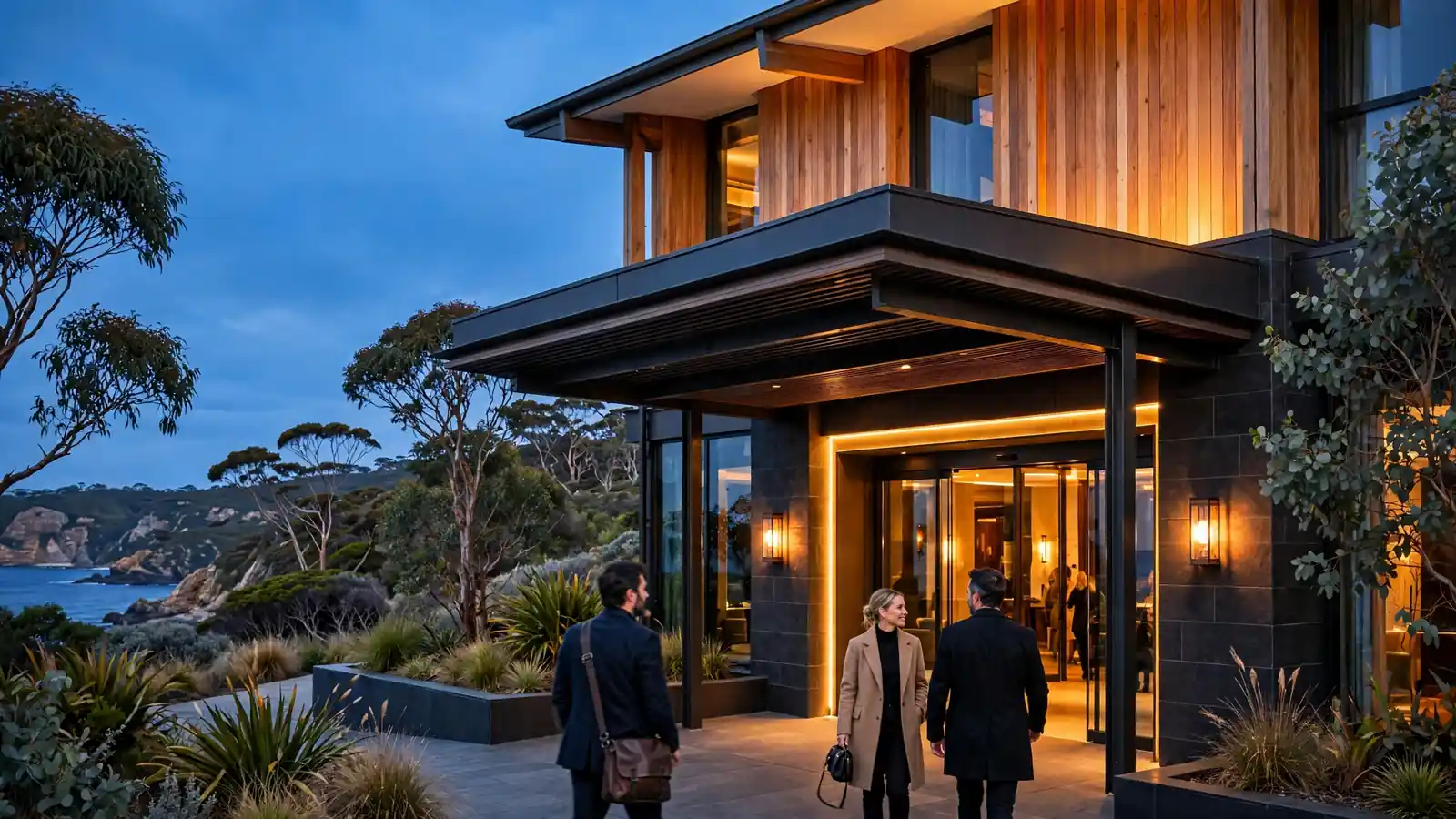
A search for a casino hotel in Tasmania can mean two different things: a stay in a property operated by, or physically connected to, a casino; or a hotel chosen because it is useful for a casino visit. Those are not interchangeable arrangements. A casino’s presence does not, by itself, establish that it has guest rooms, sells room packages or operates a hotel.
I have seen the distinction matter at the point where a booking decision is made. The word “hotel” in a venue description can sound like a room option, when it may only describe the area around a casino or refer to a separate business. The practical question is not whether a page uses hotel language, but whether the accommodation provider, booking terms and relationship to the casino are stated plainly.
For anyone considering a Tasmania casino hotel, the first check is whether rooms are actually offered for the dates required. Then establish who operates the rooms and who takes the booking. A casino-branded package, if one is advertised, should identify what the price covers, which property provides the stay, and whether access to any casino service is included or merely nearby. Without those details, “deal” is a label, not a description of what is being purchased.
Choosing a casino for Tasmania in 2026 calls for a careful look at the available operator details, including licensing and the payment information provided. Use these notes as a starting point when deciding what to check further.
7Bit Casino
7Bit Casino is operated by Dama N.V. and holds a Curacao license.
MrPacho
MrPacho lists crypto payouts at 30–120 minutes and fiat payouts at 24–72 hours. The minimum deposit is A$30.
SkyCrown
SkyCrown is licensed by the Tobique Gaming Commission. Its listed payout times are around 10–15 minutes for crypto and 1–5 days for fiat, with a A$30 minimum deposit.
Wild Tokyo
Wild Tokyo has a Curacao license. Its listed minimum deposit is A$10, with crypto payouts taking 30–60 minutes and fiat payouts 1–5 days.
Uptown Pokies
Uptown Pokies has operated since 2017 and is licensed in Curacao. Its minimum deposit is A$20.
Thor Casino
Thor Casino is licensed in Curacao by Antillephone N.V. (Versus Odds B.V.). Its minimum deposit is EUR 20.
Roby Casino
Roby Casino holds a Curacao eGaming license under Roby Games Ltd.
Ricky Casino
Ricky Casino lists crypto payouts in under an hour and PayID payouts in 1–3 business days. The minimum deposit is A$20, or A$30 to qualify for the bonus.
GoldenCrown
GoldenCrown is licensed by the Curacao Gaming Control Board under OGL/2023/176/0095, with Hollycorn N.V. named as the operator.
LevelUp Casino
LevelUp Casino holds a Curacao eGaming license, OGL/2023/174/0082, under Dama N.V. Its minimum deposit is A$15.
The room information needs the same scrutiny. Confirm the room category, occupancy conditions, included services, check-in and check-out arrangements, cancellation rules, and any taxes or other charges shown before payment. These are not claims about a particular Tasmanian property; they are the details that turn a broad hotel listing into a usable booking. A photograph or a short promotional line cannot settle them.
Location also needs a clear definition. “Near the casino” may refer to a short walk, a drive or simply the same broader area. A listing should give an address and a practical way to assess the route. Where transport, accessibility or late arrival matters, those arrangements need direct confirmation rather than inference from the casino connection. A hotel can be convenient for a visit without being part of the casino.
The reverse is equally important: a casino visit does not require an on-site stay. Someone looking for a casino hotel may be comparing accommodation with access to a venue, not seeking a property owned by the venue. Keeping those intentions separate makes it easier to compare the actual booking conditions instead of relying on a shared name or an attractive headline.
 Casino in Victoria: Hotel Offers and Details to VerifyLearn why casino-hotel offers depend on dates, room category, booking conditions and included extras, and which Victoria venue details remain unconfirmed.
 Best Casino in Melbourne: What to VerifyReview what a casino stay may include, which facilities and offers remain unverified, and why Australian online casino searches are a separate…
Hours are another point that can be misread. Casino opening hours describe the availability of casino operations; they do not establish hotel check-in times, reception coverage or room availability. Hotel services and casino operations can have separate schedules. Those details should be checked with the relevant operator close to the intended visit, rather than inferred from a general venue-hours listing.
The same caution applies to phrases such as “casino hotel rooms” or “casino hotel deals.” Neither phrase confirms current inventory, a particular rate, or a package that can be booked. Availability can depend on dates and the provider’s own booking conditions, so an old listing or cached page is not a reliable substitute for a live reservation page or direct confirmation.
My rule is simple: treat a property as a hotel option only when its accommodation offer can be identified and its terms can be reviewed. Confirm the property name, room availability, total price, booking responsibility and cancellation conditions before making plans. If those points remain unclear, the casino connection alone is not enough to support a booking decision.
A useful distinction. No assumptions.
A request for poker at a casino can mean several different things: a dedicated room for cash games, scheduled tournaments, or simply a venue where poker is available in some form. Those are not interchangeable. A tournament listing does not establish that cash games run, and a general casino description does not confirm that poker is offered at all.
I have seen how easily a broad label can be read as a promise. “Poker” may attract attention, while the practical details that determine whether a visit makes sense—format, schedule, registration, eligibility and whether a game is running—sit elsewhere or change. A search for a Tasmanian casino poker room or tournament is therefore a starting point, not evidence of a facility or event. Each detail needs current confirmation from the venue before plans are made.
A poker room implies a dedicated space, but that phrase alone says nothing reliable about the games available or when they operate. A tournament is a scheduled competition; it may have its own entry conditions and timetable. Neither term should be inferred from the other.
The same care applies to wording such as “casino rooms”. Depending on context, that can refer to hotel accommodation, a gaming area or a private function space. It does not, by itself, identify a poker room. Keeping those meanings separate prevents an accommodation result or general venue description from being mistaken for evidence of poker facilities.
For a tournament, the useful checks are concrete: whether a date is confirmed, what format is being run, how registration works, and whether the published details remain current. A calendar entry can be outdated; a promotional page can describe a past event. If the venue has not confirmed the particulars, the sensible conclusion is that the event is unverified. No assumption needed.
A casino gym is a different kind of facility question. The word “casino” in a search does not establish that a gym is on site, available to visitors, or connected to the gaming venue. Nor does it clarify whether access is limited to members, guests or another group. Those are separate conditions that would need to be stated by the operator.
Sports-bar searches carry a similar ambiguity. A sports bar may be sought as a place to watch a match, meet friends or get food and drinks; the phrase is not proof that such a bar forms part of a casino. It also does not confirm screens, service, opening times or a particular sporting broadcast. Those details should not be filled in from a venue label.
I treat amenity wording as a lead, not a listing. “Sports bar” sounds definite. The underlying question is whether the venue currently operates that facility and what access entails.
Search results for whether a casino is open today or open now can be especially easy to misread. A map status, old listing or general trading-hours panel may not reflect a temporary change or the status of a specific activity. Even if a venue is open, that does not establish that poker, a tournament, a gym or a sports bar is operating at that time.
The practical check is to confirm each activity separately through a current venue channel: whether it exists, whether it is available on the intended date, and what conditions apply. For poker, confirm the game or tournament rather than relying on a broad casino label. For a gym or sports bar, confirm access and current operation. A facility can be present without being open to every visitor, and an event can be advertised without being current.
That distinction is plain but important: a venue search can reveal what someone hopes to find; it cannot verify the activity. Check the specific claim before treating it as part of a Tasmanian casino visit.
Parking and dining are practical parts of a casino visit, but neither can be inferred from the word “casino”. A venue may have parking nearby without operating a car park; an advertised parking arrangement may also have conditions that affect availability or cost. Valet parking is a separate service, not a safe assumption based on a venue’s profile. For any casino in Tasmania, current venue information is needed to establish whether parking is available, where it is, whether it is free, and whether valet service is offered.
I learned to separate these details from the headline. “Convenient parking” is promotional shorthand until the location, access arrangements and any charges are clear. A map pin alone does not establish that spaces are reserved for visitors. Parking can also be managed by another business, with its own terms. Check the venue’s current information before setting out, particularly if the visit depends on accessible parking or a specific arrival arrangement. Details matter.
Dining needs the same discipline. A casino’s presence does not confirm that it operates a dining room, what kind of food is served, or when a service is available. “Dining” can refer to an in-house venue, an independently operated business, or food options in the surrounding area; those are not interchangeable. For a Tasmania casino visit, confirm the named venue and its current service details rather than treating a general listing as proof. Bingo is another distinct activity: its availability should be checked separately, not assumed from a casino or dining reference.
The phrase “online casino” points to a different issue from choosing somewhere to visit. Under the Interactive Gambling Act 2001, it is illegal for an Australian-run online casino to provide real-money casino services to people in Australia. The restriction covers online casino games such as pokies, blackjack and roulette. This is not the same as asking whether a physical venue has parking or food service; the legal rules apply to online operators and their services.
Offshore gambling platforms sit outside Australian regulation. Their services are not regulated under Australian law, so a player does not get the protections that local regulation would provide. The fact that an offshore site can be encountered online does not make it an Australian-regulated service or a suitable alternative to a physical casino. I have seen “available” used as if it meant “approved”. It does not.
Some platforms use region controls to prevent access to games from particular locations. A VPN can make an internet connection appear to come from elsewhere, but using one to reach blocked games breaches the site’s terms of service and may lead to account suspension. It is not a reliable workaround or a way to change the legal status of the service. Access can be blocked, and an account can be affected.
For a search around the best casino in Tasmania in 2026, the useful distinction is simple: parking and dining are venue details that require current confirmation; online casino services raise a separate Australian legal and regulatory question. A well-presented listing does not settle either one. Verify the practical arrangements with the venue, and do not treat offshore online gambling as locally regulated.
An accommodation search built around a casino does not necessarily mean the casino operates a hotel. It may reflect a simpler plan: stay somewhere in the surrounding area and visit the venue separately. That distinction matters because a result that pairs a casino name with lodging can be a travel listing, an independent booking offer or an advertising package—not proof of a shared operator or a direct connection.
For a Tasmania casino stay, the practical question is not merely whether accommodation appears beside the venue name. It is whether the location, booking terms and travel arrangements match the intended visit. A map pin can provide a starting point, but it does not establish walking distance, door-to-door travel time or access after a late visit. Those details need checking against the property’s own address and current transport information.
I learned to read “nearby” carefully. In travel promotions, it can mean close on a map while still requiring a separate journey. The wording may also describe an area rather than a specific property. Before treating a listing as suitable, confirm the full address, how the route works in practice, and whether the accommodation itself—not just a nearby landmark—is available for the dates involved. Convenient on paper.
A package described as a casino accommodation deal needs the same scrutiny. The label does not tell a guest whether lodging is included, who supplies it, what cancellation conditions apply or whether any casino benefit is attached. A promotion can be an ordinary accommodation offer presented alongside a venue name. The booking page should set out the supplier, inclusions, exclusions and terms before the offer is treated as a combined stay.
The same care applies when a listing mentions casino promotions. A promotional phrase is not evidence that a room reservation qualifies for a benefit, or that the benefit applies to every booking. The relevant terms should identify who is responsible for the offer and what conditions govern it. If the details are not stated clearly, the safer reading is that the accommodation and casino visit are separate arrangements.
I would also separate the lodging decision from assumptions about gaming facilities or venue trading times. Those details do not establish where to stay, whether a particular property is open for bookings, or how easily a guest can travel between lodging and a venue. Each item needs its own current confirmation. A search result can compress several subjects into one line; it cannot make them one verified arrangement.
A useful comparison starts with the accommodation’s own listing: location, room conditions, check-in and cancellation terms, and the contact channel for questions. Then check the journey independently rather than relying on a promotional description. If parking is part of the plan, confirm it with the accommodation or venue separately; a casino-related label does not establish that parking is included or available.
The distinction is simple but often blurred by packaging: a place to stay near a casino is not automatically casino accommodation. A Tasmania casino location in a search result is not, by itself, a reliable guide to nearby lodging or travel. Treat the stay as its own booking, and verify any claimed connection before paying.
A venue’s phone number and address are practical details, not decoration. In my experience, they are also where small errors cause wasted journeys: an old directory entry can remain visible after information changes, while a map pin may mark a broad property rather than the entrance a visitor needs. For a Tasmania casino visit, contact details and venue policies should be confirmed through a current, official venue channel before travel. A copied listing is not confirmation.
The same applies to a contact number found through a general search. It may connect to a central switchboard, a third-party directory or a different department from the one handling visitor questions. When making contact, the useful point is to identify the specific issue—directions, access, a bar, dress expectations or a game enquiry—and confirm that the information applies to the intended venue and date. Keep the answer with the travel details. Simple recordkeeping.
A map can help with orientation, but it does not settle every arrival question. Check the address against the venue’s own directions and make sure the mapped destination corresponds to the public entrance, rather than an office, service road or nearby landmark. Car-park access is a separate detail from the street address; confirm the relevant entrance and any access conditions directly instead of assuming a map pin answers both. That is especially useful when several roads or building entrances appear around the destination.
Bar searches are similarly easy to misread. A listing, photograph or older review may establish that a bar was mentioned at some point, but it does not confirm present availability, service arrangements or entry rules. Before planning an evening around a bar, confirm the venue’s current information and whether the area is open to the intended visitors. “On site” can sound definitive in a listing; operational details are what matter.
Dress-code information deserves the same check. A general description of a casino is not a policy, and standards can differ between areas or change over time. If clothing requirements affect the plan, ask the venue directly and clarify whether the answer concerns the gaming floor, a bar or another part of the property. Guesswork at the entrance is avoidable.
Concert searches call for a different kind of confirmation. They are an event-planning question, not evidence that a performance is scheduled. Any proposed date, ticket information, entry arrangement or age condition needs to match a current venue announcement or an authorised ticketing notice. An old event page can remain discoverable long after the event has passed.
The same practical approach applies to questions about baccarat or craps: a game name in a listing does not establish that it is offered at a particular venue or on a particular visit. Confirm the specific detail with the venue before building a trip around it. In visitor planning, the reliable order is plain: establish the address, confirm the right contact channel, then check the detail that could change the visit. No assumptions.
Breakfast and buffet searches are requests for specific services, not evidence that a particular venue serves them. A page title, old photograph or third-party listing can make a meal option look current when the underlying details have changed. I treat claims about breakfast service, buffet availability and serving times as separate facts that need confirmation from the venue before they can guide a visit. “All-day” is a label, not a timetable.
The same caution applies to the word “resort”. It can describe a broad leisure proposition, but it does not establish which services are operating or included. A useful listing would identify what the property actually offers and when; without that, the label does little work. No assumption about meals should be drawn from it.
Rewards searches require a different kind of reading. At a physical venue, a loyalty programme’s value depends on its written eligibility rules, how points accrue and what they can be exchanged for. A “reward” may be conditional rather than equivalent to cash, and a promotional headline rarely explains every condition. I would separate benefits available to members from services open to all visitors, then check the applicable terms rather than infer a benefit from the name of a programme.
Online casino bonuses are a separate matter from venue loyalty schemes. Real-money online casino games are prohibited for operators providing them to people in Australia under the Interactive Gambling Act 2001, so bonus language should not be read as an invitation to play. Where free spins are discussed, the winnings may be subject to wagering requirements before withdrawal; they are not automatically cash in hand. A report on psu.com gives a range of 20 to 50 times for such requirements, while a separate specialist review describes a 30-times requirement. Those are source-specific claims, not a universal current rule. Terms can differ, and a headline alone cannot settle what applies.
Employment searches are separate again. A phrase about casino jobs does not confirm that a venue is recruiting, what roles exist or whether applications are open. A reliable vacancy notice should identify the employer, role, location, duties and application process, with a current posting date. Without those details, a broad careers result is not a job offer. No confirmed vacancy can be inferred from the wording of a search.
The useful distinction is simple: food-service information describes what may be served; rewards describe conditional benefits; a job notice describes an actual opening. Each needs its own current confirmation. Search wording is not proof.
A result suggesting that a casino is open, reopening or undergoing development is a lead, not confirmation of its current status. Search listings can retain old hours and event notices after circumstances change. I have learned to separate a venue’s established operating position from language written to attract attention: “coming soon” may describe an aspiration, while an approved and active project is a different matter.
For anyone checking whether a casino in Tasmania is open, the useful evidence is a current notice from the venue or the relevant authority, with a clear date and an unambiguous statement of what is operating. A map entry or an undated directory page may be convenient, but neither settles whether admission is available today. Hours can also differ on public holidays or during temporary closures, so a general weekly schedule should not be treated as a guarantee for a particular visit.
Reopening claims need the same care. “Reopening” might refer to a proposed return, a staged restart or a date that has since passed. The wording should identify what is reopening and when, rather than merely repeating a headline. If there is no current confirmation, the responsible conclusion is that the status remains unclear—not that the venue is open or about to open.
Entertainment and event listings are time-sensitive in a different way. An old calendar entry can survive after an event has been cancelled or moved; a promotional announcement may describe a plan rather than a confirmed programme. A reliable listing should give the event details, date and venue, and should be checked against a current official update before travel is arranged. A general entertainment page does not prove that anything is scheduled for a particular evening. Plans change. Quickly.
Development language also needs decoding. A proposal, public consultation, planning decision, construction activity and completed project are distinct stages. A statement that a site is being considered for development does not establish approval, a construction timetable or an opening date. In my experience, promotional copy often compresses those stages into one confident-sounding sentence. The documents and dated announcements matter more than the adjective.
Reviews require similar context. A review can describe a visit at a particular point in time; it cannot, by itself, establish today’s operating hours, current events or the status of a later development. Recent reviews may help indicate what visitors encountered, but comments can refer to different dates or expectations. The practical distinction is simple: a review reports an experience, while a current venue notice confirms present arrangements.
For a search framed around the best casino in Tasmania in 2026, the year in the wording does not make an old listing current. Any claim about opening, reopening, entertainment or development should be checked against a dated, authoritative update. Where that confirmation is absent, no firm status should be inferred.
A search for a restaurant at a casino in Tasmania can mean several different things: a dining room inside a venue, a restaurant operated by the same business, or an independent place nearby. Those are not interchangeable. A result that mentions a casino and a restaurant in the same sentence does not, by itself, establish that the restaurant is on site or connected to the venue.
An eating establishment located inside the casino venue.
A restaurant operated by the same business as the casino.
An independent place located in the surrounding area.
I learned to be careful with that distinction when checking venue information. A name can persist in old listings after a service changes, while a general description can sound like a current offer without identifying who provides it. For a Tasmania casino restaurant, the useful details are specific: the restaurant’s confirmed name, its location in relation to the casino, whether it is operating, and how its current service is described by the venue. Without those checks, a polished listing can still be stale or misleading.
Menus need the same discipline. A menu shown on a third-party page may no longer reflect what is served, and a photograph or broad cuisine label does not establish current dishes, prices, dietary options or service arrangements. I would not treat those as settled details unless the venue itself confirms them. Plain answer.
Restaurant searches can also blur the difference between “at” and “near.” A nearby restaurant may be relevant to someone planning a visit, but it is not a casino restaurant simply because it appears alongside the casino in a map result. Before relying on a listing, the location and business relationship need to be clear. The distinction matters most when making plans around a particular venue rather than choosing somewhere in the wider area.
There is a practical way to read these listings. Look for an identifiable business, a current venue-controlled page or contact channel, and information that matches across the listing and the venue’s own details. If those elements are absent or inconsistent, the listing is a lead, not a confirmed option. That is a modest standard, but it prevents a search result from being mistaken for an operating restaurant.
The phrase “dining on site” can do a lot of promotional work while saying very little. It may refer to a restaurant, another food service, or simply a general venue amenity. I would not convert it into a restaurant name, menu or service claim without direct confirmation. A reliable restaurant entry should say what the business is and where it is, rather than leaving those points to inference.
For anyone comparing restaurants associated with a casino in Tasmania, the safest reading is therefore literal: treat a restaurant as confirmed only when its identity, location and current service are clearly established. Anything less is an unverified lead, not a dependable listing.
A spa search can make a casino appear to offer a complete leisure package, but the wording of a result is not proof that a spa or day-spa service exists at a Tasmanian venue. I have seen how a broad label can travel further than the detail behind it: a directory may group nearby businesses with a casino, or an old listing may remain visible after arrangements change. Treat spa access as an amenity to confirm, not an assumed feature.
Check if the venue identifies a spa and explicitly explains whether access, treatments, or bookings are available to casino visitors, rather than relying on third-party listings.
The useful check is specific. Does the venue itself identify a spa, and does it explain whether access, treatments or bookings are available to casino visitors? If the information comes from a third-party listing, confirmation from the venue is still needed. Without that, there is no sound basis for planning a visit around a spa.
Address details deserve the same care. A result may refer to a casino, a broader precinct, an entrance or a nearby business. Those are not interchangeable when planning a trip. I would compare the venue’s own current address information with a map and confirm which entrance applies, particularly where a listing gives only a suburb or complex name. Do not rely on an old directory entry as the final word.
Dress codes are policy, not atmosphere. Photographs and promotional language cannot establish what clothing is permitted, whether requirements differ by area, or whether a policy has changed. If the venue publishes a current dress standard, read the actual wording rather than inferring it from images. Where no current policy is stated, confirmation is the only reliable basis for deciding what to wear. Small detail. Real inconvenience.
Searches about casino games also need context. A venue’s gaming information concerns what it offers on site; it does not establish that every game is available, or that online casino play is lawful in Australia. Under the Interactive Gambling Act 2001, operators are prohibited from providing real-money online casino games, including slots and table games, to people in Australia. That is a separate question from whether a physical venue operates particular games.
Careers information is another distinct matter. A jobs page or vacancy listing can change, and a general mention of employment does not confirm that a role is open. Check whether an advert is current and whether applications are being accepted before relying on it.
For a Tasmania casino visit, spa access, address, dress requirements and gaming details should each be confirmed as separate facts. One polished listing cannot settle all four.
A food court and a restaurant are different propositions. A food court implies a shared dining area with multiple food outlets; the word does not establish which vendors operate there, whether they are open, or whether the format exists at a particular venue. A casino visit in Tasmania should not be planned around that assumption without a current venue listing that explicitly describes a food-court area.
I have seen amenity labels do more work than the details behind them. “Food options” may refer to a single counter, a restaurant, or something else entirely. The useful check is the venue’s own current information, with the format and operating status stated plainly. If those details are absent, it is safer to treat the food-court question as unresolved than to infer facilities from a broad dining label. No guesswork.
Pool access is a separate question, not an automatic extension of casino facilities. A pool may be associated with another part of a property, require separate access, or not be available at all; none of those possibilities should be presented as fact without confirmation. A reference to a casino in Tasmania does not, by itself, establish that visitors can use a pool.
For practical planning, the relevant confirmation is whether a pool is on site, whether it is open to the intended visitors, and whether access conditions apply. Those details can change and should come from a current venue channel rather than an old listing or a general description. The distinction matters: a facility’s presence does not necessarily mean public access.
Food-court searches and pool searches point to specific amenities, but neither phrase is evidence that the amenity exists. Treat each as its own verification task, and keep the decision tied to clear, current venue information.
It is a restriction that uses your IP address to identify your location and prevent access to certain games. Blocked games may be missing from the lobby or fail to load.
Free-spin winnings commonly require 20x to 50x wagering before withdrawal; one stated requirement is 30x. Pokies typically contribute 100% toward wagering requirements.
Club Liverpool has the highest number of operational poker machines among clubs in NSW.
A VPN can change your apparent digital location, but a casino or software provider may still restrict games under its licensing rules. Australian players should also note that offshore casinos are not regulated under Australian law.