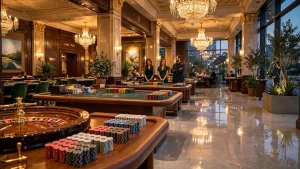
The guide distinguishes the physical Adelaide venue and nearby-stay searches from Australian online casino rules and claims that need verification.

An Adelaide casino and an online casino are not interchangeable terms. The first refers to a physical venue; the second raises a separate question about whether online gambling services can lawfully be offered to people in Australia. Under the Interactive Gambling Act 2001, operators cannot provide real-money online casino games, including pokies and table games, to customers physically located in Australia. An Australian-run online casino therefore cannot lawfully offer those services locally.
Offshore platforms sit in a different position, but that does not make them Australian-regulated casinos. The law focuses on the operator providing the prohibited service; Australian players are not subject to a fine or criminal prosecution simply for using an offshore site. That distinction is important, but it is not an endorsement. Offshore operators are not regulated under Australian law, and the legal framework does not create a locally licensed online-casino option for Adelaide residents.
Sports betting is a separate category. It remains widely accessible and legal in Australia, while online casino-style games such as pokies, blackjack and roulette are restricted when supplied to people in the country. The fact that a betting service operates legally does not mean its casino games are lawful to offer here. Different products can sit under different rules, even when they appear on the same digital platform.
Choosing a casino for Adelaide in 2026 means checking the details that matter to you, such as licensing, deposit minimums and payout information. Use these short verdicts as a starting point when considering the options.
7Bit Casino
7Bit Casino is operated by Dama N.V. and holds a Curacao license. These details provide a concise starting point for assessing its regulatory background.
MrPacho
MrPacho lists crypto payouts at 30–120 minutes and fiat payouts at 24–72 hours. Its minimum deposit is A$30.
SkyCrown
SkyCrown is licensed by the Tobique Gaming Commission. Its stated payout times are around 10–15 minutes for crypto and 1–5 days for fiat, with a A$30 minimum deposit.
Wild Tokyo
Wild Tokyo holds a Curacao license and has a A$10 minimum deposit. Its listed payout times are 30–60 minutes for crypto and 1–5 days for fiat.
Uptown Pokies
Uptown Pokies has operated since 2017 under a Curacao license. Its minimum deposit is A$20.
Thor Casino
Thor Casino is licensed in Curacao by Antillephone N.V. and operated by Versus Odds B.V. Its minimum deposit is EUR 20.
Roby Casino
Roby Casino is licensed by Curacao eGaming and operated by Roby Games Ltd. These are the available details for assessing its background.
Ricky Casino
Ricky Casino lists crypto payouts in under an hour and PayID payouts in 1–3 business days. The minimum deposit is A$20, or A$30 to qualify for the bonus.
GoldenCrown
GoldenCrown holds a Curacao Gaming Control Board license, numbered OGL/2023/176/0095, and is operated by Hollycorn N.V.
LevelUp Casino
LevelUp Casino is licensed by Curacao eGaming under OGL/2023/174/0082 and operated by Dama N.V. Its minimum deposit is A$15.
Availability can also depend on location controls. Online casinos and software providers may use a player’s IP address to estimate the country from which a connection is being made. Where a licensing jurisdiction requires Australian users to be excluded, an operator or provider may block access from Australian IP addresses. A blocked game may not appear in the lobby at all; in other cases, a game can be visible but fail to load because the location restriction is applied when it is opened.
That explains why a game catalogue can change without the physical Adelaide venue changing its hours, entertainment schedule or development plans. Those are venue matters, not evidence that an online casino service is locally authorised. I have seen the distinction cause confusion: a familiar brand or game name can make a product look available, while the location rule determines whether it can actually be accessed.
There is a historical example. NetEnt region-blocked its wide-area progressive jackpot games from Australia in mid-2016; Mega Fortune and Hall of Gods were among the titles affected. That is a dated provider action, not a promise that every provider follows the same policy now. Licensing conditions and access decisions can differ, and they can change.
A missing title, an error message or a changed lobby is therefore not proof that an Adelaide casino has opened, reopened or added an online service. It may reflect a location restriction imposed by an operator or game provider. The distinction is simple. Physical venue information belongs to the venue; online game access is governed by a separate legal and licensing framework.
A request for an Adelaide casino hotel can mean two different things: a room operated as part of the casino venue, or a separate hotel chosen because it is close to the venue. Those are not interchangeable arrangements. The first concerns the identity of the accommodation provider and what is included in a stay; the second is a location-based choice. I keep those questions separate before comparing any offer.
A listing that uses “casino hotel” in its heading does not, by itself, establish that the casino operates the rooms or that a booking includes venue access or other benefits. The practical check is the property named on the booking page, the business taking payment and the terms attached to the reservation. If those details point to different businesses, the relationship should be clear in the booking conditions rather than inferred from branding.
Room searches often turn on details that a short promotional label leaves out. The room category, occupancy conditions, inclusions, cancellation terms and check-in arrangements should be stated in the booking information. If a feature matters to the stay, it needs to appear in the specific room description or confirmed terms; a photograph or broad hotel description is not the same thing as a promise attached to a reservation.
I learned to read the booking conditions before treating a rate as a deal. “Special” is an advertising word; the real question is what changes the price and what happens if plans change. A lower displayed rate may come with conditions that make it less suitable, while a package label can sound broader than the inclusions actually listed. The written terms carry the weight.
The same care applies to comparisons. Rates can refer to different dates, room types or cancellation conditions, so two headline prices may not describe equivalent stays. A useful comparison keeps those elements aligned and checks whether taxes, fees or other charges are addressed in the final price shown before confirmation. If a page does not make the basis of comparison clear, the headline alone cannot settle it.
“Deal” can mean a reduced rate, a bundle or simply a promotional presentation. It does not automatically mean that meals, entertainment, parking or any other service is included. Those inclusions need to be named in the offer terms, with any restrictions attached. I would treat an unqualified package description as a starting point, not as a full account of what the booking buys.
The booking path also matters. A venue page may direct to an accommodation provider, while a third-party platform may set its own payment and cancellation rules. The business responsible for the reservation should be identifiable before payment. That is where amendments, refunds and service questions are likely to be handled. Not the logo at the top.
Searches about casino opening hours are about the venue’s current operating information, not hotel check-in or check-out times. Those are separate schedules and should be confirmed separately. A room reservation does not establish that every part of a venue is open at the same time, and a general hours label may not cover special dates or particular areas.
I would check the current venue information close to the intended visit and use the relevant department’s published details where available. If the purpose of the stay depends on a specific service being open, confirmation should concern that service rather than the casino’s general hours. A hotel booking and an opening-hours listing answer different questions.
For a stay described as connected with Adelaide Casino, the sound decision is to verify who supplies the room, what the selected rate includes, the terms governing changes and the current hours relevant to the visit. That keeps the accommodation decision grounded in the reservation itself, rather than in assumptions created by a search label.
Accommodation near Adelaide Casino is a different question from staying in a casino hotel. The first is about lodging in the surrounding area; the second is about rooms associated with the venue itself. Search results can blur those two intentions, so the distinction matters before comparing options.
I have found that accommodation listings often use “near” as a broad label rather than a precise promise. A property can be presented as suitable for a venue visit without the wording establishing its walking distance, route, transport options or relationship to the casino. A map pin is a starting point, not a complete account of how a stay will work.
The practical comparison begins with the exact property address and the route to the venue. Travel time can depend on the route chosen and the way of getting there, so a headline distance alone may not answer the useful question. The same applies to parking: a lodging listing’s parking information does not establish what parking is available at the casino or nearby. Separate claims need separate checks.
“Accommodation deal” is another phrase that can conceal different conditions. A displayed rate may depend on dates, room availability, cancellation rules or the booking channel. A package title does not, by itself, explain what is included. I treat the final price and the terms attached to the reservation as more meaningful than a promotional label. Short version: read the conditions.
For a stay centred on a casino visit, the venue’s current location details and the accommodation provider’s own listing should be checked independently. Opening times and trading hours are also separate from a hotel’s check-in arrangements; one does not establish the other. Those details can change, and a booking page may not answer questions about the venue’s schedule.
There is a further distinction in the word “casino”. Adelaide Casino is a physical venue, while online casino games are a separate matter. Under the Interactive Gambling Act 2001, operators cannot provide real-money online casino games to people physically located in Australia. A nearby room or a venue visit does not alter that rule.
I would not treat a lodging result, a location pin or a deal headline as confirmation of a particular facility or benefit. Each describes only what its own listing states. For a reliable comparison, the relevant details are the property’s address, the booking terms and the route to the venue—not an assumption that every listing using “near” means the same thing.
Parking, a meal and gambling are separate practical questions, even when they are bundled into one visit to a casino. I learned to separate them because a venue’s name in a search result does not establish what is available on site. Adelaide parking arrangements, charges, access conditions and dining hours need to be checked against current venue information before plans are made. I would not treat an old listing or an unlabelled map result as confirmation.
The same applies to searches for lunch or dining at the venue. A phrase such as “casino dining” can refer to anything from a quick meal to a full restaurant service, but it does not confirm a particular outlet, menu, price or opening time. Those details can change, and guessing turns a useful guide into a bad booking decision. Check the venue’s current information for the specific service and date. No assumption.
Bingo is another term that can mean different things depending on context. A search for bingo at an Adelaide casino does not establish whether a particular session, game or facility is offered. It also should not be read as evidence that online casino games are available to people in Australia. A physical venue and an internet service operate under different rules.
That distinction matters. Under the Interactive Gambling Act, operators based in Australia are restricted from providing online casino games such as pokies, blackjack and roulette. A venue’s local presence does not make an online version of its casino games a lawful Australian service. So an “online casino” result linked to Adelaide is not, by itself, proof of a locally authorised platform. The label can be broader than the legal reality.
I have seen the word “licensed” used as if it settled every question. It does not. For online casino games, the relevant point is that Australian-based operators cannot offer those services to people in Australia under the Act. A reference to an overseas licence does not convert an offshore site into an Australian-licensed casino. That is a different issue from checking practical details for a physical venue.
A VPN can make an internet connection appear to come from another country, but using one to reach a region-blocked pokies site is against the site’s terms and may lead to account suspension. It does not change the person’s physical location or make the service locally authorised. A workaround is not permission.
For the “best casino in Adelaide” question, the useful comparison is therefore about an actual venue visit: confirmed access and current services, rather than a supposed local online casino. Parking and food should be verified as separate arrangements, while online casino claims should be judged against the law, not promotional wording. Clear boundaries first.
Searches about poker at an Adelaide casino can point to quite different things: a physical poker room, a scheduled tournament, or simply a general question about whether poker is available at the venue. Those are not interchangeable. A room listing would describe a facility; a tournament notice would need to establish dates and entry conditions. Neither can be inferred from the wording of a search.
I have seen venue language blur those distinctions. “Poker” can be used as a broad draw even when the detail a visitor needs is whether a particular game or event is actually running. A tournament claim is more specific still: it depends on a current schedule and conditions, not just the existence of a casino. Without current, venue-published information, it would be misleading to state that Adelaide has a poker room, that tournaments are held there, or that a particular event is upcoming.
The word “rooms” also needs context. In searches connected with casinos, it may mean accommodation, a function or event space, or a gaming area. These are separate venue questions; the phrase alone does not confirm that any particular room exists or is available.
There is also a legal distinction between in-person venue activity and online casino play. Under the Interactive Gambling Act 2001, operators cannot provide real-money online casino games, including poker and table games, to people physically in Australia. Offshore sites are not regulated under Australian law, and access may be blocked or restricted. A physical poker event, if one is listed by a venue, should not be treated as evidence that the same activity is legally offered online.
A VPN does not change that distinction. Using one to reach region-blocked pokies sites is against the site’s terms of service and may lead to account suspension. That is a poor substitute for a clear, lawful route. No workaround.
Searches mentioning sports bars, entertainment or events often signal a practical need: what is happening, where it is taking place, and whether the venue is open at the time. A general event label cannot answer those questions. Nor does it establish that a sports bar is operating, that live entertainment is scheduled, or that a room is available for a function.
“Open today” and “open now” are time-sensitive checks, not stable venue descriptions. Opening hours can change, while an event may have its own access arrangements. The useful evidence is a current venue notice or direct confirmation, with the relevant area and event identified. A casino’s general operating status would not necessarily establish that every bar, room or activity is open.
In my experience, the wording of a listing matters: “entertainment” can describe a broad category, not a confirmed performance; “poker” can describe a general offering, not a scheduled tournament. Treating the label as a promise is how expectation gets ahead of the actual terms.
For Adelaide specifically, claims about poker-room facilities, tournament dates, event rooms, sports-bar service or today’s opening status need current venue information behind them. Without that, the responsible account is narrow: these searches concern in-person facilities and activities, but the wording itself confirms none of them. A listing should identify what is offered and when, rather than leave the reader to fill in the gaps.
A contact number, a map pin and a listing for a bar can look like small details. In practice, each answers a different question, and none should be treated as proof of the others. A map result may identify a venue without confirming its current entry point; a directory number may be old; and a bar listing does not establish opening hours or whether a particular service is operating.
I learned to treat contact details as operational information, not decoration. Venues change how they handle enquiries, and third-party listings can lag behind. For a phone number or contact channel, the useful check is whether it appears on a current, official venue page. If a call is important to a booking or visit, confirmation through another official channel can prevent a stale listing from shaping the plan. A number repeated across several directories is not necessarily independently verified.
The same caution applies to maps and car-park searches. A map can help establish the general location, but it cannot, by itself, confirm parking access, entry arrangements, fees or availability. Those details may be presented separately from the venue’s general contact information. “Easy parking” is an advertising phrase; the practical question is what access is available at the time and whether the venue confirms it. I would not infer those conditions from a pin or a short directory description.
Bar and concert listings need their own checks. A bar name appearing in a search result does not establish current trading hours, service, age conditions or event programming. Nor does a venue’s association with entertainment mean that a concert is scheduled. Event dates and ticket arrangements can change, so a current venue announcement or the event organiser’s own information is a stronger basis than an old calendar entry. Small distinction. Important one.
Venues can change how they handle enquiries and third-party listings often lag. The most reliable check is to see if a phone number or contact channel appears on a current, official venue page.
Searches for baccarat or craps can also lead to a category mix-up. Those are casino table games, but a venue-related result is not evidence that either game is currently offered at a particular location. Online versions are a separate matter: the Interactive Gambling Act 2001 prohibits operators from providing real-money online casino games to people in Australia. A venue contact page or map listing does not change that rule.
For practical details, the order of checking matters: confirm the venue identity first, then use its current official contact information for questions that depend on the day, and treat third-party maps or directories as navigation aids rather than final confirmation. If details conflict, the discrepancy is a reason to verify, not a reason to choose whichever listing sounds more convenient.
That approach is less glamorous than a neat set of claims, but it avoids turning an unconfirmed phone number, car park, bar or concert listing into a promise. The useful detail is the one that still holds when plans depend on it.
Breakfast and buffet searches are about a specific service, not simply whether a casino has somewhere to eat. A listing needs to establish what is served, when it is available and whether the offer is current. Without those details, “buffet breakfast” is only a label; it does not confirm a menu, opening hours, booking conditions or price. I have seen how easily a broad venue description can be mistaken for a promise of a particular service. Labels are not proof.
The same care applies to descriptions of a casino resort. The word “resort” can suggest a package of facilities and benefits, but it does not establish what is on site or what is included in a stay. A breakfast offer might be tied to a particular booking, date or condition. Those terms matter more than the promotional name. If they are not set out clearly, the practical value of the offer cannot be judged.
Rewards searches raise a related question: what does membership actually provide? A programme name alone says little about eligibility, how benefits are earned, where they can be used or whether they expire. None of those terms should be assumed from the word “rewards”. In my experience, the small print defines the product. The headline does not.
Employment searches need a different kind of check. A genuine vacancy should identify the role, its duties, the employer and a way to apply through an appropriate channel. A general careers page is not evidence that a particular position is open now. Nor does a broad reference to casino jobs establish pay, hours, employment status or required experience. Those details belong to the individual advertisement and should be assessed there, not inferred from the venue’s name.
The distinction matters because hospitality and casino operations can involve very different work. A job title may sound familiar while the actual duties, roster and required qualifications vary. Before treating a listing as current, its date and application status need to be clear. A copied or expired advertisement can circulate after recruitment has closed. No vacancy is confirmed by a search result alone.
There is also a boundary between venue rewards and online gambling offers. Australian law prohibits operators from providing real-money online casino games, including pokies and table games, to people located in Australia. A local rewards enquiry should therefore not be read as evidence that an online casino service is lawful or available. Sports betting is a separate category; it does not change the rule for online casino games.
For buffet, breakfast, resort, rewards and employment information, the useful evidence is the specific, current condition attached to the claim: what is offered, who qualifies, when it applies and how it can be confirmed. Without that, an attractive heading remains just a heading. Verification first.
A request for the Adelaide Casino address is a practical one, but a place name alone is not enough to plan a visit. Venue details can change, and search snippets may be outdated or refer to a different business. The reliable check is the venue’s current official information, matched against the intended destination before setting out. I learned to treat the address as an operational detail, not background copy: a small mismatch can send someone to the wrong entrance or site.
The same discipline applies to dress expectations. A dress code is a condition of entry, not a decorative detail, and an old listing or a comment about what people wore on one occasion cannot establish the current rule. Official venue guidance is the relevant reference. If the wording is unclear, checking with the venue is better than turning an assumption into a plan.
A spa-related listing needs even more care. Searching for a day spa associated with a casino does not prove that the casino operates one, that a separate business is on site, or that a service is available to visitors. Those are different arrangements, and a name or map result may blur them. Confirm the business identity and its current service information before treating “spa” as a venue amenity.
I have seen how promotional labels can do a lot of work while leaving the practical terms unstated. “On-site” sounds definitive; it does not answer who operates the service, whether it is open, or what access involves. Check the actual provider. No assumption.
Careers information is a separate matter from visitor facilities. A result about employment may point to a corporate recruitment channel rather than a page for the venue itself. The distinction matters when checking whether a role is current and who is hiring; a search result is not confirmation of a vacancy.
Bars also belong to venue information, not to online casino play. Their names, opening arrangements and entry conditions should be checked through current venue channels rather than inferred from an old listing. By contrast, online casino-style games are not a locally licensed service for people in Australia: the Interactive Gambling Act 2001 prohibits operators from providing real-money online casino games to people physically in the country. A physical venue’s existence does not change that rule.
For practical planning, separate the questions: where the venue is, what entry rules apply, and whether a named service is actually operated there. Each needs current confirmation. That is less enticing than a polished listing, but more useful.
Restaurant searches attached to Adelaide Casino are about dining at or associated with the physical venue. That is a different question from whether a venue has a particular cuisine, menu, service style or booking arrangement. A name appearing beside a casino in a directory is not, by itself, proof that the restaurant is inside the building or currently operating there.
I learned to read venue listings as operational information, not as a promise of a particular experience. Restaurant details can change independently of the casino itself: a menu may be revised, service hours adjusted, or a booking process changed. The useful distinction is between information published by the venue and descriptions repeated by directories or review pages. Start with the venue’s own current restaurant information, then check that any menu or booking page actually refers to the same outlet and date.
“Dining options” is broad language. It can mean a full-service restaurant, a casual food counter, or simply somewhere to eat nearby. Those are not interchangeable. A search for restaurants at the casino does not establish that every nearby listing is part of the casino, and a listing associated with the venue does not establish what is being served now. The label matters. So does the source behind it.
Menus are especially easy to misread. An old photograph or cached page may look authoritative while describing a previous offering. Prices, opening hours and reservation conditions should be treated as current only when they appear on a live venue channel or are confirmed directly by the business. I would not infer any of those details from a general casino description. Small print, not atmosphere.
Restaurant names also need context. A result may refer to a venue inside the casino, one connected to the wider property, or an independent business in the surrounding area. Checking the address and the business’s own description helps separate those categories without assuming that a shared location means shared ownership or service.
The same care applies to rooftop dining language. A rooftop label describes a setting only when the business itself identifies that feature; it does not establish a restaurant, menu or dining service. Nor does a bar listing necessarily answer a restaurant question. The practical test is simple: confirm the business identity, the location, and the current service details before relying on a listing.
That approach keeps a restaurant search focused on what it can establish: whether a named dining business is connected to the venue and what it currently says it offers. Atmosphere can wait. Details first.
Food-court searches point to a specific format: several food counters or outlets grouped around shared seating. That is different from asking whether a casino has somewhere to eat. A venue can have dining without a food court, and the phrase alone does not establish which, if either, is available at Adelaide Casino.
The distinction matters because amenity labels do work in marketing. “Food court” can sound like a convenient, all-purpose service, but the label says nothing by itself about the outlets, opening times, seating or current operation. Those details need to come from a current venue listing, not from the wording of a search result. An old directory entry can remain visible after arrangements change. Small detail. Real consequence.
Pool searches raise a separate question. A pool may be associated with a hotel, a leisure facility or another nearby business; the word does not establish that it belongs to the casino or is available to casino visitors. Nor does a general reference to a property settle access rules, operating status or whether the facility is part of a stay package.
In my experience, broad amenity names are where assumptions slip in. A map result or a short promotional description can blur the boundary between the casino, accommodation and neighbouring businesses. The useful distinction is ownership and access: which venue operates the facility, and who is permitted to use it.
So food-court and pool information should be treated as separate venue details, not inferred from the casino’s name or from nearby listings. The searches express an interest; they are not evidence of a facility.
Yes. Australian-based operators cannot offer real-money online casino games such as pokies, blackjack and roulette to people in Australia. Sports betting is treated separately.
A VPN can make your connection appear to come from another country by changing its apparent digital location. It does not change the Australian rules or make an offshore casino regulated in Australia.
NetEnt blocked its wide-area progressive jackpot games from Australia in 2016, including Mega Fortune and Hall of Gods. NYX Gaming/Next Gen titles such as Foxin’ Wins and Doctor Love were also region-blocked.