Sydney listings can identify a place, but venue access, gaming facilities and hours need separate confirmation.
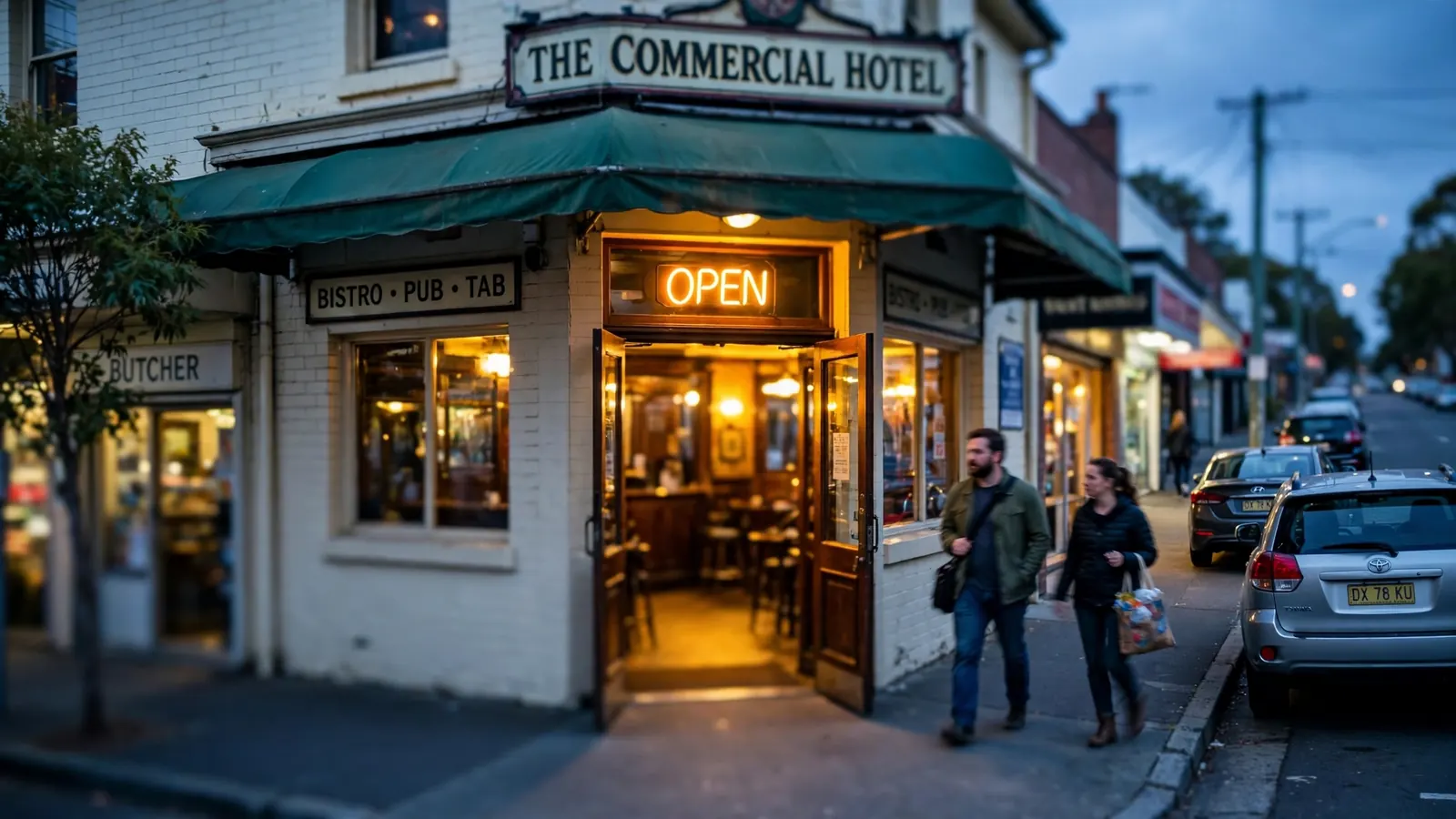
A nearby-venue search can look precise while leaving the important details unresolved. “Near” might mean near a suburb, a station, an airport terminal or a point selected on a map. Those are different starting points, and a result that appears close on a screen does not establish how far the entrance is from the place that matters.
I learned to separate the location from the offer. A venue name appearing beside Sydney, the airport or the central city does not, by itself, confirm that the venue has pokies. Nor does a map marker establish that a gaming area is inside the building, accessible to the public or operating under the conditions someone expects. The pin is a location claim. The facilities are a separate claim.
That distinction matters most when the search includes “near me”. The phrase depends on the searcher’s current location, which may be approximate or set to a different place. A result can be relevant to the broader area without being close to the actual starting point. And a suburb name can cover enough ground that “in the suburb” is not the same as “within easy reach”.
Finding pokies to play in Sydney in 2026 is easier when you can check the practical details behind each option. Use this list as a starting point and consider the available licensing and payment information when deciding what suits you.
7Bit Casino
7Bit Casino is operated by Dama N.V. and holds a Curaçao licence.
MrPacho
MrPacho lists crypto payouts at 30–120 minutes and fiat payouts at 24–72 hours. The minimum deposit is A$30.
SkyCrown
SkyCrown is licensed by the Tobique Gaming Commission. Its listed payout times are around 10–15 minutes for crypto and 1–5 days for fiat, with a A$30 minimum deposit.
Wild Tokyo
Wild Tokyo holds a Curaçao licence and has a A$10 minimum deposit. Listed payout times are 30–60 minutes for crypto and 1–5 days for fiat.
Uptown Pokies
Uptown Pokies has operated since 2017 and holds a Curaçao licence. Its minimum deposit is A$20.
Thor Casino
Thor Casino is licensed by Antillephone N.V. in Curaçao, with Versus Odds B.V. named as the operator. Its minimum deposit is EUR 20.
Roby Casino
Roby Casino is licensed by Curaçao eGaming and is operated by Roby Games Ltd.
Ricky Casino
Ricky Casino lists crypto payouts in under an hour and PayID payouts in 1–3 business days. The minimum deposit is A$20, or A$30 to qualify for the bonus.
GoldenCrown
GoldenCrown holds Curaçao Gaming Control Board licence OGL/2023/176/0095, with Hollycorn N.V. named in the licence details.
LevelUp Casino
LevelUp Casino holds Curaçao eGaming licence OGL/2023/174/0082, and is operated by Dama N.V. Its minimum deposit is A$15.
A map is useful for checking geography, but not as proof of a venue’s facilities. It may show a business label or a marker at a building; neither detail settles whether pokies are available there. A listing may also use a broad area name, while its pin points to a different entrance or part of a large site. The map answers where a listing has been placed, not every question about what is inside.
I would treat distance as something to verify from a defined starting point and a specific destination. “Sydney” is not a single point. Neither is “the airport” or “the CBD”. A route from a terminal, a station or a particular street can differ from a straight-line distance shown between map pins. If the destination itself is uncertain, a precise-looking distance only gives uncertainty a decimal place.
The same caution applies to results around Central or the city centre. A result described as central may refer to a broad district rather than a particular entrance or block. A label can help narrow a search, but it cannot turn an unconfirmed venue detail into a reliable recommendation.
Some searches combine a venue request with a location, such as Sydney Airport or a central Sydney landmark. Others include “Sydney” in a way that could refer to the city, a suburb, or a different place altogether. The wording is not enough to resolve that ambiguity. Before treating a result as nearby, the destination and the starting point both need to be clear.
The same applies to a location outside New South Wales that shares a place name or abbreviation with Sydney. A search result may be geographically relevant to a different state or region. That is not evidence of a Sydney venue; it is a sign to check the place attached to the listing rather than relying on the words in its title.
“Online” changes the meaning again. A result about online pokies is not a physical venue near Sydney, even if the phrase includes a city name. A place-based search and an online service are not interchangeable. The location wording alone does not establish that a local venue exists or that an online result corresponds to one.
From the counter side, this is where confident wording can do too much work. “Nearby” sounds like a measurement, but without a confirmed destination and starting point it is just a label. “Best” sounds like a comparison, but proximity alone cannot establish the quality or facilities of a venue. A tidy result card is not a checked recommendation.
I cannot responsibly point to a Sydney venue or state a distance on the basis of location wording alone. The practical check is to confirm the exact venue identity and address, then measure the route from the actual starting point. If either end is vague, the distance is not settled. No guesswork dressed as precision.
A search for online pokies around Sydney can blur two different things: gambling at a physical venue and a company supplying real-money casino games over the internet. They are not governed by the same practical arrangement. A venue-based experience does not make an online service legal, and a familiar Sydney name in a search result does not establish that an internet casino is authorised to serve people in Australia.
The central law is the Interactive Gambling Act 2001. It prohibits operators from providing real-money online casino games, including pokies, to people in Australia unless the operator holds a domestic licence. No domestic online casino licences have been issued. The result is straightforward: there is no Australian-licensed online casino.
That distinction matters when a search mentions a Sydney casino alongside online play. The words may refer to a physical property, a brand, or an offshore website using familiar language. They do not establish that the named venue offers online pokies, that a website is connected to it, or that real-money online play is permitted. I have seen promotional wording rely on that blur. Familiarity is not authorisation.
The Act is directed at companies offering prohibited online gambling services, not at individual players. An Australian player is not made criminally liable merely for playing on an offshore site that accepts them. That does not turn the service into an Australian-regulated casino or give the player the protections associated with a domestic licence. Those are separate questions, and collapsing them into one is where much of the confusion starts.
Phrases about no-deposit offers, cashless play, high limits or maximum bets describe marketing or account conditions, not the legal status of a service. A search result can make an offshore offer look local without changing who operates it or which country’s rules apply. The label is doing work. The legal position is not.
This is also why the word “legal” needs a subject. It can refer to whether a player faces a penalty, whether a company may supply a service, or whether a player can enforce a claim. Under the Australian framework, the operator’s provision of real-money online casino games is the prohibited conduct; the player is not the target of that prohibition. But that does not mean an offshore company is answerable to Australian casino regulators as though it held a local online licence.
The practical weakness appears when an offshore casino refuses to pay winnings. Australian players have no legal recourse in Australia to compel that operator to pay. A screen balance or a displayed win is not the same as a claim that can be enforced through an Australian-licensed casino framework. That is a material difference, not fine print.
I would not read a Sydney reference, a familiar venue name, or the phrase “real money” as proof of a local legal relationship. Nor does a search for the best-paying pokies in Sydney identify a lawful online service. Those words may describe what someone hopes to find, but they do not create a domestic licence or remedy.
The distinction is plain once the layers are separated: physical venue gambling is one matter; real-money online casino services are another. The law prohibits operators from supplying those services to people in Australia without a domestic licence, and no such licences exist. Players are not the law’s target, but an offshore non-payment dispute has no Australian legal remedy. Familiar branding changes none of that.
That is the boundary. Not the wording.
An opening time is useful only when it belongs to the venue in question and reflects its current schedule. I have seen how easily a broad answer can sound definitive: a directory gives a time, a snippet repeats it, and the detail is treated as confirmation. It is not. Without a current, venue-specific statement, I cannot responsibly say that a Sydney pokie venue opens early, or that it is open at a particular hour.
Early-morning searches are especially easy to misread. A request about pokies being available around dawn is not proof that a venue admits patrons then, nor that its gaming area operates whenever another part of the premises does. “Open” can refer to the building, a bar or dining area, or the specific area where pokies are located. Those are different things. A time attached to one should not be transferred to the others.
The same distinction applies when a venue’s general hours appear online. A listing can be useful as a lead, but it may not establish the current operating schedule for the gaming area. Pages can remain visible after information changes, and search summaries may omit conditions or context. The polished presentation does not make an old time current. A stale listing is still stale.
For a search about pokies opening in Sydney, the sound check is a direct one: does the venue itself publish the relevant hours, and do those hours clearly apply to the gaming area? If the wording is ambiguous, confirmation from the venue is more useful than inferring an answer from a hotel, club or business-directory listing. I would not turn a general opening time into a claim about when machines are available.
There is also a difference between a scheduled opening and present availability. A venue may publish regular hours, but that alone does not confirm that the premises are operating as usual on a particular day. Special arrangements, temporary changes or a delayed opening can make an otherwise accurate schedule unhelpful for immediate planning. The point is not that any particular Sydney venue has changed its hours; it is that a schedule and a live status answer different questions.
Late-night wording creates the same problem in reverse. A request about play continuing into the early morning does not establish that a venue remains open then. Nor does a late closing time for one part of a premises confirm access to its gaming area for the same period. I would keep those claims separate unless the venue’s own information makes the connection explicit. No assumption is safe.
“Open now” is a time-sensitive claim, not a durable fact. A page that once showed a schedule cannot, by itself, establish what is happening at the moment it is read. For a decision that depends on current availability, the latest direct confirmation matters more than an old listing or a copied summary. If the information cannot be confirmed, the honest answer is that the hour remains unconfirmed—not a guessed opening time dressed up as local knowledge.
This is a narrow point, but an important one. Opening hours should be attached to a named venue, a defined area and a current schedule. Without all three, a confident answer can create a journey based on an assumption. No reliable shortcut.
A published return-to-player figure describes a game setting, not the result of a particular session. I separate those two ideas because the word “return” can sound like a forecast. It is not. A stated RTP does not promise that a player will get a corresponding share of their stake back, or that a run of play will finish ahead.
The underlying mechanic is random. Each spin is generated separately by a Random Number Generator, so its outcome does not depend on whether earlier spins won or lost. A losing streak does not make a win “due”; a recent win does not make another one less possible. Patterns may feel persuasive while play is underway, but they are not a reliable way to predict the next result.
That distinction matters when people compare pokies by claimed returns. A published setting may describe the game over extensive play, rather than what will happen during one visit or one short session. Individual results can vary sharply. The setting is information about configuration, not a personal payout schedule.
There is another complication: a game title alone may not establish the return setting in use. A specialist review has reported that some game providers give casinos a choice of RTP configurations for the same pokie. On that account, identical titles could operate with different return percentages at different casinos. That is a report about some provider arrangements, not a rule that applies to every game or venue. The practical point is narrower: a familiar name does not, by itself, tell the whole story.
I would therefore treat “best paying” as a claim that needs a defined basis. Is it referring to a published setting, a particular configuration, or someone’s short-term experience? Those are not interchangeable. Without a stated, verifiable setting, a broad claim about a game paying better leaves out the detail that would make comparison meaningful.
Even when a setting is clearly disclosed, it cannot identify which game will produce a win on a given spin. Nor does it turn a theoretical return into an assurance about the amount returned, the timing of a win, or the outcome of a session. The word “best” is doing more work than the evidence may support.
From the counter side, I learned to distinguish an explanation of how a product is configured from a promise about what a person will experience. A return figure can help describe one feature of a game. It cannot remove randomness, make results predictable, or settle the question of how a particular session will go.
No forecast.
An airport label can describe an area, a transport point or a broad search radius. It does not, by itself, establish that pokies are available inside an airport terminal, nearby, or at a venue with a particular name. The same distinction applies to North Sydney: a suburb or district in a search result is not proof of a gaming facility at a specific address.
I have seen location wording do more work than the evidence behind it. A result may combine a place name with a general category, while leaving the important detail unstated: whether the named premises actually offer pokies. That is not a small distinction. A map pin can identify an address without confirming what happens inside it.
For airport-related searches, the wording can blur “at the airport” with “in the surrounding area.” Those are different claims. A venue described as being near an airport is not necessarily within the airport, and an airport result does not establish that a terminal contains gaming facilities. Treating those phrases as interchangeable creates a confident-looking answer where the location itself remains unclear.
North Sydney has a similar problem. A district name can appear in listings for businesses across a wider area, or in pages that discuss Sydney generally. The place label alone cannot confirm the address, the premises, or whether pokies are offered there. I would separate those checks rather than letting a broad geographic match stand in for a venue description.
The practical test is specific: match the business name to an address, then confirm that the premises themselves identify pokies as a current offering. If the information only says “Sydney,” “airport area” or “North Sydney,” the claim has not yet reached venue-level detail. A map result and an advertising label are starting points, not proof.
Searches for pokies in Sydney city raise the same issue, though the wording sounds more precise. “City” can refer to a central area rather than one defined premises. The result still needs to connect an identified venue with an identified address and a stated facility. Without that connection, the location phrase tells little about what is actually available.
A separate question concerns the maximum cash payout from pokies in Sydney. That figure cannot be inferred from a venue’s location or from a general description of its machines. A payout claim would need to identify the relevant game and the conditions that apply; a broad city label cannot supply either. I would not treat a headline figure with no clear scope as a reliable answer.
These are ordinary distinctions, but they prevent a common mistake: reading geographic relevance as confirmation of services. An airport, North Sydney or city-centre reference may help narrow a location. It does not establish a particular venue, its facilities, or a payout amount. Details matter.
Crown Sydney is a name that can draw several different expectations: a particular address, a casino, a gaming area, or a room of pokies. Those are not interchangeable claims. A venue name by itself does not establish which facilities are operating, what games are available, or whether a particular area is open to the public.
I have seen how easily a familiar brand can do the work of evidence in a reader’s mind. The name feels like a complete answer. It is not. A search for Crown Sydney pokies may describe an intended visit, but it cannot confirm that pokies are present or identify a room in which they can be played. That distinction matters before any comparison is made.
“Best pokies room” sounds like a ranking, but it leaves the standard unstated. Best could mean a preferred atmosphere, a particular layout, accessibility, or a selection of games. Without a stated measure and current venue details, the phrase is an opinion dressed as a result. No ranking follows from the name alone.
The practical check is to separate each claim. Is the information about Crown Sydney itself, or about a specific facility within it? Does it describe pokies, or another part of the venue? Is it current, and does it come from a channel responsible for venue information? These questions are more useful than treating a broad label such as “casino” as proof of every feature a visitor might expect.
That is the difference between an address and an offer. A location can be real while a particular gaming claim remains unconfirmed. Likewise, a page that uses casino language may be describing the wider property rather than confirming access to pokies. The wording needs to match the claim.
I would not turn the search phrase into a recommendation. Nor would I infer that a specific gaming room exists, that it has particular machines, or that it suits one kind of visitor better than another. Those conclusions require details tied to the venue and the time of the visit, not a familiar name repeated in a headline.
For anyone comparing Sydney options, the same discipline applies here as elsewhere: identify the exact facility being discussed, then check the relevant detail directly before making plans. If the information does not identify the facility or what it offers, the safest reading is simply that the claim remains unestablished.
Names carry weight. Details do the work.
A venue’s machine count matters for oversight, not as a shortcut to calling it the best pokies venue in Sydney. The operational question is whether staff responsibilities are clear while machines are running. A report by regionriverina.com.au describes a requirement taking effect from 1 July: venues operating more than 20 gaming machines are to have a dedicated responsible gambling officer (RGO) on duty during machine operations.
That is a staffing obligation, not a promise about the quality of a venue or the result of a visit. The RGO role puts a named responsibility on the floor while gambling is taking place. In practical terms, that gives the venue a designated point for handling concerns about gambling harm, rather than leaving the task as an assumed part of everyone’s job. A title on a roster is not the same as attentive oversight. Still, the duty being tied to operating hours makes the timing explicit.
The same report says venues are allowed a one-month grace period to take down signage and put the RGO arrangements in place. That transition period is limited: it is not a standing exemption from the new arrangements. For anyone comparing Sydney pokies venues, these details are more useful as a way to understand venue obligations than as a basis for ranking one location above another.
The report also describes a gambling incident register. Venues are to record occurrences that include a patron showing behaviour suggesting they may be at risk of, or experiencing, gambling harm. The register turns an incident into something the venue must document, rather than a moment that can simply disappear when a shift ends. It does not, by itself, establish how a particular venue handles a concern or whether its response is effective.
I have always read these rules as process controls: they set responsibilities and create a record, but they cannot tell a customer what the floor will feel like on a particular day. A venue’s public presentation may emphasise hospitality; the less visible test is whether staff know who is responsible and whether concerns are recorded consistently. Paperwork matters. So does follow-through.
These duties apply according to the stated machine-count threshold, not to every venue merely because it is in Sydney or the CBD. They are therefore not a directory, a machine-count check for individual clubs, or evidence that a particular location has been inspected. They describe the oversight expected of venues that fall within the reported requirement. For a venue comparison, that distinction keeps a regulatory measure in its proper place: relevant to how operations are organised, but not a substitute for verified details about an individual site.
The phrase “24-hour pokies” sounds like a simple description, but it combines two separate claims: that a venue is open around the clock and that its pokies are available throughout that time. Neither follows from the wording alone. A result using the phrase is not confirmation of a particular Sydney venue’s hours or facilities.
I have learned to treat “open now” as a time-sensitive claim, not a standing fact. A listing may be old, refer to a different part of a venue, or show general trading hours rather than the hours relevant to pokies. Even a current-looking page can leave the key point unclear: whether the stated hours apply to the specific venue and its gaming area.
That distinction matters because “24-hour” can work as shorthand in a heading while saying very little about what is actually operating. The reliable check is tied to a named venue and a current statement of its hours. If that statement does not identify the hours clearly, the phrase remains unconfirmed.
No shortcut. The wording is not evidence.
A useful check separates three things: the venue’s name, its address, and the hours published for that venue. The details should refer to the same place. If a page gives broad Sydney-wide wording without identifying a venue, it cannot establish that a particular location is open all day. Nor does a general opening time, by itself, settle whether the gaming area is available for the same period.
The same care applies to claims about late-night or continuous availability. “Open” is not a precise enough description when the question concerns pokies. The hours need to be clear about what they cover, and any changeable information needs to be checked close to the intended visit. A search result or an old saved listing is a lead, not confirmation.
From behind the counter, I saw how a short label could outlive the conditions it was meant to summarise. “Always open” has a clean ring; the detail behind it is what counts. Without venue-specific hours, there is no sound basis for saying that a Sydney venue operates around the clock. The responsible conclusion is narrower: the claim needs checking against the named venue’s current information, and should not be treated as a city-wide fact.
A CBD label narrows the area someone has in mind; it does not establish that a particular club is there, has pokies, or offers the facilities implied by a listing. The same applies to broad searches for clubs with pokies across Sydney. A category or map pin can be useful for orientation, but it is not confirmation of a venue’s address or what operates inside it.
I learned to separate those questions at the counter. A venue name, a club description and a gaming-room claim are three different things. A directory may group places under a convenient heading; that heading is not evidence of machine numbers or even of current facilities. “Best” is more slippery still. Without a defined measure and checked details, it is an opinion dressed as a comparison.
For a CBD visit, the useful checks are specific and independent: the venue’s own current address, whether its information identifies pokies, and whether the details match the intended location. A club’s name or general hospitality description cannot settle those points. No shortcut. The map is not the room.
Self-exclusion is a separate matter from locating a club. Deposit limits, loss limits, session time limits and self-exclusion are responsible-gambling tools; they do not verify where a venue is or what it provides. BetStop is a national self-exclusion register, but its reach has a boundary: it applies to Australian-licensed operators and does not bind offshore sites. That distinction matters because a block that works in one part of the market should not be mistaken for a universal barrier.
The legal age for gambling in Australia is 18. For anyone considering self-exclusion, the practical question is which service or venue the chosen measure actually covers, rather than assuming one action carries across every setting. A label saying “self-exclusion” describes an intention; its scope depends on the system involved.
So a CBD or club result can point toward an area to investigate, but it cannot substantiate a recommendation on its own. Address, facilities and exclusion arrangements each require their own confirmation. No inference from the label.
A request involving Parkes and Sydney does not, by itself, identify a particular pokies venue. The wording may combine a place name with a wider city reference, but that is not enough to establish which destination is meant—or whether a particular venue is associated with it. I have seen location wording treated as if it were a recommendation. It is not.
The same distinction applies to broad requests for pokies in Sydney. A phrase such as “best” expresses a preference, not a measurable finding. Without confirmed details about a venue and its facilities, ranking destinations would turn an impression into a claim. I would not call a place the best simply because its name appears beside a city or suburb in a result.
A useful check starts with the exact place intended, then looks for confirmation from the venue itself or an authoritative local source. The name should match, and the information should make clear which location it refers to. A map marker, a snippet, or a result that repeats the wording may help identify a lead, but none settles the question on its own.
Parkes is especially easy to misread when it appears alongside Sydney without further context. It could be a location reference, part of a venue name, or wording copied from another listing. Those possibilities should not be collapsed into one confident recommendation. No guesswork.
I have made the mistake of assuming that familiar wording meant a verified destination. It only meant the wording was familiar. For anyone comparing Sydney venues, the practical distinction is simple: a broad description can indicate what someone is looking for, but it cannot confirm a venue’s address, pokies facilities, or suitability. Those details need separate confirmation before they are treated as fact. A place name is a starting point, not proof.
You must be at least 18 to gamble in Australia, including online.
Australian law prohibits companies from offering real-money online pokies to people in Australia, and no domestic online casino licences have been issued. The law targets operators rather than players, but Australians who use offshore sites have no legal recourse in Australia if a casino refuses to pay winnings.
It is the amount you must bet before bonus winnings can be withdrawn, usually calculated as a multiplier of the bonus or deposit-plus-bonus amount. For example, a $500 bonus with a 40x requirement means $20,000 in bets; if the requirement applies to a $500 deposit plus a $500 bonus at 35x, it means $35,000 in bets.
Compare the amount you must wager with the value of the offer, and check any cash-out cap on free-spin winnings. For example, a $500 bonus with a 40x requirement requires $20,000 in bets, while a 35x requirement on a $500 deposit plus a $500 bonus requires $35,000.