A practical guide to checking hotel room categories, booking inclusions, dining, parking and other Queensland casino-related searches.

A casino hotel search combines two decisions that should be checked separately: where to stay and what access, if any, the booking includes. The word “casino” in a property name or listing is not enough to establish that a room reservation comes with gaming access, a particular view, or any other extra. I treat those as separate claims, each needing its own terms.
For room selection, the useful details are practical ones: bed configuration, occupancy, room layout, accessibility features, and whether the stated room type matches the booking confirmation. A broad label such as “premium” is promotional language until the actual inclusions are spelled out. The same applies to photographs. They can show a representative room rather than the exact room category reserved, so the written description carries more weight than the image.
A casino hotel deal also needs to be read as a set of conditions, not simply as a lower headline rate. Check what dates it covers, whether the stated price is for the full stay or a single night, and whether cancellation or change terms apply. If a package mentions an added benefit, the booking terms should say what it is and how it is redeemed. A deal is only comparable with another rate when the room type, dates, inclusions and conditions line up.
Choosing an online casino while in Queensland calls for checking the details that matter to you, such as licensing, deposit minimums and payout methods. This list gives you a concise starting point for that review.
7Bit Casino
7Bit Casino is listed with a Curaçao license and is operated by Dama N.V.
MrPacho
MrPacho lists a A$30 minimum deposit. Its stated payout times are 30–120 minutes for crypto and 24–72 hours for fiat.
SkyCrown
SkyCrown is licensed by the Tobique Gaming Commission. Its stated payout times are around 10–15 minutes for crypto and 1–5 days for fiat, with a A$30 minimum deposit.
Wild Tokyo
Wild Tokyo lists a Curaçao license and a A$10 minimum deposit. Its stated payout times are 30–60 minutes for crypto and 1–5 days for fiat.
Uptown Pokies
Uptown Pokies is listed as operating since 2017 under a Curaçao license, with a A$20 minimum deposit.
Thor Casino
Thor Casino lists a Curaçao license through Antillephone N.V. (Versus Odds B.V.) and a minimum deposit of EUR 20.
Roby Casino
Roby Casino is listed with a Curaçao eGaming license held by Roby Games Ltd.
Ricky Casino
Ricky Casino states that crypto payouts take under an hour and PayID payouts take 1–3 business days. The minimum deposit is A$20, or A$30 to qualify for the bonus.
GoldenCrown
GoldenCrown is listed with a Curaçao Gaming Control Board license, OGL/2023/176/0095, held by Hollycorn N.V.
LevelUp Casino
LevelUp Casino lists a Curaçao eGaming license, OGL/2023/174/0082, held by Dama N.V., and a A$15 minimum deposit.
I have seen how small wording differences can change the value of an offer. “Room only” does not imply extras; “subject to availability” leaves the final decision with the provider; and a displayed starting price is not a promise that every room or date will cost that amount. None of those phrases is unusual in accommodation sales. They are simply the operating terms. Read them closely.
Before confirming a stay, make sure the reservation is for the intended property and room category, and that the guest details and dates are correct. Keep the confirmation and the terms shown at purchase. If a booking page and confirmation describe different inclusions, the discrepancy should be resolved with the accommodation provider before arrival, rather than treated as an entitlement after check-in.
The phrase “casino hotel” can also blur the boundary between a hotel service and a gambling service. A room reservation is an accommodation transaction; it does not establish that any gaming activity is lawful or available. Under Australia’s Interactive Gambling Act 2001, operators are prohibited from providing real-money online casino games to people physically in Australia. That restriction concerns online services, not the meaning of a hotel-room label, and the two should not be conflated.
 Sydney Casino Hotels: Rooms, Gaming and Booking TermsSeparate room, gaming and venue-service terms matter: a hotel booking alone does not confirm access, available facilities or operating schedules.
 Darwin Casino: Development, Stay and Visit GuideExplore development claims, stays, dining, poker, access restrictions and practical visit details. The guide distinguishes announcements from completed changes.
When comparing Queensland casino hotels, I would put the room details and the booking conditions ahead of promotional wording. A clear description tells what is being reserved; clear terms explain what happens if plans change. If either part is vague, the apparent bargain may be difficult to assess. The sensible comparison is between confirmed inclusions, not between slogans.
Hours are another detail that can be confused with a hotel booking. A reservation does not, by itself, establish the operating schedule of a casino or any other venue. Those hours can be a separate, time-sensitive matter and should be confirmed through the relevant operator’s current information before making plans around them. The same discipline applies to claims about access attached to a stay: unless the booking explicitly states the benefit and its conditions, it should not be assumed.
A room is the product being purchased. Any other promise needs its own wording. That distinction keeps the decision grounded in what the reservation actually says, rather than in what a “casino hotel” label might suggest.
A search for poker at a Queensland casino can mean two different things: a live poker room with tables and scheduled tournaments, or online poker played remotely. They are not interchangeable. A tournament listing, where one exists, is a venue-specific detail; it cannot be inferred from the general fact that poker is a familiar casino game. I keep that distinction clear because promotional language can make a game category sound like a confirmed facility.
The same applies to claims about a dedicated poker room. A venue’s name or casino status does not, by itself, establish that it has a particular room, tournament calendar or format. Those details can change, so any practical decision about attending an event needs current confirmation from the venue. I would not treat an old listing or a general description of casino gaming as proof that a tournament is running today.
Online pokies are a different subject again. Their defining mechanism is not a tournament structure but a sequence of individual spins. Each game is powered by a Random Number Generator (RNG), which determines the outcome of a spin. The RNG does not carry a record of earlier results into the next one. A run of wins or losses therefore does not make a later spin “due” to produce a particular result.
That independence is easy to misunderstand when a session develops a pattern. The display may show recent outcomes, and a player may naturally look for a streak or a point at which a machine is likely to change direction. But the previous spin does not alter the next outcome. Raising a stake to recover losses does not change that mechanism; it only puts more money at risk. Chasing losses is not a strategy, and bets should not be increased to try to win back what has gone.
RTP, or return to player, describes a different timescale. It is the theoretical share of wagered money a pokie returns across a very large number of spins. It is not a promise about one session, a particular player or the next spin. A theoretical return can describe long-run game behaviour while an individual session finishes far above or below that expectation. The distinction matters: RTP is not a forecast of what happens next.
 Adelaide Casino: Venue Details and Online Gambling RulesLearn how Adelaide Casino venue searches differ from online gambling: the Interactive Gambling Act 2001 restricts operators from providing real-money online casino
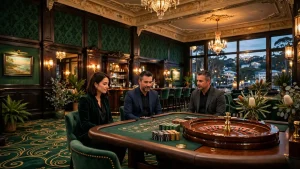 Hobart Casino: Poker, Stays and Venue DetailsLearn what a live poker room or tournament requires, why old event listings do not confirm games are running, and which venue…
I would also separate this technical explanation from an offer to play. Under Australia’s Interactive Gambling Act 2001, operators cannot provide real-money online casino games, including pokies, to people physically located in Australia. Explaining RNGs and RTP does not make online casino play a lawful service for Australian customers. It is a description of game mechanics, not a recommendation or a route to access.
Live poker searches should stay separate from those mechanics. A poker room and a tournament are on-site service questions; an online pokie is an individual game whose outcomes are generated spin by spin. Neither one confirms the availability of the other. And neither tells anyone whether a Queensland venue is open at a particular time.
From the inside, the useful distinction is plain: a room, a tournament and a pokie are three different things, even when broad casino wording puts them side by side. The mechanics are not the venue.
Breakfast and buffet searches point to specific services, not simply the presence of a casino or resort. A resort label does not, by itself, confirm that breakfast is served on site, that a buffet operates, or that either is included with a stay. Those details can change, so a current venue listing or direct confirmation is more useful than relying on an old travel page or a broad description.
The distinction matters for planning. “Breakfast” can refer to a meal offered at a particular time or as part of a stay; “buffet breakfast” describes a service format. A general buffet search does not establish what is served, when it is available, or whether access is limited to hotel guests. Without a current venue statement, those particulars should not be treated as settled.
Casino rewards can refer to an on-site membership or loyalty arrangement, while online gambling promotions are a separate matter. A search result using the word “rewards” is not proof that a Queensland venue has a programme, what it includes, or who can join. Any claimed benefit needs to be checked against the venue’s own current terms, including eligibility and conditions. The word “free” is not a substitute for those details.
Online casino bonuses should not be confused with venue loyalty benefits. The Interactive Gambling Act 2001 prohibits operators from providing real-money online casino games, including pokies, to people physically located in Australia. That includes online casino-style offers attached to those games. The rules governing an in-person venue’s membership, if it has one, are a different question from the legality of offshore online casino promotions.
Promotional terms can also shape the practical value of an online offer. A specialist report from psu.com describes bonus arrangements in which free-spin winnings carry wagering conditions; that is a report about particular offers, not a rule that applies to every promotion. In general, an advertised reward should not be read as cash available for withdrawal unless its terms say so. The fine print matters.
A search for a casino resort can combine questions about accommodation, meals and other services. Those categories need separate confirmation: a resort description alone does not establish buffet access, breakfast arrangements or a rewards programme. The same applies to job searches. A phrase such as “casino jobs” does not confirm that a particular employer is hiring, which roles are open, or what their conditions are. Current vacancies should be checked through the employer’s own recruitment channel rather than inferred from a general listing.
From the operational side, these distinctions are deliberate. A dining service, a guest benefit and an employment vacancy each has its own availability and terms; one cannot be inferred from the other. A promotional page can make several services look like one package, but only the stated conditions define what is actually included.
For Queensland-specific decisions, the reliable approach is to verify the named service and its current conditions directly with the venue or employer. Until then, breakfast, buffet access, rewards and vacancies remain separate questions—not assumed features of a casino resort.
Parking is a practical part of planning a visit, but a Queensland casino’s name alone does not establish what is available on site. I would not treat a search result or an old listing as confirmation of parking, valet service, fees or free spaces. Those details depend on the specific venue and can change; without current information tied to a confirmed address, none should be presented as a promise.
That distinction matters for searches about parking at a Queensland casino. “Free” and “valet” describe different arrangements, and neither can be assumed from the word “casino.” A reliable answer would need to identify the venue and state the applicable conditions, including whether a service is operating at the time of a visit. The same care applies to bingo or dining: a search for those services does not, by itself, confirm that a particular Queensland venue offers them.
The broader phrase “best casino in Queensland” can also blur two different subjects: visiting a physical venue and accessing an online casino. The legal position for online gambling is not an extension of a venue’s local services. Under the Interactive Gambling Act 2001, operators based in Australia cannot provide real-money online casino games to people located in Australia. That restriction applies to online casino-style services, rather than being a question of where a physical casino is situated.
Offshore platforms sit in a different legal position, but that does not make them Australian-regulated. Their status is often described as a grey area: Australian players are not generally criminally liable simply for using an offshore service, yet the service is not regulated under Australian law. That gap has practical consequences. If a dispute arises, Australian consumer and gambling protections may not apply in the same way they would to a lawful local service.
There is also a technical boundary. Online platforms can use an internet connection’s IP address to estimate the country from which someone is accessing the site. A platform may then restrict access to games or providers based on that location. A game not appearing in a lobby, or failing to load, can therefore reflect a regional restriction rather than a problem with a Queensland venue or its parking arrangements.
From the operational side, the wording matters. “Available online” does not mean legally available to someone in Australia, and a foreign licence does not turn an offshore casino into a locally regulated operator. I would keep the two decisions separate: confirm practical visitor details directly with the physical venue, and do not infer legal approval from an offshore site’s marketing.
No shortcut.
“Near” sounds precise, but it is only useful once the casino’s exact address is known. Without a confirmed venue location, naming a hotel, estimating a journey or describing a nearby neighbourhood would turn a broad accommodation search into guesswork. The same applies to claims that a property is within walking distance or offers a casino package. Distance needs a real starting point.
I separate accommodation connected to a casino from places found independently in the surrounding area. The first may be presented as a stay-and-play deal; the second is simply a separate lodging choice. Those are not interchangeable arrangements. A promotion’s wording does not establish that a room is inside the casino, that transport is included or that a booking comes with any particular benefit.
The practical comparison begins with the property’s own details: its address, room availability for the intended dates, total price and cancellation conditions. Those details should come from the accommodation provider or booking terms, not from a headline that says “casino deal”. A discounted rate can still have conditions attached. Read the price and conditions together. That is the useful part.
For a stay near a casino, distance should be checked against the actual venue address, not inferred from a broad Queensland label or a property’s use of the word “nearby”. A map can show the route, while the property can confirm its address and access arrangements. Travel time may differ from straight-line distance, so a nearby pin on a map is not a promise of an easy trip.
I also treat casino promotions and accommodation offers as separate claims until their terms connect them. A casino promotion does not, by itself, mean that a room is included. An accommodation special does not establish access to casino services. If an offer is described as a package, its written conditions should spell out what is included, when it can be booked and what restrictions apply. The label is not the deal.
The word “Queensland” can make a listing sound more specific than it is. It identifies a state, not a particular casino entrance or a set of nearby stays. Before making travel plans, the venue and property details need to line up: the casino’s confirmed location, the accommodation’s confirmed address, and the booking conditions for the relevant dates. If any part is unclear, the distance and total cost remain unclear too.
I would not treat an advertised accommodation deal as evidence of a particular property, price or partnership without terms that establish it. Nor would I assume that casino opening times, gaming-machine availability or parking arrangements follow from a room listing; those are separate venue details and need their own confirmation.
A sound comparison is deliberately plain: identify the venue, verify the accommodation address, compare the full booking terms and keep any promotion distinct from the room price. Until those details are clear, “near a Queensland casino” describes an intention, not a confirmed location or offer. No shortcut.
A contact number, map pin or bar listing can look definitive while referring to an old directory entry, a nearby business or a venue with a similar name. I treat those details as separate checks: the venue’s identity, its current contact channel, and the address attached to that channel. A map result is useful for orientation, but it is not proof that the pin marks a casino entrance or that the listed services are on site.
For a Queensland casino contact, the practical distinction is between a general switchboard and a department-specific line. A general number may route enquiries about access, parking, entertainment or gaming; it does not confirm the answer to any of them. Before travelling, current contact details and the intended destination need to match across the venue’s own channels. Old event pages and third-party listings can remain visible after their information has changed. A small check prevents a wasted trip.
The same caution applies to a casino bar. A bar appearing in a map search may be nearby rather than part of a casino, and a venue’s name alone says little about current service or entry arrangements. I would not read “casino bar” as a promise of opening times, a particular atmosphere or a drinks offer. Those are operational details, not things a search label can settle.
Baccarat and craps are table-game terms, but their appearance in a venue listing does not establish that either game is offered at a particular Queensland property. Nor should an online game lobby be mistaken for a physical casino floor. The legal distinction matters: under the Interactive Gambling Act 2001, operators based in Australia cannot provide real-money online casino games, including table games, to people in Australia. A listing for an in-person venue and an online casino service are not interchangeable.
Parking and car-park details need the same location check as a map pin. A result might identify a nearby public car park rather than casino parking, and a map route does not establish access arrangements, capacity or fees. Those specifics should come from a current venue contact or official location information, not from an assumption based on the word “casino.” Practical details change. Confirm them close to the visit.
Concert listings are similarly time-sensitive. A past event page can remain indexed, while a general entertainment label does not confirm a forthcoming performance. The useful details are the event date, venue location and any entry instructions, checked together against the current event announcement. Without that match, the listing is only a lead.
I have seen how a tidy directory entry can turn into a confident but wrong instruction. Contact details, maps, bars and table games each answer a different question; none should be used as a stand-in for the others. Verify the exact venue and the specific service before relying on a listing. Details first. Assumptions later.
“Open” can mean more than a lit entrance. A casino may have different operating arrangements for its gaming floor, entertainment spaces and other services, and those arrangements can change. I would not treat a general listing or an old review as confirmation that a venue is open at a particular time. Check the venue’s own current information before making a trip, especially where a reopening or temporary change is involved.
The same caution applies to event details. A listing may refer to a past performance, a future booking or a function that is not open to the public. The name of an event alone does not establish its date, access conditions or whether it is still going ahead. For Queensland casino entertainment, the useful details are the venue’s current event notice and any conditions attached to attendance. No guesswork. Dates matter.
Development announcements need similar care. A proposal, a planning step and a completed project are not interchangeable. A headline about a Queensland casino development does not, by itself, show that work has started, that facilities have opened or that visitors can use them. I look for a clear status and an update from the organisation responsible before treating a development as an operating feature.
Employment information also changes. A past vacancy or recruitment notice does not show that a role remains available, while a general careers page does not confirm a particular opening. Applicants need the current listing and its stated requirements, rather than assumptions based on a venue’s size or a news report. These are separate questions: whether a casino is operating and whether it is hiring.
A Queensland casino review can be useful for describing one person’s experience, but it is not a reliable substitute for current operational information. Reviews may predate changes to hours, events or facilities. I separate opinion from details that need to be current, and avoid treating a review as proof of a reopening or development milestone.
Menu references should be checked directly with the relevant venue as well; a menu reproduced in an older listing may no longer apply. That is a practical verification point, not a claim about what any Queensland casino serves.
For a decision about visiting, the order is simple: confirm the venue’s current operating status, then check the specific event or service being planned. For development and employment, establish whether an announcement is current and what stage it describes. Until those details are confirmed through an appropriate current channel, opening hours, reopening status, events, jobs and project timelines should be treated as unconfirmed—not filled in with plausible-sounding assumptions.
A venue name is not an address. I have seen practical plans go wrong when a broad label is treated as enough to identify a particular property. Before arranging a visit, the useful details are the exact venue name and its street address, matched against an official operator listing. Map results and directory pages can help locate a place, but they should not be treated as confirmation that a listing is current.
The same caution applies to searches for a day spa or spa inside a casino. A name that suggests a resort or entertainment complex does not establish that a spa operates there, what treatments it offers, or whether it is open to non-guests. Those are separate services, often managed and updated independently. The practical distinction is simple: confirm the facility and its booking arrangements through the relevant venue or service provider rather than inferring them from the casino name.
Dress codes are also venue-specific. A general idea of what is suitable for a night out does not establish a casino’s entry policy, and requirements can differ between areas within a property. Promotional language such as “smart casual” is only useful when it is tied to a current, clearly stated policy. The detail that matters is what the venue actually permits at the intended entrance or service.
Bars call for the same separation between a broad venue description and a confirmed listing. A bar’s presence, name, location within a property, service hours and entry conditions should not be assumed from a casino search result. Those details can change, and a map pin alone does not settle them.
Career searches need a different route. A casino-branded vacancy may relate to the operator, a contracted service or another business on the premises. The employer named in the position listing is the meaningful detail; the venue name alone does not identify who is hiring. Official recruitment pages are a better starting point than an old vacancy copied to a third-party board.
“Casino games” is similarly broad. It can refer to different forms of entertainment, but a search phrase does not confirm which games a Queensland venue provides or the conditions that apply. I keep that distinction sharp: a venue-specific service needs a venue-specific confirmation. Assumptions fill space. They do not verify a visit.
Restaurant information attached to a casino name can refer to several different things: a dining room inside the venue, a separately operated business within the same complex, or a restaurant nearby. Those distinctions matter. A listing that places a restaurant “at” a casino does not, by itself, establish who operates it or whether it is part of the casino’s own facilities.
Restaurant information can refer to a dining room inside the venue, a separately operated business within the same complex, or a restaurant nearby. A listing placing a restaurant "at" a casino does not automatically establish who operates it.
I treat a venue name as a starting point, not proof of a current dining arrangement. Restaurant pages, booking platforms and older reviews can remain visible after menus, trading schedules or business arrangements have changed. The useful details are the ones tied to a current official venue or restaurant page: the restaurant’s own name, its location, its service times and any booking conditions. A dated menu is more informative than a short directory entry. Still, even a current menu does not establish that every item is available at every service.
The same care applies to claims about cuisine, prices, dress expectations and special occasions. These are operational details, not permanent features of a casino. A menu can change with season or service, and a booking policy may differ between restaurants in the same precinct. I would not infer a particular dining style or level of formality from the word “casino” alone. Marketing language is not a menu.
“Rooftop” also needs to be read precisely. It may describe a bar, a restaurant, a shared terrace or simply a view from an upper level. Those are not interchangeable. A rooftop bar is not necessarily a restaurant, and a venue’s use of rooftop imagery does not establish that dining is served there. The distinction is practical: food service, seating arrangements and booking information should be stated separately rather than assumed from a photograph or a broad venue description.
For Queensland casino dining, the sensible comparison is therefore based on named, current establishments and the details each one publishes—not on a general impression that a casino complex must include a particular kind of restaurant. Nearby businesses can be relevant to a visit, but proximity alone does not make them casino restaurants. Likewise, a restaurant associated with a wider precinct may have separate management and conditions.
I have seen how listings acquire an unwarranted air of certainty through repetition. One copied description appears across several directories, then looks like independent confirmation. It is not. A direct, up-to-date restaurant listing carries more weight than repeated snippets, especially for menus and service arrangements. Check the precise business identity. Then check the detail itself.
Food and a food court are not interchangeable descriptions. “Food” can refer broadly to places to eat, while a food court means a particular shared dining format. Treating the terms as equivalent can make a venue seem to offer a facility it may not have. In practical checks, the useful distinction is whether a listing identifies a specific food-court area or simply refers to dining on or near casino premises.
The same care applies to a pool. A pool may belong to a hotel or another part of a wider complex rather than the casino itself. A property name shared across facilities does not establish that every amenity is operated by, or available through, the casino. The wording of a listing matters.
I have learned to read amenity labels literally. “Food nearby” does not mean food inside the venue; “pool access” does not, by itself, explain where the pool is or who can use it. Short descriptions often compress those distinctions. Details matter.
For Queensland, searches about casino food, a food court or a pool should be treated as separate questions, not as proof that any particular facility exists. A reliable venue description would name the facility and make its relationship to the casino clear. If it does not, the label alone cannot settle the point.
That distinction keeps general food information separate from a claim about a dedicated food-court facility, and a hotel amenity separate from a casino amenity. It also avoids turning a broad property description into a promise about what is available at a specific Queensland casino.
An RNG determines each spin, and each spin is independent of previous results. RTP is the theoretical percentage of wagers returned over a very large number of spins, not a guarantee for an individual session.
Yes. The Interactive Gambling Act restricts operators based in Australia from offering online casino games such as pokies, blackjack and roulette to people in Australia. Offshore platforms are not regulated under Australian law, although it is technically not illegal for Australian players to use them.
NetEnt blocked its wide-area progressive jackpot games, including Mega Fortune and Hall of Gods, from Australian players. NYX Gaming/Next Gen titles such as Foxin’ Wins and Doctor Love have also been region-blocked; availability can depend on the player’s location and the provider’s or casino’s restrictions.
Progressive jackpot pokies add a small share of each bet to a growing jackpot, and some games let players pay a set amount to enter a bonus round directly. Free-spin winnings may come with wagering requirements before withdrawal.