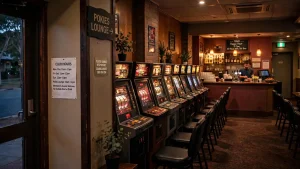
A demo can help show how a game looks and plays, but it cannot establish that credits are cash or that paid sessions behave the same way.

A free-play option, when a casino or game provider makes one available, removes the stake from the session. That changes what the session can establish. It can let someone see how a game presents its buttons, symbols and pace without risking money. It cannot show that a balance accumulated on screen is withdrawable cash, or that the same outcome would have been produced in a paid session.
That distinction matters when looking for a free way to try Big Red. The wording of a game name beside “free” does not establish that an authorised version exists, that a particular site carries it, or that the session uses the same configuration as paid play. A result found on a screen is evidence of what happened in that session, not proof of a payout route. There is no reason to treat a displayed credit total as money owed.
In the trade, “free” can sound more complete than it is. The word may describe a trial environment, a promotional feature, or simply the absence of a cash stake; those are not interchangeable conditions. The practical question is what the session actually permits. If credits cannot be converted into a withdrawable balance, the play is practice or entertainment, not a way to earn winnings. Clear wording matters.
Choosing a big red pokies site is worth a closer look at the practical details behind the offer. This list gives you a quick reference to the operator information available for each option.
7Bit Casino
7Bit Casino is operated by Dama N.V. and holds a Curacao license.
MrPacho
MrPacho lists a minimum deposit of A$30. Its stated payout times are 30–120 minutes for crypto and 24–72 hours for fiat.
SkyCrown
SkyCrown is licensed by the Tobique Gaming Commission. Its stated payouts take around 10–15 minutes for crypto and 1–5 days for fiat, with a A$30 minimum deposit.
Wild Tokyo
Wild Tokyo holds a Curacao license and has a A$10 minimum deposit. Stated payout times are 30–60 minutes for crypto and 1–5 days for fiat.
Uptown Pokies
Uptown Pokies has operated since 2017 under a Curacao license. Its minimum deposit is A$20.
Thor Casino
Thor Casino is licensed in Curacao by Antillephone N.V. for Versus Odds B.V. Its minimum deposit is EUR 20.
Roby Casino
Roby Casino is licensed by Curacao eGaming, with Roby Games Ltd listed as the operator.
Ricky Casino
Ricky Casino lists crypto payouts in under an hour and PayID payouts in 1–3 business days. The minimum deposit is A$20, or A$30 to qualify for the bonus.
GoldenCrown
GoldenCrown holds a Curacao Gaming Control Board license, OGL/2023/176/0095, with Hollycorn N.V. listed.
LevelUp Casino
LevelUp Casino holds a Curacao eGaming license, OGL/2023/174/0082, and is operated by Dama N.V. Its minimum deposit is A$15.
A no-stake session can be useful for assessing the experience of using a game. It may reveal whether the controls are understandable, whether the visual presentation is comfortable, and how the game behaves during the time spent with it. That is a modest but genuine form of testing. It is about familiarity and preference, not financial performance.
It can also expose the gap between the idea of a game and the experience of playing it. A title may sound appealing, while its pace or presentation does not suit a particular player. Finding that out without placing a stake is a reason to value free play as a test. The test is of the session itself.
But the boundary is firm. Free credits are not a sample of future cash winnings, and a pleasing run does not establish that paid play will reproduce it. Each spin is produced through a Random Number Generator, so outcomes are not a sequence that can be read from a free session and carried over into another one. A trial may show the kinds of screen events the game displays; it does not turn them into a forecast.
The same caution applies to any apparent “win” in a free session. If the credits are supplied for practice and cannot be withdrawn, a rising balance is only a result within that environment. It may make the session more engaging, but it does not establish a cash value or create a claim to payment. The label on the balance is less important than the rules governing whether it can leave the game.
Free play cannot establish the amount a cash session would return. Nor can a trial, by itself, verify that paid play elsewhere behaves identically. A game name alone does not answer what configuration is in use, while a free session does not prove which terms would govern a separate cash session. Those are separate questions, not details that can be inferred from a practice balance.
This is why free Big Red play should be understood as a search for an experience, not a route to money. Even if a page presents a matching title and a play button, that presentation does not by itself prove the game’s identity, its cash availability or the conditions attached to paid play. A cautious reading separates what is visible from what is being implied. A familiar-looking screen is not a payout promise.
The test can still serve a purpose. It can show whether the format holds attention, whether the controls make sense, and whether the game is worth learning about further. Those observations have value precisely because they do not require a wager. They should not be stretched into a claim about likely cash results.
I have seen promotional language blur that line: “try for free” sounds like a preview of a larger opportunity, when the only certain thing may be that no stake is being placed in that session. The useful interpretation is narrower. Free play can answer, “Is this experience appealing?” It cannot answer, “What will a paid session pay?” or “Can these credits be withdrawn?” unless the applicable terms explicitly say so.
For anyone considering a free version of Big Red, availability should not be assumed from the search phrase or the title alone. A free option, if encountered, needs to be judged by what it actually offers: practice credits, playable features and clear conditions. No cash stake means no cash outcome to collect. A test, not a payout route.
“Big Red” sounds like a clear game title, but a familiar name is not a complete description of a pokie. It does not, by itself, identify a provider, establish which version is meant, or confirm that a game with that title is available to Australian players. Those details need to be tied to a specific game listing or provider record. Without that link, claims about its symbols, features or way of paying out would be guesswork.
That distinction matters because pokie names are easy to repeat and hard to verify in isolation. A casino listing may use a shortened title; a search result may refer to a different game with similar wording; and promotional copy can describe a theme without identifying the underlying software. I have seen how a confident-sounding label can make a page feel specific while leaving the important identification question unanswered. The name is a starting point, not proof.
A game’s actual rules are found in its paytable and information panel, where available. These explain what combinations count, how the symbols are evaluated and whether the game has features beyond its base play. Those details belong to the particular version, not to a general impression created by its title. No particular reel layout, symbol set, bonus round or jackpot feature can be attributed to Big Red on the name alone.
A title cannot show whether a game uses a particular number of reels, fixed or changing paylines, or a different way of evaluating winning combinations. Those are design choices. In a conventional reel-based pokie, symbols appear in positions across reels, and the game’s rules determine which arrangements qualify for a return. Some games use paylines; others may use different combination rules. The exact method has to come from the game’s own instructions.
Nor does a title tell us whether a feature is present or how it works. Free spins, expanding symbols, bonus rounds and jackpots are familiar features across the wider pokie market, but familiarity is not evidence that any one of them belongs to this game. A name can suggest a theme; it cannot substantiate a mechanic.
The same caution applies to claims about a game being “classic” or “high paying.” Those are advertising descriptions unless supported by the rules and relevant settings. A theme or visual style does not determine how often a feature appears, what a qualifying combination returns, or how a session will unfold. The wording may be memorable. The rules do the actual work.
At a general level, a pokie combines a set of game rules with a random outcome for each spin. A player selects a stake and starts a spin; the game then displays an outcome, which is assessed under its rules. The paytable explains which outcomes return something and how the game handles them. That is the useful framework for reading any pokie description, including one using the Big Red name.
A paytable is not a forecast. It describes the conditions attached to outcomes, rather than promising when an outcome will occur. Nor does a list of features prove that a particular session will trigger them. In practical terms, a game can be understood through its documented rules, but a title or promotional summary cannot fill gaps in those rules.
Each pokie spin is determined by a Random Number Generator and is independent of the preceding spin. That is a general mechanic, not a Big Red-specific feature. It means the displayed result of one spin does not supply evidence about what the next one will show. A run of symbols, whether it looks favourable or not, does not reveal a pattern that can be used to identify the game’s design or predict an outcome.
A sound identification would connect the displayed title to the provider and the game’s own information, then match those details against the rules shown in the actual listing. If the title appears without those identifiers, the sensible limit is clear: the name can be discussed, but precise claims about the game cannot be treated as established.
That is especially important when a page presents details as though they are universal. A description of one similarly named pokie is not automatically a description of another. Even an accurate account of one version would not establish that a different casino listing uses that version. Names travel further than specifications.
For Big Red, the distinction is between what the label evokes and what a documented game can support. General pokie mechanics explain how to read a game’s rules; they do not supply missing rules for a particular title. The name alone cannot settle the game’s identity, features or availability. Without a reliable game-specific record, restraint is the accurate account. No embellishment needed.
The legal distinction is between the company supplying an online pokie and the person who plays it. Under the Interactive Gambling Act 2001, an operator cannot lawfully provide real-money online pokies to people in Australia without a domestic licence. No such licences have been issued, and there is no Australian-licensed online casino.
That prohibition is aimed at the service provider, not at an individual player. Australians are not made criminally liable simply for playing on an offshore site that accepts them. This is a narrow distinction, not a sign that the service is authorised in Australia: an offshore operator can still be providing a service that it is not permitted to offer here.
I have found that people often read the absence of a player penalty as a form of consumer protection. It is not. The rule about who the law targets does not create an Australian licence for an offshore casino, nor does it give a player a domestic body that can compel the operator to pay. Different questions. Different protections.
The legal position is not that real-money online casinos are regulated locally and available under Australian supervision. The Interactive Gambling Act prohibits the provision of these services to customers in Australia unless the operator holds a domestic licence, and none has been issued. An offshore company’s presence online, or its willingness to accept Australian customers, does not change that position.
The Australian Communications and Media Authority enforces the Act and blocks access to illegal offshore gambling sites. Internet service providers must comply with its blocklist. Blocking is an enforcement measure against access; it does not turn an offshore site into an Australian-licensed business, and it cannot be treated as a guarantee that every offshore service is unreachable at every moment.
For a person considering whether a named pokie can be played for money, the central issue is therefore not just whether a site displays the game or accepts a deposit. The legal status of the operator and the practical ability to recover money are separate matters. A game listing does not establish that the service is lawful or that a payout will be protected.
The most consequential practical gap appears after a win. If an offshore casino refuses to pay, Australian players have no legal recourse in Australia against that operator. The problem is not merely delay: the domestic protections available against a locally licensed casino do not exist, because there is no Australian-licensed online casino to oversee the transaction.
That changes the meaning of a displayed balance. A figure in an account is not the same as money received in a bank account. The operator controls the account and its withdrawal process, while the player has no Australian regulator able to order that offshore business to honour a disputed payment. A site’s own terms may describe a complaint route, but that is not equivalent to enforceable domestic recourse.
I regard this as the part promotional language tends to soften. “Available” can mean only that a page loads or an account accepts funds. It does not establish lawful local provision, reliable payment, or a remedy if the operator withholds winnings. No local backstop.
The legal minimum age for gambling in Australia, including online pokies, is 18. That age rule does not alter the operator prohibition or provide payment protection to adults. The law’s practical division remains straightforward: operators are prohibited from supplying real-money online casino games to people in Australia without a licence that has not been issued; individual players are not the target of that prohibition, but they may still face the loss of funds without Australian recourse.
The useful way to think about a pokie spin is as a separate event, not as the next step in a story. Each spin is determined by a Random Number Generator (RNG), and each one is independent of the spins before it. A win does not make another win more likely; a run of losses does not make a win “due”. The sequence can look meaningful without carrying a message.
That distinction matters when considering how to play Big Red or any other pokie. People naturally look for patterns: a symbol that seems to be appearing often, a near miss, or a run of results that feels unusually long. Those observations describe what has already happened. They do not reveal what the RNG will determine next.
Random sequences do not have to alternate neatly between wins and losses. They can contain clusters. Several similar results in a row may feel like evidence that the game has entered a phase, but the feeling comes from reading a sequence as a pattern. It does not change the independence of the next spin.
A previous result can therefore be remembered, counted or discussed, but it cannot serve as a forecast. The same applies to a long stretch without a particular result. “It has not happened for a while” is a description of the past, not a force that makes the next outcome more likely.
I have seen that distinction get blurred in ordinary talk about play. A streak is treated as a clue; a near miss becomes a hint; a pause is mistaken for a reset. None of those interpretations follows from the independence of spins. The machine is not keeping a visible score of what it supposedly owes.
The symbols shown after a spin are the result, not an explanation of what will follow. A display may make one outcome feel close to another, especially when familiar symbols appear together. But a visual impression is not evidence that a future spin is being guided toward a particular combination.
This is why choosing a moment to spin, repeating a pattern of button presses, or waiting after a loss cannot be treated as a way to read the next outcome. Those actions may change the rhythm of a session, but they do not turn earlier results into information about the next RNG-determined event.
The same reasoning applies when someone plays Big Red pokies and sees a result that seems to confirm a personal system. One successful sequence can make a system feel persuasive; it still does not establish that the sequence predicts anything. Random outcomes can match a belief by chance. That match is not proof of a signal.
Independent does not mean that every short stretch will look evenly balanced. It means each spin stands on its own rather than being caused or corrected by the previous result. Expecting a tidy alternation is another way of trying to impose a pattern on a random sequence.
My rule is simple: record a past result as history, not advice. It may explain why a session felt exciting or frustrating, but it cannot tell what the next spin will do. No hidden cue. No reliable “due” moment.
Free online play sounds straightforward: open a game, make spins without staking cash, and get a feel for its pace. In practice, that phrase can describe different arrangements. A site may offer a no-stake mode, a promotional feature, or a version intended only for entertainment. Those are not interchangeable, and the label alone does not establish what is available for a particular game.
That distinction matters with Big Red. The wording “play free” expresses an expectation, not proof that an online version or free-play mode is currently offered. I would not treat a result from a general games catalogue, a search listing, or a page using the title as confirmation. The useful check is whether the actual game screen identifies a no-stake mode and makes clear how it works. Without that, availability remains uncertain.
Free modes can be used to assess the experience of using a game, revealing if controls are understandable and if the visual presentation is comfortable without risking money.
If a free mode is present, its practical value is limited but real. It can show how the controls respond, how the screen is arranged, and whether the pace and presentation are comfortable. It can also help separate the basic act of operating a game from the decision to risk money. That is a modest test of usability, not a guarantee about what another version will do.
The wording on a site deserves attention. “Free” may refer to a play mode with no cash stake, but promotional language can also be attached to conditions or a particular account feature. The screen should make clear whether any balance is virtual, whether a real-money account is involved, and what actions are available. If those points are blurred, the headline has done more work than the explanation. That is a warning sign about clarity, not evidence of a particular game feature.
A free session is also easy to overread. A run of wins can feel like evidence that the game is generous; a dry spell can feel like a pattern that is about to change. Neither impression provides a reliable basis for judging later play. Each pokie spin is determined independently by a Random Number Generator. The apparent rhythm of a short session is just what happened in that session, not a message about what should happen next.
I have seen people treat practice as a rehearsal for a later cash session. That is understandable, but the comparison has limits. Familiarity with buttons and screens may carry over if the same version is being used. A result, balance, or sequence seen in a free mode does not establish what a separate version will produce, or whether its settings match. A familiar name is not a specification.
There is another practical limit: free play can make time feel less costly because no stake is visibly leaving a balance. That can encourage longer sessions than intended. A mode without a cash stake is still an activity with a beginning and an end; it need not become a test of persistence. Setting a stopping point before starting is a simple way to keep “just practising” from turning into an unplanned stretch of play.
For anyone looking specifically for Big Red online, the careful answer is conditional: free play is worth considering only if the game itself is clearly presented in a no-stake mode. The title alone does not establish that such a mode exists. Treat the session as a limited look at interface and pace, and keep its impressions separate from claims about future outcomes or other versions. A small test. Nothing more.
A demo session can make the visible rhythm of a pokie easier to follow: how a spin is presented, how symbols appear, and what the game displays when a feature is triggered. That is a narrow kind of evidence. It concerns the version running in that session, not a promise about what another session will produce. Nor does the label “demo” establish that a particular Big Red version is available to try.
The distinction matters because a run of spins is a sample, not a forecast. Each spin is an independent event determined by a Random Number Generator. A cluster of wins, a long stretch without one, or a feature appearing early says nothing reliable about what the next spin will do. I have seen session results treated as if they revealed a pattern; that is an easy conclusion to draw when outcomes are displayed one after another. It is still not a signal.
A demo can therefore show how the game behaves on screen in the session being observed. It cannot demonstrate that the same sequence, frequency of features, or apparent rhythm will recur. A short session is especially poor evidence for broad conclusions. Even a long one remains a record of those spins, not a forecast.
There is another limit: the return setting. A specialist review reports that some providers let casinos choose among multiple RTP settings for a given pokie. The same game may therefore have different return percentages in different casino configurations. A demo session does not, by itself, identify which setting is active elsewhere—or establish that a real-money version uses the same one. Seeing wins in a demo is not proof of a higher RTP; seeing losses is not proof of a lower one.
This is where demo language can overstate its value. “Try before you play” sounds like a test of likely results. In practice, it can only offer an observation of one session’s presentation and outcomes. It cannot certify a return percentage or predict future play. The distinction is plain. A session is not a forecast.
A pokie’s title identifies a game; it does not, by itself, identify the return setting used by a particular casino. A specialist casino review reports that some game providers let operators choose from multiple RTP settings for the same pokie. On that basis, the same title may be configured with different return percentages at different casinos.
RTP, or return to player, describes a proportion of stakes expected to be returned over a very large number of plays under a particular setting. It is not a forecast for an individual session, and it does not mean that a player will receive that proportion back. The important distinction is between the game’s name and the configuration actually supplied by an operator.
That distinction matters when people compare versions of a named pokie, including games they associate with Big Red. A familiar title, matching artwork or similar-looking game screen cannot establish the RTP setting. Nor does a casino’s description of a game settle the point unless it identifies the relevant setting clearly. A percentage quoted for one casino should not automatically be carried over to another.
In my experience, marketing tends to make the title do more work than it can bear. “The same game” sounds like a complete comparison, but it may conceal a configuration difference. The name can remain unchanged while the return setting differs. That is a small technical detail with a real effect on what the published RTP means.
The review’s statement is not evidence that every provider offers selectable settings, or that any particular Big Red pokie has more than one. It supports a narrower point: some providers permit this choice, so the title alone is not enough to determine the return percentage at a given casino. Without an operator’s specific information about the setting, a precise comparison cannot be made responsibly.
This also limits what can be inferred from a list of games or a shared label. Matching names do not prove matching settings, and a general RTP figure cannot be treated as a universal property of the title. The setting is the detail that matters; the branding is not a substitute.
A request for a Big Red download is really a question about how the game is delivered: as installed software, through a mobile app, or inside a browser. Those are separate arrangements. An app may be a casino’s general-purpose client rather than a standalone copy of one pokie; browser access, by contrast, means the game is loaded within a web page without installing a dedicated game file.
It would be misleading to turn a familiar installation route into a claim about this particular game. A page describing an app, an icon in an app store, or a general statement that a casino works on phones would not, by itself, establish that Big Red is included.
The distinction matters because “download” can describe several things. It might refer to a casino application, a game client, or a file offered by an unrelated site. Those are not interchangeable. A file carrying a familiar game name is not proof of an authorised release, and installing software does not demonstrate that the named pokie will run on the device. I have seen the word “mobile” used as a broad compatibility label; behind it, the actual product may simply be a website adapted to a smaller screen.
Browser play is also not something that can be inferred from the existence of a desktop or mobile site. The game itself must be available in that environment. No how-to can responsibly bridge that gap.
For a real-money casino service, availability is not the only issue. The Interactive Gambling Act 2001 prohibits operators from providing real-money online casino games to people in Australia, and no Australian online casino licence has been issued. A download link does not change that legal position, nor does an app format turn an offshore service into a domestically licensed one.
The practical conclusion is narrow: the name alone establishes no download, app or browser access for Big Red. Installation and web access are different technical routes, but neither should be assumed for this game. Evidence first. No shortcut.
The kangaroo wording suggests a particular version of Big Red, but the wording alone does not establish that such an edition exists. It may describe how someone remembers a game, a theme they expect to find, or a label used informally. Those possibilities are not the same as a confirmed title.
That distinction matters in pokies. A familiar name can travel further than the details attached to it. A listing, image or short description may give the impression of a separate variant without showing that the game has a distinct, recognised release. I have seen how easily a descriptive phrase becomes treated as a product name once it is repeated. Repetition is not confirmation.
So “kangaroo” should not be read as evidence of a particular feature, symbol set, bonus round or game version. Nor does the phrase establish where the game can be played, whether it is offered online, or whether a particular casino carries it. Those are separate claims, each requiring clear identification of the game and its source. The name does not fill in those details.
This is not a claim that no kangaroo-themed pokie could exist. It is a narrower point: the specific Big Red kangaroo variant cannot be substantiated. Without dependable identification, attaching mechanics or availability to it would turn an assumption into a description. That is how inaccurate game pages acquire confident-sounding detail.
The practical way to read the phrase is as an unconfirmed variant description, not as a reliable catalogue entry. A genuine listing would need to identify the game consistently, rather than relying on a suggestive phrase or artwork. Until then, there is no sound basis for treating “Big Red” and a kangaroo reference as proof of a separate edition.
Names can be suggestive. They are not specifications.
Yes, Australian players can legally play on offshore sites that accept them, but offering real-money online pokies to Australians without a domestic licence is illegal for operators. No Australian online casino licences have been issued, and players have no legal recourse in Australia if an offshore casino withholds winnings.
Yes, if a casino or game provider offers a free-play option. It can help you try the controls and presentation, but practice credits that cannot be withdrawn are not cash winnings.
No strategy can predict a spin: each one is an independent random event. Treat free play as a way to assess the experience, not as a guide to future cash results.
Yes. Some providers let casinos choose between multiple RTP settings for the same game, so check the RTP shown for the specific game version.