Accommodation proximity, venue facilities and casino-related searches are separated from details that require direct venue-level confirmation.
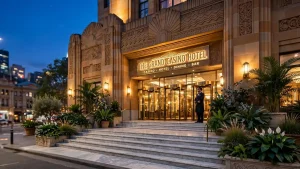
A casino hotel and a hotel near a casino are not the same booking. The first description implies a direct relationship between the accommodation and a casino venue, often because they share a site, operator or building. The second only describes proximity. A hotel can be close to a casino without being owned by it, connected to it or offering casino-related services.
That distinction matters when interpreting accommodation listings for Canberra. A property’s location, name or marketing language does not establish a casino connection. Nor does a listing for a room establish that the room is available on the dates being considered. Each claim needs to be checked at the level at which it affects the stay.
I have seen how quickly these categories become blurred in booking copy. “Casino stay” sounds like a package, but it can mean anything from a room in a property associated with a venue to an ordinary hotel booking made by someone planning to visit a casino elsewhere. The wording is not the arrangement. The terms are.
Choosing an online casino while in Canberra means weighing the details that are actually available for each option. This list gives a concise reference point for the operators featured on this page.
7Bit Casino
7Bit Casino is operated by Dama N.V. and holds a Curacao licence.
MrPacho
MrPacho lists crypto payouts at 30–120 minutes and fiat payouts at 24–72 hours. Its minimum deposit is A$30.
SkyCrown
SkyCrown is licensed by the Tobique Gaming Commission. Listed payout times are around 10–15 minutes for crypto and 1–5 days for fiat, with a A$30 minimum deposit.
Wild Tokyo
Wild Tokyo holds a Curacao licence and has a A$10 minimum deposit. Its listed payout times are 30–60 minutes for crypto and 1–5 days for fiat.
Uptown Pokies
Uptown Pokies has operated since 2017 and holds a Curacao licence. Its minimum deposit is A$20.
Thor Casino
Thor Casino is licensed in Curacao by Antillephone N.V. (Versus Odds B.V.). Its minimum deposit is EUR 20.
Roby Casino
Roby Casino is licensed by Curacao eGaming, with Roby Games Ltd named as the operator.
Ricky Casino
Ricky Casino lists crypto payouts in under an hour and PayID payouts in 1–3 business days. The minimum deposit is A$20, or A$30 to qualify for the bonus.
GoldenCrown
GoldenCrown holds a Curacao Gaming Control Board licence, OGL/2023/176/0095, under Hollycorn N.V.
LevelUp Casino
LevelUp Casino holds a Curacao eGaming licence, OGL/2023/174/0082, under Dama N.V. Its minimum deposit is A$15.
When accommodation is described as a casino hotel, the useful question is what the relationship actually is. Is the casino located within the same property? Is the hotel operated by the casino business, or is it an independent hotel nearby? Does the booking include any venue access or other specified benefit, or is it room-only accommodation? Those details are not interchangeable, and a headline alone cannot answer them.
The difference can affect practical matters such as the route between a room and a venue, which business handles a booking issue, and whether a package benefit is included. These are not details to infer from a photograph or a broad location label. They belong in the property description and booking conditions.
“Casino hotel” is often the most attractive shorthand in a listing because it suggests a single, convenient experience. The precise arrangement is less glamorous: two businesses may have separate terms, separate booking systems and separate responsibility for service. Read the actual booking conditions.
A nearby hotel is a separate category. “Near” can describe a location without saying how easy it is to travel between the hotel and a venue. It does not establish walking access, transport availability, travel time or a direct connection. Even a map pin cannot confirm the route a guest would use at a particular time.
For a stay in Canberra, the sensible comparison is therefore between named properties and their published location information, rather than between broad labels. A property’s own site and the booking terms are the places to establish its address, room type, availability and cancellation conditions. If a third-party listing uses a casino-related description, the wording should be checked against the hotel’s own information and the venue’s official material.
I would treat proximity as a map question and affiliation as a business question. They require different evidence. One does not prove the other.
A room listing describes a specific product, not every room in a hotel. Room names, bed arrangements, views, accessibility features and included services can differ within one property. A general photograph may show a representative room rather than the exact room category attached to a rate. Availability also changes by date and booking channel, so an old listing or a search result snippet cannot stand in for a live booking confirmation.
The same applies to claims about amenities. A feature shown in a property’s general description may not be available in every room or included in every rate. The practical check is the room-level description and the conditions presented before a booking is confirmed. Where a feature matters, it should appear explicitly in the terms or be confirmed directly by the property.
“Room deal” can also conceal what is being compared. A lower displayed rate may have different cancellation conditions, inclusions or payment timing from another offer. A room price is not a complete comparison unless the room category and booking conditions match. That is the part promotional tiles tend to compress.
A deal is meaningful only when its conditions are clear. The rate may depend on dates, length of stay, room category, booking channel or a particular package. A label such as “special” does not, on its own, show what is included or whether the terms suit a particular stay. The booking page should make clear what is being purchased and what happens if plans change.
If a package refers to casino access or a venue benefit, the benefit needs a concrete description: what it covers, who can use it, and whether it is tied to the room reservation. A hotel discount and a casino offer are not automatically the same promotion. Nor should a guest assume that a booking made through one business creates entitlements at another.
This is where the industry language can be slippery without being technically false. “Exclusive” may describe a booking channel, not an exclusive room. “Package” may mean several items bundled together, but the actual inclusions still govern. A headline is not a term.
Opening hours are a separate operational question. They can matter when planning an evening around a venue, but they do not establish that a hotel exists on-site, that rooms are available, or that a booking includes access to anything beyond accommodation. Venue hours should be confirmed through the venue’s own current information; room availability and hotel services belong to the accommodation provider.
Keeping those checks separate prevents one assumption from doing the work of another. A venue’s operating schedule cannot confirm a hotel’s reception arrangements or check-in policy. A hotel booking cannot establish a casino’s current hours.
For anyone comparing a Canberra stay, the clean sequence is straightforward: identify the property, establish whether it is on-site or merely nearby, confirm the specific room and dates, and read the rate conditions. If the listing promises a relationship or benefit involving a casino, check that claim with the businesses responsible for it. Those are separate checks. No shortcut.
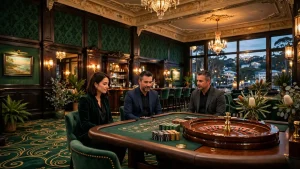
A poker room and a room with electronic gaming machines are not interchangeable. The first suggests table poker, which may involve scheduled tournaments or cash games; the second refers to gaming machines. Search results can blur those categories, but the practical details are different: a tournament needs a format, entry conditions and a published schedule, while rules for machine gambling concern access and play.
I separate those questions before treating any venue description as useful. A Canberra reference in a listing is not, by itself, confirmation that a dedicated poker room operates there or that a tournament is scheduled. Dates and formats can change, so a tournament claim needs a current venue notice rather than an old directory entry or an undated promotional mention. A room label alone does not establish what games are offered.
The same care applies to “casino rooms.” That wording can mean accommodation, a gaming area or a room used for poker. It says little without context. For someone looking specifically for poker at a Canberra venue, the relevant details would be whether table poker is offered, whether play is tournament-based or cash-based, and what conditions apply on the day. None should be inferred from the word “casino” alone.
The legal details that are specific to New South Wales should stay attached to New South Wales. In that state, gambling on poker machines is restricted to people aged eighteen or older. NSW also requires pre-commitment systems in which players set a loss limit before play. Those are useful facts when considering gaming-machine rules in NSW; they do not establish the age rules, machine settings or venue procedures for Canberra.
That distinction matters because poker-machine regulation and poker-room information answer different questions. A pre-commitment system concerns a player’s machine play and chosen loss limit. It does not tell anyone whether a poker tournament is running, how to enter one, or whether table poker is available at a particular venue. Nor should a rule from one jurisdiction be presented as a Canberra venue policy.
From an operational point of view, the wording of a listing matters. “Poker” may be used loosely in general descriptions, while the actual offering could be machines rather than table games. “Tournament” is more specific: it implies an organised event, not simply the possibility of playing poker. I would treat those as separate claims and look for each to be stated plainly. Small distinction. Real consequences.
A current tournament notice should identify the event and its date, while venue information should make clear whether the room is open for the stated activity. If a listing offers neither, it cannot settle those practical questions. The same standard applies to claims about a sports bar or whether a casino is open today: a search result or venue label is not a substitute for current operating information. Those details can change independently of gambling rules.
For Canberra, the sound approach is to keep the questions narrow: is there a named poker room, is a specific tournament listed, and does the venue itself publish current conditions? NSW machine rules can explain NSW machine play, but they cannot answer those local questions. Mixing the two creates confidence without evidence—and that is precisely where a short search phrase becomes misleading.
Baccarat and craps are venue-level questions: they concern whether a particular gaming floor offers those table games, not whether the games exist in the wider casino industry. A city name attached to a game does not establish a Canberra table, its availability or its operating arrangements. The same distinction applies to a bar, car park or concert programme. Each is a specific facility or listing that needs to be tied to an identifiable venue.
That is how plausible-sounding details get repeated as though someone checked them.
A car-park search has a practical purpose: it is about access, location and arrangements for leaving a vehicle. A map or contact number is useful only when it points to a confirmed venue and an official channel. A map pin, third-party listing or recycled phone number can look authoritative while referring to something else. I would not use any of those as proof of casino facilities without a reliable venue identification behind them. No guesswork.
Concerts need their own check. An event listing should identify the venue and the event, and its date should be current; a past performance does not establish a programme now. Nor does a venue’s possible use for entertainment show that casino games or a bar are present. These are separate facts, not interchangeable signs of a functioning casino destination.
Online games are a different matter again. Under the Interactive Gambling Act, operators based in Australia are restricted from offering online casino games such as pokies, blackjack and roulette to people in Australia. That legal position does not answer whether a physical venue has baccarat or craps tables, a bar, parking or concerts. It concerns online services, not a venue map.
This distinction matters because the same game name can appear in different contexts. A reference to blackjack or roulette online is not evidence of an in-person table, and a venue’s game listing would not establish that the same game can lawfully be supplied through an Australian-based online casino. One is a venue question; the other is an operator and service question.
For Canberra-specific practical details, the useful evidence would be an identifiable venue’s own current contact information, location details and event notices. Until those are tied to a confirmed property, a named bar, car park, table game or concert should not be presented as an established local feature.
Parking, bingo and online gambling are separate questions, even when they appear together in a search for a Canberra casino. A venue name or search result alone does not establish that a particular property has parking, valet service or bingo. Those are venue-level details, and they need confirmation from the operator before they can be relied on. No assumptions about free parking, access arrangements or a bingo schedule follow from the wording of a listing.
The online part requires a different check. Under the Interactive Gambling Act 2001, operators based in Australia cannot provide real-money online casino games to people in Australia. That restriction covers casino-style play, not just a particular brand or game. A site’s Australian-facing language, payment options or familiar game names do not change the legal position.
Offshore platforms sit in a different, less settled position for players. It is technically not illegal for an Australian player to use one, but an offshore operator is not regulated under Australian law. That distinction is often blurred in advertising: “available” describes technical access, not Australian approval or the protections that come with local regulation. The operator’s position and the player’s position are not the same thing.
I have seen that distinction matter most when a service looks polished enough to seem local. A page may load, accept account details or display a game lobby; none of those steps proves that the service is authorised to provide online casino gambling in Australia. If games are blocked or an account is restricted, that is not evidence of a Canberra venue’s online service. It is a separate issue involving the platform and the rules it applies.
A VPN can make a connection appear to come from another country, but using one to reach region-blocked pokies sites breaches the site’s terms of service and may result in account suspension. It does not turn an offshore platform into an Australian-regulated operator. A workaround is not a licence.
There is a practical limit to what can be inferred from the phrase “online casino in Canberra”. It may refer to a search for a physical venue, an offshore gambling site, or simply casino-style games accessible on a device. Those are not interchangeable. A Canberra venue’s parking and bingo information concerns on-site services; online casino access concerns national gambling law and the status of the operator.
That distinction also explains why a venue search should not be treated as an invitation to gamble online. Real-money online casino games offered to people in Australia are prohibited services when supplied by operators based here. Offshore platforms are not regulated under Australian law, even though player use is technically not illegal. The regulatory gap remains. That is the point.
Breakfast and buffet searches can make several different things sound like one offering: a meal served at a casino, a hotel breakfast, or a buffet at a nearby venue. The wording alone does not establish that any of these is available in Canberra, still less what a menu, service time or price might be. I would not treat a result that uses “casino” and “breakfast” together as proof of an on-site dining arrangement.
“Buffet” is particularly easy to overread. It describes a style of service, not a confirmed restaurant, menu or booking option. The same applies to breakfast: a venue may serve food without offering a buffet, and a hotel breakfast may be separate from casino operations. Without a named venue’s current information, those distinctions cannot be settled.
That may sound cautious, but it is the practical line. A broad label is not an operating detail.
A resort is a type of destination or accommodation offering; it is not evidence that Canberra has a casino resort or that casino facilities are part of a particular property. A search result using the phrase can refer to a place outside the city, a travel package, or promotional language. The word itself does not verify a location, facilities or a connection to a casino.
Rewards require the same care. A loyalty programme is specific to its operator, and its rules determine how membership works and what benefits, if any, apply. The label “casino rewards” does not tell us whether a scheme exists locally, who runs it, or whether it covers dining, stays or play. I would want to see the operator’s own current terms before treating any claimed benefit as usable.
Promotional wording often compresses several conditions into one attractive phrase. “Member benefits” may sound broad while applying only to selected services or under stated terms. The detail matters more than the label. No scheme confirmed, no promise.
For someone comparing breakfast, buffet or resort options, the useful distinction is between a venue’s confirmed service and a search phrase that merely combines those ideas. A current, named operator page or direct confirmation is needed before relying on menus, meal availability, inclusions or rewards. If that detail is not available, it is better to leave it unresolved than to build a plan around an assumption.
The same standard applies whether the interest is a morning meal, an all-you-can-eat format, a resort stay or a loyalty benefit. None should be inferred from the others. A resort does not automatically mean buffet breakfast; a casino does not automatically mean a rewards programme; and a rewards programme does not establish that meals are included.
I have seen how a short promotional label can become a firm expectation once it is repeated in listings. That is where the trouble starts: a reader may plan around a benefit that was never clearly attached to the place they intended to visit. Confirm the specific service and its terms with the named business before relying on it. No assumptions.
A search for a casino does not establish that a venue is operating, preparing to reopen or being built. Those are separate claims, and each needs a current, venue-specific source.
I have seen how easily an old listing can acquire the appearance of fresh information. A directory may retain a business entry after details have changed; an event page may circulate after its date has passed. Neither is a sound basis for stating that a casino is open tonight or that a particular entertainment program is running. The practical distinction is simple: a current operating-hours notice is not the same thing as a general location listing. Dates matter.
“Development” can mean a proposal, a planning process, construction or an operating project. Treating those stages as interchangeable turns a headline into a claim the headline may not support. A reliable account needs to identify what stage is actually documented, who is responsible for the project and whether there is a current public update.
The same care applies to employment. A general careers page does not prove that a local venue has open positions, and a job advertisement without a clear location may relate to another property. Canberra vacancies should be tied to a named employer, a location and a live listing. Without those specifics, there is no basis for describing local casino employment as available.
Entertainment requires dates and a venue, not just a broad promise of “events.” A concert announcement, recurring program and one-off function are different things; an old listing cannot establish what is scheduled now. Nor does a general review settle these practical points: a review may describe an earlier visit, while opening times and schedules can change.
I separate physical venue information from online gambling claims. Under the Interactive Gambling Act 2001, operators cannot provide real-money online casino games to people in Australia. That legal position does not establish whether a Canberra venue is open, being developed, hiring or hosting entertainment. Different question. Different evidence.
For any claim about a local opening, reopening, project, job or event, the useful test is whether it comes from a current, identifiable venue or responsible organisation and clearly applies to Canberra. Until those details are established, presenting them as settled would give a search result more weight than it deserves.
An address is not a minor detail. It determines whether a listing refers to a casino, a hotel, an entertainment venue or a business with a similar name. I have seen how a broad label can travel across directories long after the underlying listing changes. A map pin or a page title alone is not enough to establish that a Canberra casino operates at that location. The venue name, street address and current operator should match across reliable, up-to-date records before travel plans are built around them.
The same care applies to requests for a spa or day spa. A spa may belong to a hotel or another nearby business rather than to a casino, and proximity does not make it an on-site amenity. “Resort” language can blur that distinction. A claim about treatments, access or opening arrangements needs to be tied to the specific property and its current information—not inferred from the word *casino*.
Bars are also venue-level details. A city listing may mention bars in the surrounding area without establishing that any are inside a casino. Nor does a general venue category confirm a particular bar, its service or its access rules. The distinction matters when the plan depends on staying on site. Labels do not prove facilities.
Dress codes can be less visible than addresses, but they are just as specific. Requirements may differ between a gaming floor, a dining area and a separately operated bar; a rule from one venue cannot safely be transferred to another. I would look for a current policy from the venue itself and note where it applies. “Smart casual” sounds clear in promotional copy. In practice, the boundary is whatever the operator’s stated entry policy says.
Career searches need similar precision. A result mentioning hospitality or gaming work in Canberra does not by itself establish a casino vacancy. The employer, work location and role should be clear in the listing, and the application route should lead back to that employer. Old vacancy pages can remain visible after recruitment has closed. A job title is not an open position.
The phrase “casino games” also cannot establish what a particular Canberra venue offers. A venue’s name or category is not a current games catalogue. For practical planning, the useful evidence is a current, venue-specific statement—not a description copied from another property or an assumption drawn from the city label. Details matter.
A restaurant associated with a casino can mean several different things: a dining room inside the gaming venue, a separate business on the same site, or an independent restaurant nearby. Those arrangements are not interchangeable. A map pin or a page using “casino” in its wording does not, by itself, establish that a restaurant is operated by a casino or located within one.
I have seen how easily a broad venue label can become a promise in a listing. “At the casino” sounds definite; “near the casino” describes a different relationship. Before treating either as a dining option, the useful details are the business’s own name, its street address, and whether it identifies itself as part of the venue or as an independent operator. Without that distinction, a result can answer the wrong question.
The same care applies to menus. A restaurant name alone says nothing reliable about its current dishes, service periods, booking arrangements, or whether it is operating. Those details belong to the restaurant, not to the general idea of a casino destination. A menu reproduced on a third-party directory may also lag behind a business’s own information. The wording matters. Small print matters more.
A rooftop bar is a separate offering, not proof of a restaurant upstairs or of a casino dining room below. The phrase can refer to a bar at an independent hotel or another nearby venue. The address and the operator’s own description are what connect a place to a particular site; shared neighbourhood language does not.
For Canberra, the label “casino” should not be allowed to do the work of a venue listing. That is not a judgement about Canberra’s food scene.
In practice, a dependable dining description needs to connect the restaurant, its location, and its operator in the same current listing. If any one of those pieces is unclear, the claim should stay narrow: a restaurant may be in Canberra, but that alone does not make it a casino restaurant. No borrowed certainty.
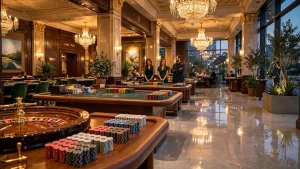
Food-service and pool searches point to practical expectations: somewhere to eat during a visit, perhaps a food court, and a swimming pool as part of the leisure offering. Those are separate facilities, and neither follows automatically from the word “casino”. A venue may have gaming without providing either; the category alone settles nothing.
I treat “food court” as a more specific claim than food being available. It implies a defined area with food outlets, not simply a nearby café or dining room. Likewise, a pool search can mean an amenity inside a hotel or resort, rather than a facility operated by a casino. Without a confirmed venue listing, those distinctions cannot be resolved for Canberra.
That matters because promotional language can blur what is on site with what is nearby or associated through a separate business. “Convenient dining” may describe location, not a food counter within the venue. “Resort-style” can suggest leisure facilities without establishing that a pool is open to casino visitors. The wording is doing work. The detail matters more.
For a Canberra casino visit, food and pool arrangements should therefore be treated as unconfirmed until they are stated in current, venue-level information. A general destination page, an old directory entry or a broad description of the precinct would not establish operating food outlets, a food court, pool access, or who may use those facilities. Those are distinct details, not interchangeable amenities.
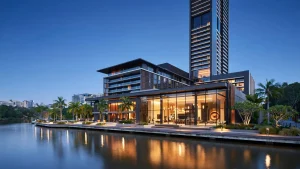
The same caution applies to images and snippets that appear beside a venue name: they can represent nearby businesses or a wider property, rather than the casino itself. I would not turn that association into a claim that food service or a pool is available on site. For now, the safe description is narrow: Canberra-specific on-site food-court and pool facilities are not established.
Australian law prohibits Australian-run online casinos from offering online casino games such as pokies, blackjack and roulette to people in Australia. It is technically not illegal for Australian players to use offshore platforms, but they operate outside Australian regulation.
Region blocking uses a player’s IP address to identify their location and restrict access to games in excluded countries. From an Australian IP address, blocked games may not appear in the lobby or may fail to load.
Club Liverpool has the highest number of operational poker machines among clubs in NSW.
Types include progressive jackpot pokies, which add a portion of bets to a growing jackpot, and buy-bonus pokies, which let players pay to enter a bonus round directly.