An overview of Darwin Casino’s development claims, accommodation, dining, entertainment and practical details for planning a visit.
Development claims are easy to make and harder to pin down. A proposed upgrade, a construction project and a completed change are different things, but promotional language can blur them. I treat “development” as a claim that needs a date, a defined scope and evidence that the work has reached the stated stage. An announcement is not proof that a project was completed; a rendering is not proof that a facility opened.
That distinction matters when assessing Darwin Casino. Without a dated, venue-specific statement, it would be irresponsible to describe a current development, name a new facility or suggest that an announced change has been delivered. The same applies to claims about a gym or fitness space. A hotel or resort may have fitness amenities, but that general pattern does not establish what this venue offers, who can use it or whether access is included with a stay. Assumption is not a facility.
Employment information also needs to be tied to a real vacancy or an official recruitment channel. General descriptions of casino work say little about positions available at one venue, the experience required or the terms attached to a role. I would separate a live vacancy from an old listing and an expression of interest from an offer of employment. The wording can sound similar; the practical difference is substantial. A listing is not a job.
Choosing an online casino while looking for options related to Darwin calls for checking the details that matter to you. This list provides a concise reference to the available operator information.
7Bit Casino
7Bit Casino is listed with a Curacao licence and is operated by Dama N.V.
MrPacho
MrPacho lists crypto payouts at 30–120 minutes and fiat payouts at 24–72 hours. The minimum deposit is A$30.
SkyCrown
SkyCrown is licensed by the Tobique Gaming Commission. Its listed payout times are around 10–15 minutes for crypto and 1–5 days for fiat, with a A$30 minimum deposit.
Wild Tokyo
Wild Tokyo has a Curacao licence and a A$10 minimum deposit. Listed payout times are 30–60 minutes for crypto and 1–5 days for fiat.
Uptown Pokies
Uptown Pokies is listed as operating under a Curacao licence since 2017. Its minimum deposit is A$20.
Thor Casino
Thor Casino is licensed in Curacao by Antillephone N.V., with Versus Odds B.V. identified as the operator. Its minimum deposit is EUR 20.
Roby Casino
Roby Casino is listed with a Curacao eGaming licence and Roby Games Ltd.
Ricky Casino
Ricky Casino lists crypto payouts in under an hour and PayID payouts in 1–3 business days. The minimum deposit is A$20, or A$30 to qualify for the bonus.
GoldenCrown
GoldenCrown is listed with a Curacao Gaming Control Board licence, OGL/2023/176/0095, and Hollycorn N.V.
LevelUp Casino
LevelUp Casino is listed with a Curacao eGaming licence, OGL/2023/174/0082, and Dama N.V. Its minimum deposit is A$15.
“Entertainment” is broad enough to cover very different things: a regular programme, a one-off performance, a private function or simply the general atmosphere of a venue. A description that does not identify what is happening, when it is happening and where it is taking place cannot establish a particular programme. The same standard applies to events associated with Darwin Casino. A past event does not establish a future schedule, and an event announcement does not prove that bookings remain available or that arrangements have not changed.
I have seen how a polished phrase can do more work than the detail beneath it. “Something for everyone” is appealing copy, not a useful account of an event. The practical questions are specific: what is scheduled, whether the event is open to the public, and whether its details are current. If those points cannot be established from a current venue communication, a confident description would be guesswork. Better left unsaid.
Opening and reopening language deserves the same care. “Open” can refer to a venue’s overall operation, a particular area, or access to a specific service. “Reopening” implies a prior closure and a return, but it does not by itself establish the date, scope or present status. A headline may remain visible after circumstances change. For a current answer, the relevant evidence is a dated notice from the venue or another responsible source, not an undated snippet repeated elsewhere.
 Hobart Casino: Poker, Stays and Venue DetailsLearn what a live poker room or tournament requires, why old event listings do not confirm games are running, and which venue…
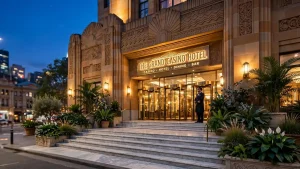 Casino in Victoria: Hotel Offers and Details to VerifyLearn why casino-hotel offers depend on dates, room category, booking conditions and included extras, and which Victoria venue details remain unconfirmed.
That is why I would not infer that Darwin Casino is open today, or that it has reopened, from the wording of a page title or an old announcement. Nor would I treat a general reference to casino entertainment as confirmation of a current event. Those are different claims, and each needs its own current support. Small distinction. Real consequences.
For development, fitness, employment and entertainment alike, the useful standard is not whether a statement sounds plausible. It is whether it identifies the venue, describes the specific offering and remains current. This avoids turning the common features of casinos into claims about one Darwin venue. It also keeps a future plan, a past event and a present facility from being presented as interchangeable.
A careful account can therefore be clear about what a reader should look for without pretending to supply particulars that have not been established: dated project updates for development, direct facility information for fitness, current recruitment notices for employment, and event communications that specify the occasion and its status. Those are not decorative details. They determine whether a claim describes something real and available, rather than an idea, an old listing or promotional shorthand.
A casino hotel can mean a room inside the same property as the gaming venue, or simply a hotel marketed alongside a casino visit. The difference matters: “stay and play” language can make separate businesses sound like one package. I treat the room, the booking terms and any casino offer as separate parts until the conditions show how they are connected.
For a stay at a Darwin casino, the useful comparison is not just the headline rate. A deal may bundle accommodation with another benefit, but the name of the offer does not establish what is included, when it can be used or whether restrictions apply. The booking conditions carry the substance. A low displayed price is not a complete comparison if dates, cancellation rules or inclusions differ.
Room descriptions also need reading literally. A room category tells less than the full terms: occupancy, bedding, access arrangements and any additional charges can affect whether it fits a particular stay. Photographs are illustrative, not a substitute for a written room description. I have seen the attractive label do more work than the detail beneath it. Fine print decides.
When checking a casino hotel room, the practical questions are straightforward: what is included in the quoted price, what conditions apply to changes or cancellation, and whether the booking is made directly with the hotel or through another provider. If an offer is described as exclusive, the booking page should explain what makes it so. If it does not, the word is decoration.
The same caution applies to “hotel deals”. A package may be valuable for one traveller and irrelevant to another, depending on the dates and the benefits attached. The sensible comparison is between like-for-like room terms, not between promotional labels. I would also keep a copy of the confirmation and the conditions shown at checkout; those documents are the clearest record of what was actually booked.
 Adelaide Casino: Venue Details and Online Gambling RulesLearn how Adelaide Casino venue searches differ from online gambling: the Interactive Gambling Act 2001 restricts operators from providing real-money online casino
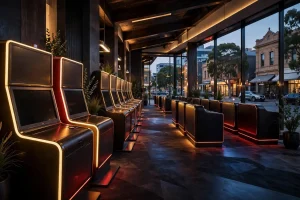 Best Pokies in Adelaide: Venues, Hours and RulesLearn how independent RNG spins prevent past results predicting payouts, and what the article checks about Adelaide venues, hours and online-pokies claims.
Searches for a hotel near a casino often blend two different needs: sleeping close to the venue and staying in a hotel operated as part of it. Proximity alone does not establish shared ownership, shared services or a combined booking. Nor does a casino’s name in a hotel listing prove that the property is on-site. Those distinctions should be clear in the address and booking details before a reservation is treated as a casino-hotel stay.
Ownership is another question that should be separated from the room offer. A venue’s owner, the company operating a hotel and the business taking a booking may not be the same entity. A name used in advertising is not enough to establish the relationship. The booking confirmation and the relevant company information are more useful than assumptions drawn from branding.
I keep the decision narrow: identify the property, compare the room terms, and read the offer as written. A hotel stay can be planned around a casino visit without assuming the accommodation itself grants any special access or benefit. The useful detail is contractual, not promotional.
Opening hours, performance schedules and gaming-floor access are separate practical questions. A casino may trade while a particular show is not scheduled, and a published show time does not by itself establish when every part of the venue is open. I have seen people treat “open” as one simple status; operationally, it can refer to different areas and services. Check the venue’s official current information for the specific date and activity, then confirm again before setting out. Schedules change. Assumptions cost time.
The same distinction matters when looking for poker. In Australia, “poker” can mean a table game, a tournament, or pokies—also called Electronic Gaming Machines (EGMs). Those are not interchangeable offerings. A search for poker machines does not confirm that poker tables or tournaments are available, and a reference to poker does not establish that pokies are operating. The precise product and its terms matter more than the label.
For gaming involving pokies, identification checks are part of the process. Venues must check identification, and failing to comply with the applicable requirements can have legal consequences. It is a routine control, not a courtesy. Anyone planning a visit should have valid identification available and follow staff directions.
Show listings also need to be read as dated information, rather than as a standing promise of entertainment. A performance page may describe a scheduled event, while venue trading hours answer a different question. Before making plans around a show, check its date, start time and entry conditions on the venue’s own current channels. If no listing is shown for the intended date, that is not a basis for assuming a performance is taking place.
The same caution applies to employment. Searches for casino jobs can lead to listings for different kinds of work, with distinct duties, eligibility requirements and application steps. A role advertised elsewhere should not be treated as a confirmed opening at the Darwin venue. The reliable route is to use the venue operator’s official careers information and read the individual listing carefully. Job titles can sound familiar while the actual responsibilities differ.
From the other side of the counter, I learned that a polished label rarely answers the practical question on its own. “Entertainment” may refer to a specific event; “poker” may refer to a particular game format; “open” may describe one service rather than every facility. The useful details are the date, activity and conditions attached to the listing. Read those first.
For a straightforward visit, verify the current trading information and any show schedule separately, and confirm what kind of poker or gaming activity is being described. Do not infer one from another. That small distinction prevents a wasted trip—and avoids relying on an old listing as if it were today’s operating plan.
The phrase “best casino in Darwin 2026” can point to two different things: a physical venue in the city or an online casino that appears to serve people in Darwin. Those are not interchangeable. Searches about dining, bingo or parking concern an in-person visit; adding “online” changes the subject to internet gambling and brings a different set of rules into play.
Under Australia’s Interactive Gambling Act, operators based in Australia cannot offer online casino games to people located in the country. Pokies, blackjack and roulette fall within the restricted services. The key distinction is where the customer is physically located, not simply the location suggested by a search term or an operator’s branding. A website presenting itself as a Darwin casino does not, by that description alone, establish that it is a local venue or that online casino play is lawful.
Access can also be affected by regional blocking. Online casinos and game providers may use a player’s IP address to estimate the country from which a connection is made. If that country is excluded, an operator can block the relevant IP addresses, or a provider can prevent its games from being offered there. The practical result may be that a game is absent from a lobby or unavailable when a player tries to open it. That is an access restriction, not proof that the service is authorised in Australia.
This is why a search for an online casino in Darwin can return material that has little to do with visiting a local venue. A physical casino’s dining, parking or bingo information is about services on site. Online casino pages describe remote gambling, which sits under a separate legal framework. Similar words, different activity.
The distinction matters even when a site loads. A webpage being visible from an Australian connection does not show that its casino games may lawfully be supplied to people in Australia. Nor does a game appearing in a catalogue mean it will be available from every country: country-based restrictions can apply at the operator level or to particular providers and games.
I have seen the wording around access treated as a technical footnote. It is not. The block is part of how a service separates markets: the IP address gives the system a geographic signal, and that signal can determine whether a player or game is allowed through. A failed launch or missing title may reflect that restriction rather than a fault with the device.
For anyone comparing information about a Darwin casino, the useful first step is to identify whether the page describes a venue to visit or online gambling. The former calls for practical, venue-specific details; the latter must be considered in light of Australia’s restrictions on online casino services. A matching city name is not a licence, and availability on a screen is not legal approval. Short version: location matters.
Planning a visit to a casino in Darwin involves details that are easy to confuse: a map result may show a business listing, while contact information or an event notice may come from a separate directory. I would treat those as leads, not confirmation. Before travelling, check that the address, phone number and event information come from the venue’s own current channels. If those details cannot be confirmed there, avoid relying on an old listing.
A contact number is useful only if it belongs to the venue and is still monitored. Compare the number and address shown on an official venue page with any listing used for directions. If they differ, the venue’s own current information should take priority. Directory entries can remain visible after details change.
For map directions, check the destination label as well as the pin. A pin can identify a broad property or nearby road rather than the public entrance. Confirm the arrival point against the venue’s own directions, where available, before setting off. This is a small check, but it can prevent a trip ending at the wrong entrance.
Verifying Venue Details
Compare contact information
Match the phone number and address on the official venue page with any third-party directory listing.
Check map destination
Verify that the map pin identifies the actual public entrance rather than just a broad property or nearby road.
Confirm arrival points
Cross-reference the intended arrival point against the venue’s own provided directions.
Parking arrangements should not be inferred from a map symbol or from the fact that a venue is a casino. A map may show a car park without establishing whether it serves the venue, whether it is open to visitors, or what conditions apply. Confirm access, entry points and any restrictions with the venue before relying on a particular parking option.
The same care applies to arrival plans for an event. A concert listing may identify a venue without explaining where attendees should enter or how access works on the night. Use the event organiser’s or venue’s current instructions rather than assuming that ordinary visitor arrangements apply.
Concert dates and other event notices should be checked against an official, current schedule. Older listings can continue to circulate after plans change; a dated page is not proof that an event is still scheduled. Keep the event name and date together when checking, and confirm any practical details directly with the organiser or venue.
Questions about baccarat or craps are different from questions about concerts or parking: they concern specific gaming facilities. Their availability at a particular Darwin venue should not be assumed from a general casino description. The same principle applies to a bar on site. A venue’s current official information is the appropriate place to confirm whether these facilities are offered and what arrangements apply.
I have learned not to treat a polished listing as a guarantee. “Easy parking” may mean only that a map displays a parking area; “live events” may refer to past programming. The wording sounds definite. The detail may not be.
In-person venue information is also separate from online casino access. Under Australia’s Interactive Gambling Act 2001, operators cannot provide real-money online casino games to people physically in Australia. A phone number, map result or event listing does not change that distinction. For a physical visit, confirm the practical details with the venue; for online play, do not mistake an offshore website’s availability for lawful Australian provision.
“Buffet breakfast” is a specific service, not a safe assumption from a casino’s resort label. Breakfast hours, buffet availability, seafood dishes and service arrangements can change independently of the venue’s other facilities. I treat each as a separate detail to confirm through the venue’s current official information before making plans. A general dining page may not establish that breakfast is served, or that a buffet is running on a particular day.
The same distinction applies to the word “resort”. It describes a positioning, not a checklist of facilities. It does not by itself confirm access to a pool, spa, gym or other amenity, nor whether a facility is open to day visitors or only to guests. Those are separate conditions, and a booking or promotional description should not be read as proof that every amenity is included.
Rewards deserve the same close reading. A programme name alone says little about how points are earned, what they can be exchanged for, whether membership has conditions, or whether benefits apply to dining and accommodation. I look for the written terms attached to the specific offer, including exclusions and expiry conditions, rather than relying on a general promise of “exclusive” value. The wording matters. Fine print matters more.
For anyone comparing breakfast or buffet options, the practical check is whether the venue itself currently lists the service, its operating days and any booking requirements. A dated third-party listing can remain visible after arrangements have changed. Seafood claims should also be checked against the current menu, not inferred from an older description or from the word “buffet”. No assumption is safe.
Opening times also need to be matched to the service in question. A venue’s general hours may differ from the hours for breakfast, a buffet or a rewards desk; one published time does not establish the others. Confirm the relevant service directly before travelling.
Online pokies are a separate matter from visiting a physical venue. Under the Interactive Gambling Act 2001, operators must not provide real-money online casino games, including pokies, to people located in Australia. A resort or rewards label does not change that legal position, and this is not a recommendation to use an offshore site.
I have seen promotional language make a package sound broader than its actual conditions. The useful test is simple: identify the named service, the dates and hours that apply, and the terms governing access or redemption. If those details are not stated clearly, the wording is not a substitute for them. The distinction is plain.
A spa, a bar or a particular dress code can appear in old listings long after a venue’s offer has changed. I treat each as a separate detail to confirm, not as an automatic feature of a casino stay. The same applies to games: a search result or image is not proof that a particular game is currently available on the floor.
For spa services, check whether the listing refers to a day spa, a treatment room within a hotel, or a business nearby. Those are different arrangements, with different booking and access conditions. Confirm the operator, location, appointment process and current service description before making plans. “Relaxation” is a label, not a booking detail.
Bar information needs the same care. A venue may have more than one bar, or a listing may refer to a bar elsewhere in the precinct. Check the specific venue name and its current opening information rather than assuming every listing describes the casino itself. This avoids arriving with the wrong expectation.
Dress codes are often enforced at the door, where a vague phrase such as “smart casual” becomes a staff decision. Check the venue’s own current entry policy before setting out, especially if the visit includes several areas with separate rules. A third-party listing may be out of date. If the wording is unclear, ask the venue directly.
Address details deserve a final check against the venue’s official contact information and a current map listing. Similar names can point to different businesses or entrances. For employment, use the venue’s official careers channel and confirm that a vacancy is current before sharing personal information. A job advertisement copied elsewhere may no longer be active.
At a physical gambling venue, identification checks apply to poker machine gambling. Gambling while under the applicable legal age can have legal consequences; identification should not be treated as optional. I have also seen how quickly a session can move beyond its original purpose. Set a budget beforehand, do not chase losses and do not raise bets to try to recover them. Stop when the budget is spent.
A final distinction matters: games offered inside a Darwin venue are not the same as online casino games. Under Australia’s Interactive Gambling Act 2001, operators cannot provide real-money online casino games to people in Australia. An online listing does not change that rule.
Restaurant information is one of the easiest parts of a venue profile to misread. A name in an old listing does not establish that a dining room still operates, and a photograph does not confirm its current menu, service times or booking arrangements. I treat those as separate details. “Dining available” is not a menu.
For a meal at a casino in Darwin, the useful checks are practical: whether the restaurant is currently operating, what style of food it serves, when the kitchen takes orders, and whether a booking is needed. These details can change independently. A venue may retain a restaurant listing while changing its service, and kitchen hours may differ from the hours of the wider property. The distinction matters when a meal is the reason for the visit.
Menus also need more than a headline description. Dietary information, current prices and whether dishes are available throughout service are the details that shape an actual decision. A menu image without a date is weak evidence; so is a third-party directory that repeats an old description. I look for a current menu or a direct confirmation from the venue before treating any of that information as settled. No assumption should be built from a restaurant name alone.
The same caution applies to the idea of a rooftop bar at the Darwin casino. “Rooftop” describes a location, not a confirmed facility or a promise of views, food service or particular hours. A bar and a restaurant are not interchangeable either: one may serve drinks without offering a full meal, while a restaurant may have separate service arrangements. The label needs to match what is actually operating.
When comparing restaurants at the casino with places nearby, keep the categories distinct. An independent restaurant in the surrounding area is not part of the casino simply because it is close. Distance, transport and opening times are useful only when checked against current venue information; an outdated listing can turn a convenient-sounding option into a wasted trip.
I have seen how promotional language compresses several conditions into one attractive phrase. “All-day dining” can sound definitive, but the practical question is whether the kitchen is serving at the time needed. Plain details beat polished labels. Verify the restaurant’s current status, menu and service arrangements directly before making plans. No guesswork.
Choosing accommodation near a casino is a location decision before it is a “deal” decision. I have seen attractive rates do little for a stay when the property’s position, transport needs or cancellation terms do not suit the actual itinerary. For a Darwin visit, the useful comparison is between the casino’s confirmed address and each property’s stated location—not a booking page’s broad use of “nearby”.
When evaluating a stay, distinguish between the casino's confirmed address and a property's stated location. Be aware that distance may be presented as a straight line, walking route, or drive, and these are not interchangeable.
Distance can be presented in different ways: a straight-line measure, a walking route or a drive. Those are not interchangeable. A property described as close may still involve a different route or transport choice than expected. I would check the exact address and map route independently before treating proximity as settled. If the casino is only one stop on a wider trip, the best location may be the one that fits the rest of the itinerary, not the one with the shortest apparent distance.
“Deal” is a label, not a complete price comparison. The rate needs to be read alongside its conditions: whether it is refundable, when payment is due, and what changes or cancellations permit. A low headline price can be less useful than a higher flexible rate when travel plans are uncertain. The conditions matter more than the badge.
Accommodation offers can also bundle services or attach restrictions that are easy to overlook in a quick comparison. I would separate what is included from what is merely advertised, then check the booking terms for any exclusions. Promotions change, and a past offer does not establish what is available now. No fixed saving should be assumed without a live rate and its full conditions.
There is also a practical distinction between staying at the casino and staying nearby. These are different searches and should not be treated as interchangeable: nearby accommodation is selected on its own location and terms, while an on-site stay depends on the venue’s own arrangements. For either option, the booking confirmation—not a general description—is the record of the property, dates and conditions.
Entry to the casino is separate from a hotel reservation. A room booking should not be read as confirmation of admission, gaming access or any other venue condition. Those details need to be checked directly with the relevant venue before travel. That keeps the accommodation decision in its proper lane: where to stay, what the rate includes and what happens if plans change. No guesswork.
Food searches can mean different things: a general request for something to eat, or a specific expectation of a food court. Those are not interchangeable. A food court normally means a shared area serving food from multiple vendors; the phrase alone does not establish that one exists at a particular venue. Nor does a broad reference to food confirm what is served, when it is available, or whether access is limited to guests or visitors.
I treat those labels as questions to resolve before making a plan, not as proof of a facility. A venue’s own current information is the appropriate place to confirm whether a food-court space operates and what its arrangements are. If that detail is not clearly stated, the careful conclusion is simply that it has not been established. No guesswork.
The same distinction matters with pool searches. A pool associated with a casino could mean an amenity at a hotel or resort, rather than a facility open to every visitor. The word does not settle whether a pool is on site, who may use it, or what access conditions apply. Those details need direct confirmation from the venue before they become part of an itinerary.
I have seen how a broad label can do more work in people’s expectations than it does in practical planning. “Food court” sounds like a particular kind of choice; “pool” sounds like a ready-to-use amenity. Neither phrase, by itself, provides operating details. A reliable answer needs the specific facility and its access terms, rather than an assumption based on the venue category.
For a visit to Darwin Casino, food and pool plans should therefore be treated as separate checks. Confirm the food arrangement directly, and confirm whether any pool facility is available to the intended visitor. If the information cannot be confirmed, avoid building timing or activities around it. That is less exciting than an amenity list, but more useful than arriving with an expectation formed by a search phrase.
Yes. The Interactive Gambling Act restricts Australian-based operators from offering online casino games such as pokies, blackjack and roulette to people in Australia. Offshore platforms are not regulated under Australian law, and games may be blocked for Australian players.
Yes. Online pokies use a Random Number Generator, and each spin is independent, so previous results do not affect the next spin.
Examples include progressive jackpot pokies, which add a small share of bets to a growing jackpot, and games with a buy-bonus option that lets players pay to enter a bonus round directly.
You must be 18 or older to play poker machines in NSW.