A practical guide to checking opening hours, gaming-machine operation and what public information does not establish about Brisbane venues.
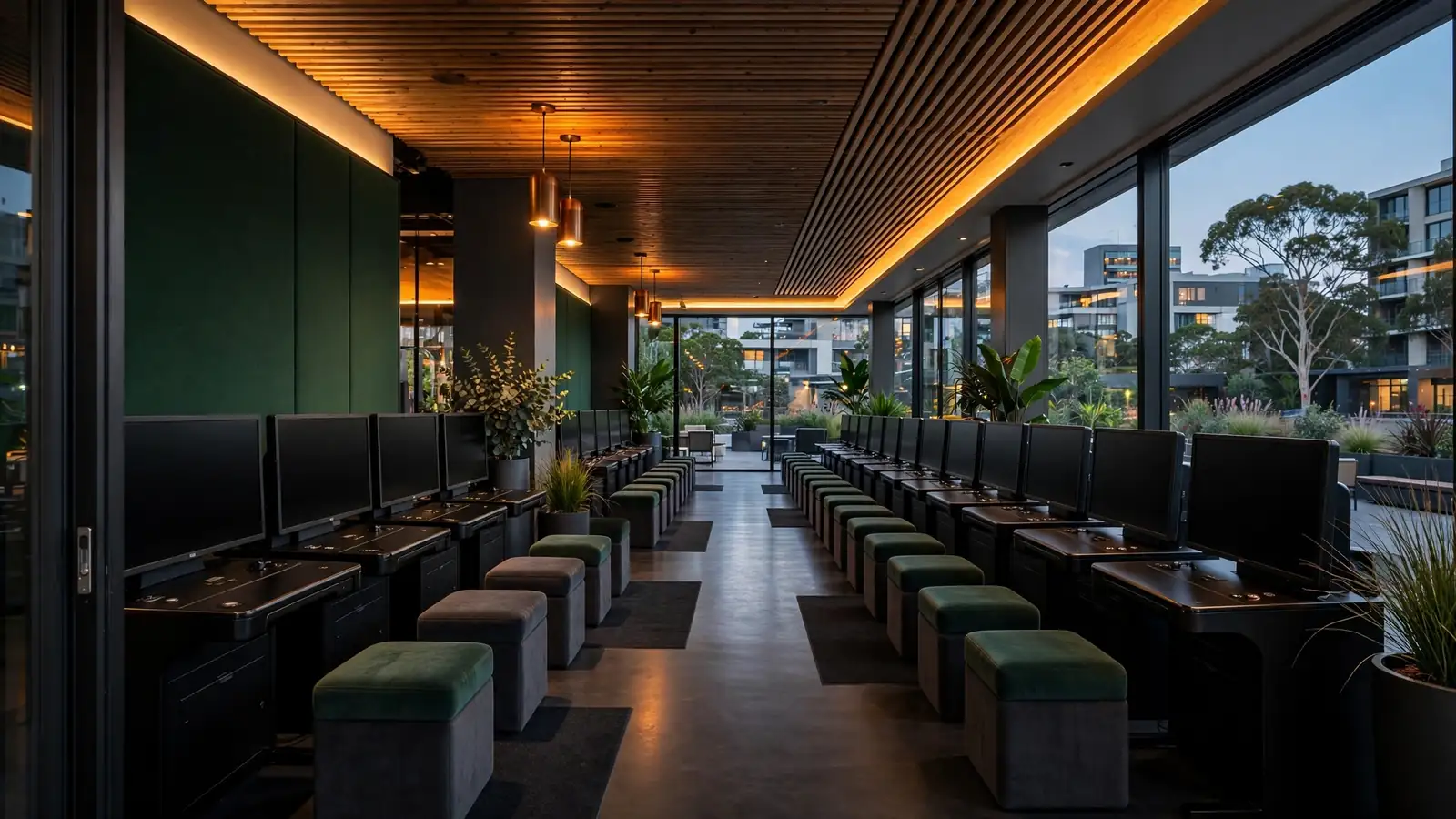
Opening times are a venue-level detail, not something that can be inferred from the word “pokies” or from a general rule about gaming rooms. A search for a room open early or late does not establish that any particular Brisbane venue is operating then. The practical point is to separate a venue’s public opening hours from the hours in which its gaming machines are available. Those details need to come from the venue itself; a citywide schedule would imply a consistency that has not been established.
There is, however, a reported operating requirement that matters once machines are running. A report published by regionriverina.com.au says that, from 1 July, a venue operating more than 20 gaming machines must have a dedicated responsible gambling officer (RGO) on duty during that operation. The threshold concerns the number of machines at the venue, while the officer’s duty is tied to the period when the machines are operating. It is not a statement about when a Brisbane room opens, or confirmation that a particular Brisbane venue meets the threshold.
That distinction is easy to lose in a short listing. A room might be open to customers while its machines are not operating, or machines might be operating during only part of a venue’s broader opening period. The requirement described in the report is attached to machine operation, not simply to the doors being open. It therefore cannot be used as a shortcut for checking a venue’s timetable.
The report also describes a one-month grace period for venues to remove signage and put responsible gambling officers in place. That allowance is a transition period, not a recurring extension to opening hours. It should not be read as a promise that every venue will make the change on the same day or as confirmation of the present arrangements at a specific Brisbane location.
The RGO requirement is about having a designated officer on duty, rather than merely displaying a general notice about responsible gambling. The distinction is operational: one is a staff arrangement during machine use; the other is information presented to patrons. The report does not provide a roster, identify individual venues, or explain how a particular room handles its staffing. Those details cannot be reconstructed from the rule alone.
A related change is the requirement for venues to maintain a gambling incident register. The register is intended to document occurrences, including situations where a patron’s behaviour indicates possible gambling harm. That makes it a record of incidents rather than a public timetable or a machine-performance report. Its relevance to opening is that the reporting obligation is part of the venue’s operating responsibilities; it does not tell a customer when a room is open.
The wording around behaviour matters. It describes a situation that may indicate risk or harm, not a diagnosis, and the recorded occurrence is not the same thing as a public finding about a patron. A register gives the venue a formal way to record relevant incidents. It does not, by itself, tell an outsider what was recorded or how any particular event was handled. No drama. Just a record.
For someone trying to establish whether a Brisbane gaming room is open at a particular time, these requirements answer a different question. They describe staffing and record-keeping conditions connected to machine operation; they do not confirm venue hours, a specific room’s operating status, or the availability of machines at the time of a visit. Nor does the reported threshold tell whether any named venue has more than 20 machines. Those are separate facts that require venue-specific confirmation.
The same separation applies to “open” in everyday use. A venue’s overall business hours, the period when a gaming room is accessible, and the period when machines are switched on are not interchangeable labels. A notice about a responsible gambling officer being on duty while machines operate cannot settle all three. Treating it as an hours listing would turn a staff rule into a claim it does not make.
So the 1 July change is useful context for understanding how operation is meant to be staffed and documented, but it is not a Brisbane opening-hours guide. The reported requirement connects a dedicated RGO to machine operation at venues above the stated threshold, with a one-month transition period and an incident register for relevant occurrences. It leaves the ordinary local question—whether a particular room is open now—to the venue’s own current information.
Choosing online pokies for a Brisbane-focused shortlist in 2026 calls for checking the details that are available about each operator. These notes offer a concise reference point without assuming anything beyond the stated information.
7Bit Casino
7Bit Casino is operated by Dama N.V. and holds a Curacao license.
MrPacho
MrPacho lists crypto payouts at 30–120 minutes and fiat payouts at 24–72 hours. Its minimum deposit is A$30.
SkyCrown
SkyCrown is licensed by the Tobique Gaming Commission. Its listed payout times are around 10–15 minutes for crypto and 1–5 days for fiat, with a A$30 minimum deposit.
Wild Tokyo
Wild Tokyo holds a Curacao license and has a A$10 minimum deposit. Its listed payout times are 30–60 minutes for crypto and 1–5 days for fiat.
Uptown Pokies
Uptown Pokies has operated since 2017 and holds a Curacao license. The minimum deposit is A$20.
Thor Casino
Thor Casino is licensed in Curacao by Antillephone N.V. for Versus Odds B.V. Its minimum deposit is EUR 20.
Roby Casino
Roby Casino holds a Curacao eGaming license, with Roby Games Ltd named as the operator.
Ricky Casino
Ricky Casino lists crypto payouts in under an hour and PayID payouts in 1–3 business days. The minimum deposit is A$20, or A$30 to qualify for the bonus.
GoldenCrown
GoldenCrown holds a Curacao Gaming Control Board license, listed as OGL/2023/176/0095, with Hollycorn N.V. named as the operator.
LevelUp Casino
LevelUp Casino holds a Curacao eGaming license, listed as OGL/2023/174/0082, and is operated by Dama N.V. Its minimum deposit is A$15.
“Best-paying” sounds like a clear ranking. In practice, the phrase can conceal two separate questions: what return setting is attached to a particular game, and what a player might receive from a short run of spins. Neither a reputation nor a memorable win answers both.
A pokie’s return to player, or RTP, is a percentage describing the share of wagers a game is designed to return over time. It is a statistical measure, not a forecast for an individual session. It does not mean that a set amount comes back after a set number of spins, and it does not tell a player when a win will occur.
Each spin is an independent event determined by a Random Number Generator. The result of the previous spin does not make a particular result due on the next one. A run of losses does not force the machine to pay, and a recent win does not mean another is less likely. I have seen “hot” used as if it were a measurable condition. It is a label, not evidence of a changing chance.
This matters when comparing claims about the best-paying pokies in Brisbane. A game’s reputation may come from a player’s experience, a published review or a story repeated from one venue to another. Those accounts can describe what someone saw; they do not establish what setting applies to every version of the game. A result from one session says even less about its long-term return.
There is another complication: a specialist review reports that some providers give casinos a choice of more than one RTP setting for a pokie. If that account applies to a particular game, the same title could operate with different return percentages at different casinos. The name on the screen would not, by itself, settle the matter. A game comparison without a clearly identified setting is incomplete.
That does not mean every casino chooses different settings, or that a particular Brisbane machine uses a lower or higher one. It means a general claim about a title cannot safely be treated as a venue-specific fact. The distinction is easy to lose in advertising: the game name is visible; the setting may not be. “Top return” sounds definite. The underlying detail may not be.
For someone weighing up Brisbane casino pokies, an important test is whether a claim identifies the game and the applicable RTP setting, rather than repeating a broad reputation. If that detail is absent, there is no sound basis for treating the claim as a comparison of actual machines. Even a stated RTP would describe the game’s theoretical performance over time, not the outcome of a particular visit.
The same caution applies to talk about pokies in Brisbane CBD or across the city. Location does not make a game’s random outcomes more predictable. Nor does a popular title become a better-paying option because it is familiar or frequently discussed. Popularity and return are different measures.
I would separate the information into three layers: the game’s identity, the RTP setting attached to the version being offered, and the random results of individual spins. The first may be obvious. The second needs specific confirmation. The third cannot be inferred from a streak, a player’s story or a list of supposed favourites.
That is why “best-paying” is a weak promise unless its basis is clear. It may point toward a comparison worth checking, but it cannot guarantee a return or identify a winner for an individual session. In a search for the best pokies in Brisbane, the careful answer is not a ranked list built on reputation. It is a recognition that a game title and a lucky story do not reveal the setting—or predict the next spin.
Random means random.
A search for online pokies from Brisbane is asking about a different thing from a search for a physical gaming room. The word “Brisbane” can make an online service sound local, but a website’s wording or a cashless payment option does not make it an Australian-licensed casino. There is no Australian-licensed online casino.
The legal line is directed at the business providing the service. Under the Interactive Gambling Act 2001, companies cannot offer real-money online pokies to people in Australia without a domestic licence, and no such licences have been issued. The restriction applies to online casino-style games offered to people physically in Australia; it is not a special rule about Brisbane.
That distinction can be easy to miss in promotional language. “Available in Australia” may describe whether a site accepts an account or a payment, not whether the service is authorised under Australian law. A cashless option says something about how money is transferred; it does not establish a local licence, fair treatment or an enforceable route to recover funds. Different question. Different risk.
The law targets operators, not individual players. Australians can legally play on offshore sites that accept them, but that does not give the player Australian legal protection if a dispute arises. In particular, if an offshore casino refuses to pay winnings, the player has no legal recourse in Australia. The practical exposure sits in that gap: access may be offered, while an effective domestic remedy is not.
That is why an online offer should not be treated as equivalent to a Brisbane venue simply because it uses local wording, mentions Australian dollars or presents familiar payment methods. Those details do not change where the operator is licensed, or the consequences if it withholds a withdrawal. From the industry side, “local” is a useful sales word. It is not a safeguard.
BetStop needs the same distinction. It applies to Australian-licensed operators and does not bind offshore sites. Since no Australian-licensed online casino exists, BetStop should not be assumed to block an offshore casino account or stop that operator from contacting someone. A self-exclusion tool cannot control a business outside the system it governs.
The online boundary also applies to searches for high-limit play, maximum bets or cashless pokies around Brisbane. Those phrases do not point to a separate legal category. If the service is an online casino taking real-money play from someone in Australia, calling it a local option does not turn it into one. Nor does a reference to Brisbane Central establish that the operator has a physical presence there.
I have seen the same confusion at the counter: a familiar label is often mistaken for a promise about what happens when something goes wrong. Online, the important difference is not the name attached to the offer but whether Australian law provides a route to enforce a claim. For offshore casino winnings, it does not.
This is separate from the rules for physical gaming rooms in Brisbane. A real venue and a website may both use the word “pokies”, but their operating arrangements and legal position are not interchangeable. No online service becomes a Brisbane gaming room by targeting people in the city. The boundary is clear; the recovery risk is real.
A “best pokies venue” label sounds like a comparison, but it only means something when the comparison has evidence behind it. A venue list, a polished interior or a prominent CBD address does not establish that its machines pay better, offer a wider choice or suit every player. I have seen promotional language do the work that machine-level information should do. It leaves the important comparison unstated.
What can be described with confidence is the operating framework for gaming venues. That tells us about obligations applying to certain venues, not which Brisbane venues meet a particular preference. It does not identify individual rooms, confirm their machine numbers or provide performance results that could support a ranking.
That distinction matters in the CBD as much as elsewhere. A list of places described as central might help with orientation, but it would not prove that each has pokies, establish how many machines it has or show how its offering compares with another venue. The label “CBD” is geographical shorthand, not a measure of quality.
From the other side of the counter, I learned to separate what a venue can demonstrate from what its advertising implies. A claim such as “best” needs a defined basis: best by what measure, assessed when, and against which alternatives? Without comparable, venue-specific evidence, the word is an opinion dressed as a finding. Not a ranking.
The same caution applies to machine counts. A number attached to a whole venue would not, on its own, say how many machines are available in a particular room or whether the selection changes. Nor would a count reveal performance. A larger selection is not proof of better returns, and proximity to the city centre is not proof of a stronger gaming offer.
A useful comparison would need current information tied to each named venue and a clear method for comparing like with like. It would also need to distinguish a venue’s general facilities from its pokies. Those are separate claims; combining them in a single “best” verdict can make a review sound more conclusive than its evidence permits.
So Brisbane venue names should not be presented as a verified shortlist here, and no CBD venue can be singled out as the best. The defensible distinction is narrower: operating requirements can be described, while venue-level machine data and comparative performance cannot be inferred from those requirements. That is less satisfying than a confident league table. It is also more honest.
Payment language can make an online offer sound more established than it is. PayID describes a way to route a bank transfer; it does not certify the business receiving it. A site’s ability to display PayID says nothing about its licensing, the fairness of its games or the return percentage attached to a pokie.
PayID works as an alias layer over the New Payments Platform. Instead of entering bank account details, a transfer can be directed using an email address, mobile number or Australian business number. For real-money online gambling, setting up PayID involves linking the chosen alias to a bank account. That is the transfer mechanism, not an endorsement of the recipient.
In practice, the payment path can still stop at the bank. A specialist review reports that some Australian banks, including members of the Big Four, occasionally block PayID transfers to gambling merchants they recognise. That is a report about changing bank and merchant controls, not a dependable forecast for any individual payment. A declined transfer does not establish whether a site is lawful or trustworthy; it establishes only that the payment did not go through.
Cards can carry a different kind of friction. A specialist review reports that a credit or debit card gambling transaction may be processed as a cash advance, with a fee of 3–5% and interest beginning immediately. The treatment depends on the bank or card issuer. The practical point is that the amount shown at checkout may not be the full cost of the transaction. “Convenient” is not the same as cost-free.
I have seen payment methods mistaken for a quality test. They are not one. A familiar bank-transfer option cannot settle questions about who operates a site, how a game is configured or whether a withdrawal will be honoured. Nor does a payment label turn an online casino offer into an Australian-licensed service.
That distinction matters particularly for searches about real-money play or a no-deposit bonus. Payment details do not change the Australian legal position on online casinos, and an offshore site’s acceptance of a transfer offers no Australian legal recourse if it withholds winnings. BetStop applies to Australian-licensed operators; it does not bind offshore sites.
Where an offshore operator requests a withdrawal, identity and address documents should be verified before the first withdrawal is attempted. That is a procedural safeguard, not a guarantee of payment. The money can move quickly into an account; getting it back is a separate matter. Payment convenience has limits.
“Near” sounds precise, but it has no fixed meaning until the starting point and the measure of distance are clear. A venue could be close in a straight line yet less convenient by road or public transport. Airport-related searches add another ambiguity: they may mean inside an airport, near its boundary, or simply convenient for someone arriving or departing. Those are different claims, not interchangeable descriptions.
I have learned to separate a map result from a claim about pokies. A pin can indicate an address; it does not, by itself, establish that the venue has gaming machines. Nor does a general venue listing establish which location is nearest to an airport, a central business district, or someone’s current position. The detail that matters is venue-specific, and proximity needs a defined starting point.
That distinction matters when an area name is attached to Brisbane. “Brisbane” may be used broadly, while a search may refer to a particular suburb, the city centre, or an airport. A result that appears relevant to one interpretation may not answer another. The phrase “near me” is even more dependent on context: its meaning changes with the person’s location, and it does not identify a particular Brisbane venue on its own.
A request for pokies inside Brisbane Airport is narrower than a request for somewhere nearby, but the wording still cannot establish that machines are available within the airport. Likewise, a nearby result cannot be treated as an airport venue just because it appears in an airport-related search. Location and offering need to be confirmed separately.
I would not name a nearest venue on this basis. Without a confirmed venue offering and a clear point from which to measure, the comparison is guesswork. That is not a small wording issue: “closest” can sound like a checked fact, even when it is only an assumption drawn from a map or a broad location label.
The same care applies to searches that mention Brisbane and Victoria together. The place wording needs to be resolved before it can support a local recommendation; a shared name is not enough to identify a Brisbane-area destination. No distance, route or travel time should be inferred from the phrase alone.
For a useful local comparison, the underlying details would need to match: a confirmed pokies offering, a precise venue location, and a defined origin. Without those, airport proximity remains an unproven description rather than a reliable way to choose a place.
“Open now” sounds like a simple status: doors open, machines available, no further checking needed. In practice, those are separate questions. A venue’s general trading hours do not, by themselves, establish that its gaming room is operating at the same time. Nor does a broad claim about Brisbane establish the hours of any particular venue.
I have learned not to treat a round-the-clock label as a venue fact. It may be a phrase used to describe a search, not a confirmed schedule. Even an accurate listing needs to be tied to a named place and a current statement about its gaming facilities; otherwise, it cannot settle whether pokies are available at a particular hour.
That distinction matters for late-night plans. “Open” can refer to a venue’s doors, a bar, dining service or another part of its operation. The word does not automatically mean that every facility inside is open. A claim of continuous pokies access needs to say precisely what remains available, and where.
A label is not a timetable.
Opening hours also have a date attached, whether or not a listing makes that obvious. A schedule copied into a directory can outlive the conditions it describes. For a specific visit, the reliable comparison is between the venue’s own current information and the detail that actually concerns its gaming area—not a general description or a third-party summary.
The phrase “24-hour pokies in Brisbane” therefore cannot be turned into a citywide promise. It does not identify a venue, establish that a gaming room operates through the night, or confirm availability at the moment of arrival. The same caution applies to an “open now” result: the time-sensitive wording is meaningful only when it refers to a named venue and the relevant facility.
I have seen how a small wording choice can carry more weight than it deserves. “Open” sounds definitive; “gaming available” is the detail that would answer the practical question. Without that distinction, the statement may be technically true about a building while saying little about the service being sought.
So Brisbane pokies opening hours are not a single timetable that can be inferred from the phrase “24-hour”. A specific claim needs a specific venue and current, facility-level hours. Without those, the honest description is narrower: the phrase expresses a search for overnight access, not proof that such access is available at a Brisbane venue.
South Brisbane, South Bank and Brisbane’s northern suburbs are distinct area labels, not evidence of a particular pokies venue. A location name cannot establish that a club or gaming room operates there, that it has machines available, or that its offering differs from one elsewhere. I have seen how easily a broad directory entry gets repeated until it sounds like a checked local fact. It is not.
The same applies to spelling variations for South Bank. They do not point to separate districts or confirm separate venues. Nor does “northside” identify a boundary that settles which suburbs or facilities belong on a list. Without a named venue supported by reliable details, drawing a map would turn a guess into guidance.
That restraint matters because a local label can imply practical things it does not prove: that a venue is nearby, open, accessible, or suitable for a particular visit. None follows from the suburb name alone. A map with pins may look precise while saying nothing dependable about the machines behind those pins.
The “maximum cash payout” part of the search belongs to a different question. A payout figure cannot be inferred from whether a venue is in South Brisbane, South Bank or the north. I would not attach a city-wide maximum to those areas without a substantiated basis for that number. A bold figure without context is not a useful comparison. It is just a number.
This is where venue descriptions and machine claims get blurred. A place may be associated with gaming without that association verifying a specific pokies selection or payout ceiling. A regional label does not supply the missing detail. Neither does repeating the label in a directory or promotional listing.
The responsible way to describe these areas is narrower: they are geographic search terms, not a verified venue map. I would not name a South Bank room, a South Brisbane club or a northern location as having a particular machine offering on that basis. No map by guesswork.
A club label and a CBD address do not, by themselves, establish that a venue has pokies. Nor do they show how many machines are available, whether they are operating, or how one venue compares with another. Those are separate details, not things that can be inferred from the word “club”.
That distinction matters when a listing is presented as a “best” choice. The label sounds like a verdict; in practice, it may say nothing about the machines, the venue’s current arrangements or what a visitor will find on arrival. I would not treat a club name or a central-city location as evidence of a particular pokies offering. No comparison follows from an address alone.
CBD searches also tend to blur different questions together: whether a club exists, whether it has gaming machines, and whether its machines are a good fit for someone’s preferences. Each needs its own answer. Machine count and game performance are not interchangeable, and neither can be established by a venue category. A confident ranking without those distinctions is mostly packaging.
Self-exclusion is a different matter from choosing a venue. It is one of the responsible-gambling tools used to restrict access to gambling, alongside deposit, loss and session-time limits. The existence of that tool does not establish a particular club’s enrolment process, coverage or terms. Those operational details need to be confirmed with the venue or the relevant service, rather than assumed from a general description.
BetStop has a specific boundary: it applies to Australian-licensed operators and does not bind offshore sites. That distinction should not be blurred into a claim that one exclusion arrangement covers every form of gambling. Exclusion and other limits are only useful when their scope is understood.
From the industry side, the wording around a venue can do more work than the underlying detail. “CBD club” is a location-and-category description, not proof of a machine list, a count, an operating status or a comparative advantage. The sensible reading is narrow. A club may be relevant to a search for pokies, but the label alone cannot establish that it offers them, still less that it offers the best option in Brisbane’s centre.
No venue verdict from a postcode.
The name Crown can appear in a search for Brisbane pokies without establishing that a Crown venue in Brisbane operates a pokies room. A search phrase is not evidence of a location, an available machine floor or a particular offering. I would not turn that wording into a venue recommendation.
That distinction matters because “best” implies a comparison. To compare rooms responsibly, there would need to be reliable information about the venues being compared and the features being assessed. A familiar brand name does not supply either. Nor does it confirm that a particular pokie is installed, how many machines are available or what terms apply to play.
I have seen venue copy make a name do too much work. A recognisable label can sound like confirmation, while the practical details remain unstated. Here, there is no substantiated basis for describing Crown as a Brisbane pokies destination or ranking it as the city’s best pokies room. No shortlist follows from the wording alone.
The same restraint applies to claims about a “casino” experience. That label should not be used to imply a specific Brisbane address, gaming area, machine selection, facilities or operating arrangements. Those are separate claims, each needing support. Without it, adding detail would create the appearance of local knowledge rather than provide it.
So the useful answer is narrow: Crown-related wording does not establish a pokies offering in Brisbane, and there is no grounded comparison that would justify calling any room the best. That is not a verdict on a venue; it is a limit on what can responsibly be stated.
For readers assessing claims elsewhere, the distinction is straightforward: a name in a heading is not proof of a venue, and an attractive label is not proof of a comparative result. I would leave the venue and machine details out unless they can be confirmed from dependable, current information. No invented shortlist.
Yes, Australian players are not the target of the law and can play on offshore sites that accept them. However, offering real-money online pokies to Australians without a domestic licence is illegal, and no such licences have been issued; players have no legal recourse in Australia if an offshore casino withholds winnings.
It is the amount you must bet, expressed as a multiple of the bonus, before you can withdraw winnings. For example, a $500 bonus with a 40x requirement means $20,000 in bets; if the requirement applies to a $500 deposit plus a $500 bonus at 35x, it means $35,000 in bets.
Yes. Some game providers let casinos choose from multiple RTP settings for a game, so the same pokie can have different return percentages at different casinos.