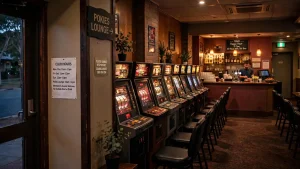
A practical look at opening-status listings, machine access, and the limits of claims about availability and payouts.
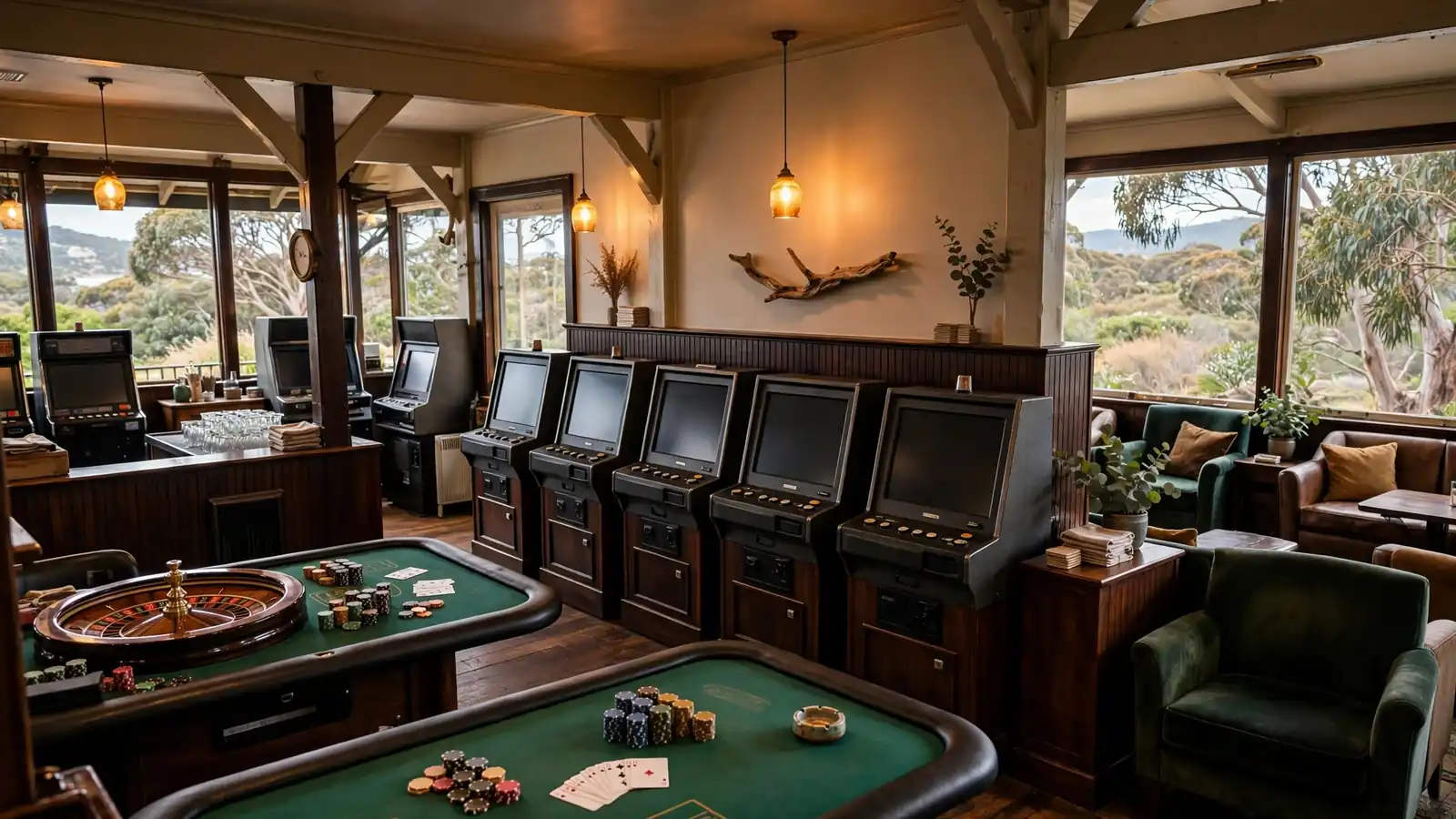
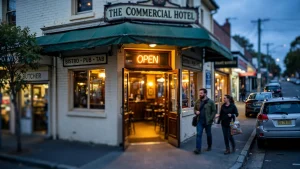
A result marked “open” is a snapshot produced by a listing service, not a live view of a gaming room. It may reflect information supplied by a business, a schedule stored on a platform or an update made by someone else. It can help identify a venue that may be operating, but it does not confirm that its pokies are available at that moment.
That distinction matters. A venue can be open while part of its operation is unavailable, and a listing may not distinguish between the venue’s general trading status and access to gaming machines. A result can also be out of date. The word “now” sounds precise; the underlying information may not be.
When I worked around venue decisions, I learned to separate the sign from the service behind it. A status label is a useful pointer, not a promise. It is not a real-time report from staff, a machine floor or a booking system.
A search for pokies in Tasmania that are open now may return a mix of business listings, maps, directories and pages written for a broad area. Those results do not necessarily describe the same thing. One may refer to a club, another to a hotel or a general venue listing. A result that mentions pokies in its description does not establish that gaming machines are operating at the time it appears.
The same caution applies to wording such as “open early” or “open late”. These phrases can describe a listing’s stated schedule, a page’s general copy or a search platform’s interpretation. They do not, by themselves, prove that a particular gaming area is accessible at that time. A result for a named brand, including one containing “Crown Tasmania”, is not proof that the brand operates a Tasmanian venue or that any associated pokies are available locally. Names travel easily across search results; local presence needs separate confirmation.
There is a practical difference between a venue’s general status and a visitor’s reason for checking it. If the question is whether a particular gaming area is operating, a general map label may be too broad to answer it. A current venue notice or direct confirmation is more relevant than a copied schedule, though even that only describes the position when it was checked. No listing can guarantee what will be available on arrival.
This is not a technicality. Search platforms compress information into a simple label because a label is easy to scan. The detail that gets lost is often the detail that matters: what the status refers to, when it was last updated and whether it applies to the whole venue or one part of it. “Open” is not the same as “pokies available”. A short label cannot carry that distinction reliably.
I have also seen how an “open now” result can shape a decision before anyone has checked the terms of that decision. The result can make a visit feel settled, when it has only narrowed down a possibility. Treating it as confirmation risks making the status itself the reason to continue, rather than pausing to decide whether playing fits within a personal plan.
Responsible-gambling tools belong in that decision before play begins, not as a reaction after a session has drifted. Deposit limits can set a boundary on money added; loss limits can define a point to stop; session time limits can mark an intended end; and self-exclusion can block access for someone who needs a stronger break. These controls address different parts of play. A time limit does not control spending, and a deposit limit does not determine how long a session lasts.
A venue’s operating status does not replace those boundaries. Nor does being able to find an open venue mean that visiting is the right choice at that time. The search result answers a narrow question about a listing’s apparent status. It says nothing about whether gambling is affordable, wanted or manageable for the person considering it.
I would read the label as a lead to verify, not as the final word. The useful checks are whether the information is recent, whether it refers to the gaming area rather than the whole business, and whether the venue itself confirms the relevant service. If those points remain unclear, the search result has not answered the question.
That is all it can establish: a possible opening, not live availability or a reason to play. Status is not access.
Finding the right pokies site in Tasmania means weighing practical details such as licensing, deposit minimums and payout options. Use these operator notes as a starting point, and check the current terms before signing up.
7Bit Casino
7Bit Casino is operated by Dama N.V. and holds a Curacao licence.
MrPacho
MrPacho lists crypto payouts at 30–120 minutes and fiat payouts at 24–72 hours. The minimum deposit is A$30.
SkyCrown
SkyCrown is licensed by the Tobique Gaming Commission. Its listed payout times are around 10–15 minutes for crypto and 1–5 days for fiat, with a A$30 minimum deposit.
Wild Tokyo
Wild Tokyo holds a Curacao licence and has a A$10 minimum deposit. Its listed payout times are 30–60 minutes for crypto and 1–5 days for fiat.
Uptown Pokies
Uptown Pokies has operated since 2017 and is licensed in Curacao. The minimum deposit is A$20.
Thor Casino
Thor Casino is licensed in Curacao by Antillephone N.V. (Versus Odds B.V.). Its minimum deposit is EUR 20.
Roby Casino
Roby Casino holds a Curacao eGaming licence and is associated with Roby Games Ltd.
Ricky Casino
Ricky Casino lists crypto payouts in under an hour and PayID payouts in 1–3 business days. Its minimum deposit is A$20, or A$30 to qualify for the bonus.
GoldenCrown
GoldenCrown holds a Curacao Gaming Control Board licence, OGL/2023/176/0095, under Hollycorn N.V.
LevelUp Casino
LevelUp Casino holds a Curacao eGaming licence, OGL/2023/174/0082, under Dama N.V. The minimum deposit is A$15.
“Best-paying” sounds like a ranking, but it can describe two different things: a pokie’s theoretical return over a very large number of plays, or a player’s actual result in one session. Those are not interchangeable. A high theoretical return does not mean a machine is likely to pay during a particular visit, and a large win does not prove that a machine has a better return setting.
I learned to be careful with that distinction because the advertising language makes it easy to blur. “Hot” suggests that a machine is due, while “best paying” can sound like a promise about the next person’s outcome. Neither follows from the way a pokie works. Its Random Number Generator (RNG) determines each result separately. A previous loss does not make a win more likely on the next spin; a recent win does not make another one less likely.
That independence matters in a Tasmanian venue just as it does elsewhere. A run of similar results can feel meaningful, particularly when people nearby are comparing screens or recalling a recent payout. But a short sequence is not evidence that the machine has changed its behaviour or that it is about to pay. The next spin remains uncertain. No pattern of past results turns it into a forecast.
Return to player, or RTP, is a theoretical measure used to describe the portion of stakes a game is designed to return over extensive play. It is not a schedule of payments and does not promise that a particular player will receive that share. The measure concerns outcomes across a very large number of spins; an individual’s experience can be far above or below it.
There is another detail that a simple game name cannot settle. A specialist review reports that some providers let casinos choose among different RTP configurations for the same pokie. If that arrangement applies, two venues offering what appears to be the same game may not be using the same return setting. The title on the screen alone would not establish the setting.
That makes claims about the best-paying pokies in Tasmania harder to assess than a list of familiar game names might suggest. A comparison would need to identify the actual configuration being used, not just the game’s title or a promotional description. Without that detail, a claim that one version pays better than another cannot be treated as a like-for-like comparison.
Return to player is a theoretical measure describing the portion of stakes a game is designed to return over extensive play, rather than a promise for an individual session.
Even an RTP figure, where it is stated, has limits. It does not describe the size or timing of individual wins, and it cannot tell a player what will happen in a short session. A game may have a theoretical return that looks favourable on paper while its actual outcomes remain unpredictable from spin to spin. The figure is a description of the model, not a personal forecast.
In my experience, the missing qualification is often more important than the headline. “Best” might refer to a published theoretical return, a recent anecdote, a particular version of a game, or simply a promotional label. Unless the claim says what is being compared and on what basis, it does not provide a reliable way to distinguish one Tasmanian pokie from another.
The same caution applies to searches for casino pokies in Tasmania’s cities or central districts. A venue’s location does not establish the RTP setting of a machine inside it. Nor does a game’s popularity show that it offers a higher return. These are separate questions, and treating one as an answer to the other creates false confidence.
A sound comparison therefore begins with the exact game configuration and the basis for any return claim. If those details are not available, the honest conclusion is limited: the game may be identifiable, but its relative return has not been established. That is less satisfying than a neat ranking. It is also more accurate.
For anyone setting a personal budget, the practical point is that RTP is not a way to recover losses or plan a win. Limits on spending and time can keep play bounded; they do not alter the RNG or improve the odds of the next result. Random means random.
A search for pokies near an airport, a CBD or another Tasmanian place is asking a location question, not identifying a particular venue. The wording can help narrow the intended area, but it does not establish that a result is inside the airport, within walking distance of a city centre or easy to reach from a nearby landmark. Those are separate claims, and each needs a reliable address and a clear basis for judging proximity.
I have seen location language do a lot of quiet work in venue advertising. “Near” sounds concrete while leaving the key detail unstated: near by what measure? A map marker may sit within a broad search area without being close to the terminal or the part of the CBD a person has in mind. A result title can also include a place name because the venue serves that area, not because it is located at the named landmark. The label is a lead, not a measurement.
Airport wording deserves particular care. “At the airport” and “near the airport” are not interchangeable. A search result that mentions an airport does not, by itself, show that pokies are located within airport buildings or that a venue is immediately outside them. The same distinction applies to searches for a CBD: a result associated with a central area is not automatically in the CBD, and the word does not specify which boundary or landmark is being used.
Broad regional wording is less precise still. A search for pokies in northern Tasmania may describe a large area rather than a single destination. Adding “near me” makes the intended search more personal, but it does not turn a general result into a verified point on the ground. The location attached to a search can be approximate, and a result’s order is not a dependable scale of distance. A higher placement should not be read as closer.
There is also a possible state-boundary ambiguity in searches that combine Tasmania with Victoria. A place reference in the wording may reflect a travel route, a comparison, or a location setting; it does not establish that the result is in Tasmania. The island-state label and the actual address need to agree before the result can answer a Tasmania-specific question.
The practical distinction is between a geographic association and a confirmed location. An address or map pin gives a more useful starting point than a headline, but even a pin needs to be interpreted against the named landmark and the area meant by “CBD” or “near.” A venue page can clarify its address; a map can show how that address relates to the airport or central area. Neither should be replaced by a vague proximity phrase.
That is the limit of a location-based claim. It can indicate what area someone has in mind, and it can direct attention to an address. It cannot make “near” precise on its own. Distance needs evidence. The wording does not supply it.
A venue’s safeguards are easiest to understand as operating duties, not as a badge saying that a place is “safe”. The practical questions are who is responsible while gaming machines are running, what staff do when a patron appears to be experiencing harm, and whether the venue records what happened. Those details matter more than a broad claim about a venue’s standards.
A report by regionriverina.com.au describes a requirement for venues with more than 20 gaming machines to have a dedicated responsible gambling officer (RGO) on duty whenever those machines are operating, with the change taking effect from 1 July. The report also describes a one-month grace period for venues to introduce the officer role and remove signage. That is a transition window, not evidence that every venue has already completed the change. The account does not establish the current arrangements at any particular Tasmanian venue.
The distinction between an RGO and general floor staff is important. A named role gives the venue a designated point of responsibility during machine operation. It does not, by itself, establish how quickly staff will notice a problem, what intervention will follow, or whether a patron’s circumstances will be handled well. The officer’s presence is one part of oversight; the way the venue responds is another.
The same report says venues will be required to keep a gambling incident register. It is intended to capture occurrences, including behaviour suggesting that a patron may be at risk of, or affected by, gambling harm. Recording an incident turns a moment on the floor into information the venue can review. Without that record, an intervention may remain a one-off conversation with no clear account of what was observed or what followed.
A register is not a diagnosis, and an entry does not prove that harm has been prevented. Its value is procedural: it gives the venue a record to work from rather than relying solely on memory or informal handover. The operational test is whether concerns are recognised, documented and followed up appropriately. Paperwork alone is not protection.
Signage also sits within the operating environment. The reported grace period concerns removing signage as venues adjust to the changes; it should not be read as permission to direct patrons towards gambling facilities from sensitive areas. Signage directing patrons to gaming lounges must be removed when it is within eyeshot of ATMs or EFTPOS terminals. Signage directing patrons to ATMs must be removed when it is within eyesight of gaming machines. Placement matters. A sign can shape a decision before staff have any reason to intervene.
For someone comparing venues, these safeguards provide a more useful standard than an unsupported label such as “best”. They do not rank Tasmanian venues, confirm that a particular club has an RGO on duty, or show how consistently incidents are handled. They describe the machinery of oversight: a designated officer for qualifying venues, a transition period for changes, and a record of concerning events.
The distinction is plain. A rule is not an outcome.
A mention of pokies alongside the Spirit of Tasmania can point to several different things: a question about the ferry, a venue associated with a destination, or an online offer using Tasmanian wording. Those are not interchangeable. A ferry name in a phrase does not establish that gaming machines are available on board, and a casino name paired with Tasmania does not, by itself, confirm a venue’s location, ownership or current services.
The same distinction matters when a search combines Crown with Tasmania or pokies. A familiar brand can make a result look more definite than it is. The name alone does not establish that a Tasmanian casino operates under it, nor that an online offer is connected to a physical venue. I have seen how easily a recognisable label can do the work of a factual claim without actually providing one. Branding is not proof.
A “no deposit” bonus is promotional wording, not a change to the rules governing real-money online pokies. The relevant distinction is who provides the service and whether the law allows that operator to offer it to people in Australia. Under the Interactive Gambling Act 2001, companies cannot lawfully provide real-money online pokies to Australian residents without a domestic licence. No Australian licences for online casinos have been issued.
That leaves no Australian-licensed online casino. An offshore site may still present itself as available, but availability on a screen is not the same as Australian authorisation. Nor does a Tasmanian reference, a ferry-related phrase or a familiar casino brand make the offer locally licensed. The wording can suggest a connection; it cannot create one.
This is where the practical risk becomes clearer. If an offshore casino refuses to pay winnings, Australian players have no legal recourse in Australia against that site to recover them. The problem is not solved by a bonus headline or by a brand name that sounds familiar. The commercial language may focus on entry or play, while the important question is what protection exists when a dispute arises. Little comfort there.
So a phrase linking the Spirit of Tasmania with pokies should not be read as evidence of onboard gaming, and a casino name attached to Tasmania should not be treated as proof of a local venue or lawful online service. In both cases, the words identify what someone is trying to find; they do not verify the underlying claim. For real-money online play, the legal position is decisive: operators have not been issued Australian online-casino licences, and an offshore site’s willingness to accept a customer does not supply Australian legal protection.
A “24-hour” label sounds definite, but it can blur several different things: whether a venue is open, whether its gaming area is accessible, and whether pokies are operating at that moment. Those are not interchangeable details. A listing may describe the venue’s general trading hours without confirming the hours for gaming.
I learned to treat an opening time as a statement with a scope, not as a guarantee. A hotel, club or other venue can have public areas with different access arrangements from its gaming area. Even where a venue remains open late, that alone does not establish that pokies are available throughout that period. The wording matters.
The same applies to a claim that a Tasmanian venue is open around the clock. It may be repeated across directories or promotional pages, but repetition is not independent confirmation. Listings can be copied, left unchanged after operating arrangements shift, or summarised so loosely that the distinction between venue access and gaming hours disappears. A precise-looking label can still be out of date.
Hours also have a time context. A published schedule may not account for a public holiday, a temporary closure, a private event or a change in the venue’s normal routine. These are reasons to treat an online timetable as a starting point rather than proof of live availability. “Open” is a narrow claim; it does not necessarily answer whether the gaming floor is operating.
For anyone comparing pokies opening hours in Tasmania, the useful detail is a current, venue-issued schedule that clearly refers to gaming, not just the building or its food and drink services. If that distinction is absent, the hours should be read conservatively. A third-party listing may help identify what to check, but it cannot settle the question by itself.
I have seen how a broad label travels: one short phrase is easier to publish than a careful explanation of separate areas and exceptions. That convenience shifts the uncertainty onto the person relying on it. No reliable conclusion about continuous gaming follows from the words “open all day” unless the venue’s own current information says what is open and when.
A timetable is not a promise. Nor does a listed schedule say anything about whether a particular machine is available, or whether play suits someone’s circumstances. Those are separate questions. The practical point is simple: a round-the-clock claim needs confirmation specific to the gaming area, and an unqualified opening time should not be mistaken for it.
A “best” pokie is not a safety category. In Tasmania, as elsewhere in Australia, the basic safeguard begins with age: the legal threshold for gambling, including online pokies, is 18. A venue or service cannot treat a person below that age as eligible simply because a machine is available or a game can be accessed.
The practical controls are about limiting exposure, not improving the chance of a win. Deposit limits restrict how much money can be added; loss limits set a boundary on losses; session time limits put a stop to extended play; and self-exclusion allows a person to bar themselves from gambling. These are standard responsible-gambling tools. Their purpose is to make boundaries usable before play becomes difficult to manage.
I have seen how easily a control can be mistaken for a promise. “Limit” sounds reassuring, but it only does its job if it is understood, set in advance and followed. A time limit does not change what happens on a spin. A deposit limit does not guarantee that a session will end without loss. Self-exclusion is a boundary, not a way to recover money already spent. The distinction matters.
Searches about maximum bets or cash payouts raise different questions from searches about safeguards. A bet setting concerns the amount staked on a play; a cash payout concerns what a machine can pay in a particular circumstance. Neither term, by itself, establishes what applies to every pokie in Tasmania. Limits and conditions can depend on the machine and its rules, so a broad label is not enough to describe an individual game. No “best” label can stand in for checking the specific terms.
The same caution applies to broad claims about pokies in Tasmania. A familiar game name or an appealing description says little about whether the available responsible-gambling controls fit a person’s circumstances. The controls are useful precisely because they focus on money, time and the decision to stop, rather than on a promise that play will pay.
In my experience, safeguards are most meaningful when treated as operating boundaries, not as decoration around the gaming floor. They do not remove chance or make gambling harmless. They give structure to decisions that can otherwise become reactive, especially when a session lasts longer or costs more than intended.
That is the useful frame for considering Tasmanian pokies: legal-age access, clear limits and an available option to step away. Safeguards do not rank games. They set boundaries around play.
A search for online pokies associated with Tasmania can blur two different issues: what the law says about the service provider and what it says about a person who uses an offshore site. Under the Interactive Gambling Act 2001, the prohibition is directed at operators that provide real-money online casino games to people in Australia without a domestic licence. No Australian online casino licences have been issued.
That does not make an individual player the target of the same prohibition. The law does not impose player liability for using an offshore casino, and Australians may legally play on offshore sites that accept them. That legal distinction is not an endorsement or a recommendation. Offshore services operate outside Australia’s domestic online-casino licensing system, and practical access can be disrupted by enforcement.
The Australian Communications and Media Authority (ACMA) is the regulator responsible for enforcing the Act. It works to block illegal offshore gambling sites, and internet service providers must follow the blocklist. A site appearing in a search result therefore does not establish that it is lawful for the operator to provide its service in Australia, or that it will remain accessible. Search visibility is not regulatory approval.
I have seen how easily a familiar phrase such as “best paying” can make an online offer sound like a straightforward comparison. It does not settle the more basic question of whether the operator is authorised to provide real-money casino games here. Nor does a site’s willingness to accept Australian customers turn it into an Australian-licensed casino. There is no such domestic online-casino licensing route.
Tasmania’s location does not create a separate online-casino rule. A site described as being near Tasmania, serving Tasmanian players or offering high-limit play remains an online service when accessed over the internet. The operator’s legal position is governed by the national framework, not by the wording used to describe its audience or games. The label changes nothing.
This distinction matters because accessibility and legal status are not synonyms. A website may be reachable at one point and blocked later; a block does not mean the player has committed the operator’s offence. At the same time, offshore operators are not brought under Australian licensing simply because local users can reach them. If an offshore site withholds winnings, Australian players have no legal recourse in Australia to recover them.
The practical reading is restrained: the law places its prohibition on providers, ACMA enforces it, and internet providers must implement its blocking measures. Those facts explain why online pokies pages can appear alongside local venue information without having the same regulatory footing. Availability is not approval.
A search for clubs with pokies in a Tasmanian CBD does not establish that a particular venue is a club, that it has gaming machines, or that its arrangements are suitable for every patron. Nor does “best” settle a useful measure: a venue’s appeal may depend on its setting or services, while the presence of pokies says nothing by itself about how gambling-related concerns are handled.
The more practical distinction is between what a venue offers and how it responds when play appears to be causing harm. A report published by regionriverina.com.au says venues will be required to keep a gambling incident register. It describes records covering occurrences such as a patron showing behaviour that suggests they may be at risk of gambling harm or already affected by it.
That register is an oversight record, not a prediction tool. It gives a venue a way to document incidents rather than treating each concern as an isolated conversation. The purpose is to preserve a record of what happened; it does not, by itself, tell a customer how a venue will respond in a particular case or guarantee that harm will be prevented. Paperwork matters. So does what happens around it.
When considering a club, the useful question is not simply whether it has pokies. It is whether information about support and self-exclusion is easy to find, and whether staff can explain the process without turning it into a sales conversation. Self-exclusion is a responsible-gambling tool, but its practical effect depends on the setting and the arrangements that apply there. A search result cannot establish those details.
I have seen how “responsible” can work as a reassuring label while leaving the actual process unclear. A register offers a record; it is not the same thing as immediate intervention, and it does not make a venue risk-free. The distinction is plain, even if advertising tends to blur it.
For anyone comparing CBD clubs, claims about atmosphere or machine choice are not substitutes for clear information about support. No venue needs to be named or ranked to make that point. The register requirement described in the report is about recording incidents and signals of harm—not identifying a “best” place to play.
“Cashless” sounds like a clear description, but it does not, by itself, explain how money moves through a pokie or what payment arrangements a venue uses. The label can leave important mechanics unstated: whether it describes funding, access to funds or another part of the process. I have learned not to treat a convenient-sounding term as a complete account of how play works.
For Tasmania, the phrase is not enough to identify a venue’s arrangements. A claim about a particular machine or payment method needs to be tied to that venue and checked against its own current information. Otherwise, the word “cashless” risks doing the work of evidence. It does not establish how a transaction is made, what records are kept or what controls apply.
That distinction matters because the payment method alone says nothing about a service’s legal status or the fairness of a game. PayID, for instance, is a transfer alias operating through Australia’s New Payments Platform; its presence is not proof of licensing or transparency about a pokie’s return settings. The payment rail and the gambling service are separate questions.
The Newcastle wording creates a different problem. Newcastle is in New South Wales, not Tasmania, so combining the two places does not identify a Tasmanian destination. It may reflect a mixed-up location label rather than a venue that belongs in a Tasmania list. I would not use that wording as a basis for ranking or recommending a place.
Search terms can be compressed and imprecise. The practical distinction is straightforward: cashless describes a claimed payment arrangement, while Newcastle points outside Tasmania. Neither phrase establishes which local venue or machine is meant. A neat label. Not a venue check.
Yes, Australians can legally play on offshore sites that accept them, but offering real-money online pokies to Australians without a domestic licence is illegal—and no Australian licences have been issued. Players have no legal recourse in Australia if an offshore casino refuses to pay winnings.
You must be at least 18 years old to gamble online in Australia.
Yes. PayID is treated like any other qualifying deposit method at the sites covered, so bonus eligibility follows the offer’s terms.
It is the amount you must bet, usually calculated as a multiple of the bonus, before you can withdraw winnings. For example, a 40x requirement on a $500 bonus means $20,000 in bets.