A cautious guide to hotel offers, poker and online casino searches, and venue details that the available information does not confirm.
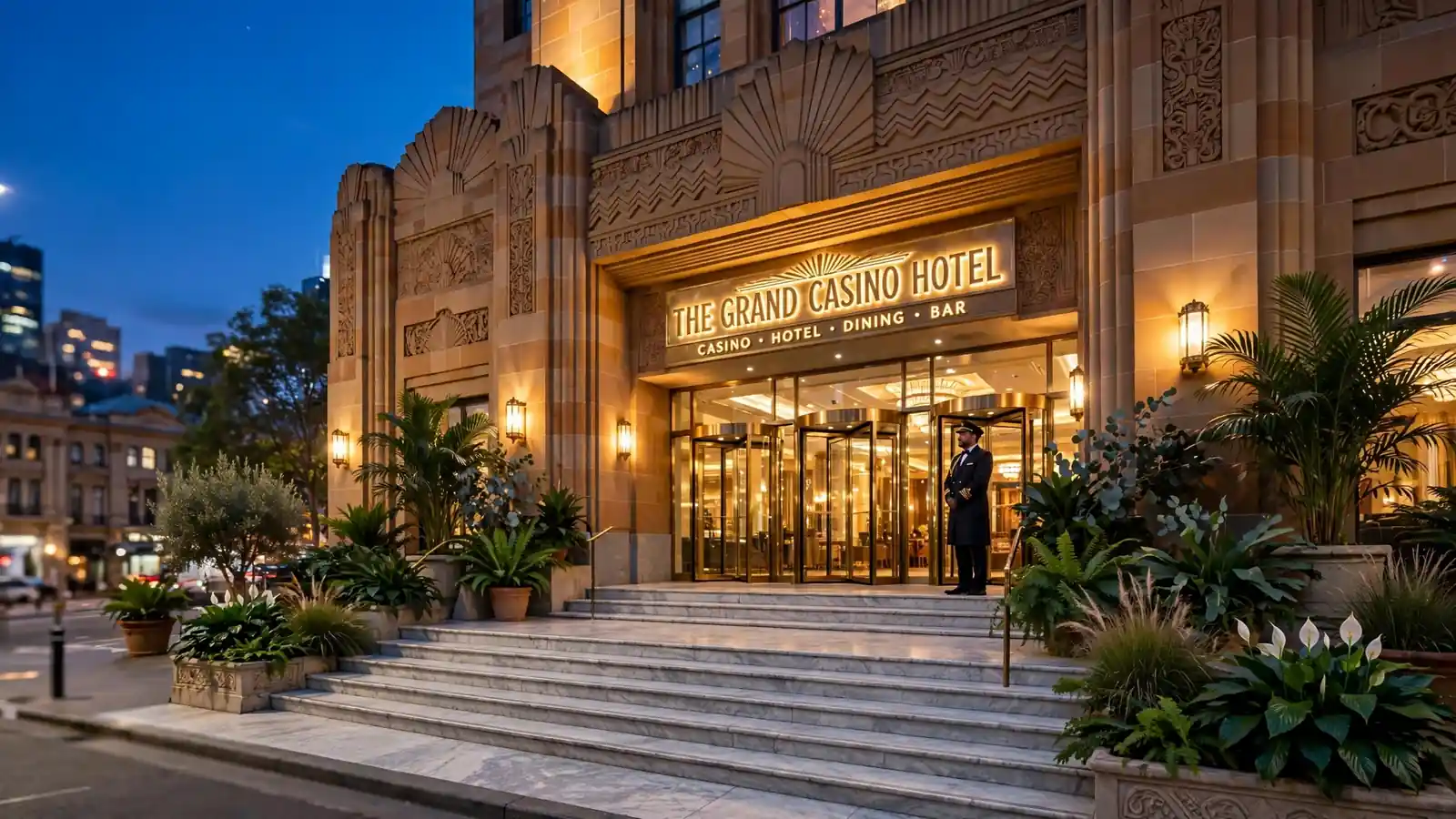
A casino hotel search can sound like a single booking question, but it combines several separate decisions: whether a casino has its own hotel, whether rooms are available for the dates in mind, what the room rate includes, and whether a promotion applies. Those details are specific to a property and can change. Without confirmed property information, none should be presented as a current offer.
That distinction matters because “deal” is often an advertising label, not a complete description of the price. A headline rate may depend on dates, room category, booking conditions or an included extra. The conditions determine what the offer is worth. A package that mentions a casino stay does not, by that wording alone, establish that the casino operates the hotel or that a particular room can be booked under the offer.
I have seen how easily those distinctions get flattened in promotional copy. A hotel and a casino may be described together because they are connected in some way, but the wording does not tell the whole commercial arrangement. The operator, booking channel and terms matter. Without property-specific confirmation, it would be misleading to turn a general association into a claim about ownership, room access or a bundled stay.
Choosing an online casino for Victoria in 2026 calls for a clear look at the information available for each option. Use these brief verdicts as a starting point when deciding what to investigate further.
7Bit Casino
7Bit Casino is operated by Dama N.V. and holds a Curaçao licence.
MrPacho
MrPacho lists crypto payouts at 30–120 minutes and fiat payouts at 24–72 hours. The minimum deposit is A$30.
SkyCrown
SkyCrown is licensed by the Tobique Gaming Commission. Its stated payout times are around 10–15 minutes for crypto and 1–5 days for fiat; the minimum deposit is A$30.
Wild Tokyo
Wild Tokyo holds a Curaçao licence and has a minimum deposit of A$10. Its stated payout times are 30–60 minutes for crypto and 1–5 days for fiat.
Uptown Pokies
Uptown Pokies operates under a Curaçao licence and has been operating since 2017. Its minimum deposit is A$20.
Thor Casino
Thor Casino is licensed by Antillephone N.V. in Curaçao, with Versus Odds B.V. as operator. Its minimum deposit is EUR 20.
Roby Casino
Roby Casino is licensed by Curaçao eGaming and operated by Roby Games Ltd.
Ricky Casino
Ricky Casino lists crypto payouts in under an hour and PayID payouts in 1–3 business days. The minimum deposit is A$20, or A$30 to qualify for the bonus.
GoldenCrown
GoldenCrown holds a Curaçao Gaming Control Board licence, number OGL/2023/176/0095, under Hollycorn N.V.
LevelUp Casino
LevelUp Casino is licensed by Curaçao eGaming under OGL/2023/174/0082 and operated by Dama N.V. Its minimum deposit is A$15.
The same caution applies to searches for casino hotel rooms in Victoria. The phrase may refer to a particular venue, or it may be a broad request for a hotel experience linked with casino entertainment. It does not establish which property is meant. Nor does it confirm room types, facilities, availability, cancellation terms or prices. Those are booking details, not safe assumptions to fill in from the wording of a search.
A reliable room listing needs to identify the property and state the terms that govern the booking. A reliable deal needs to make clear what is included and what conditions apply. Without that information, naming a rate or describing a package would create precision without evidence. Better to leave the price blank than to dress a guess as a current deal.
Opening hours are a separate issue. A hotel’s reception or guest services schedule is not necessarily the same as a casino’s operating hours, and neither can be inferred from the other. The fact that live casinos in Victoria are monitored by the Victorian Commission for Gambling and Liquor Regulation does not establish the hours of a hotel or a particular casino. Regulatory oversight is not a timetable.
For the same reason, “open” can mean different things in a booking context. It might refer to accepting room reservations, checking in guests, or operating a casino floor. Those are distinct services. A broad label cannot confirm that they share the same schedule. No current hotel or casino opening time should be treated as established without a venue’s own current information.
The practical test is straightforward: a room offer should name the property, state the stay dates and show its conditions; a schedule should identify the specific service and the time period it covers. If any of those elements are absent, the claim is incomplete. That is not a small technicality. It is the difference between a room that can actually be booked and a phrase that merely sounds bookable.
Victoria’s casino-hotel searches therefore cannot be answered responsibly with an invented directory, a guessed price or assumed hours. The useful distinction is between a casino-related hotel idea and a verified booking: only the latter supports a concrete claim. No booking detail, no promise.
Poker and pokies are easy to conflate in casino descriptions, but they refer to different activities. Poker is a card game played against other participants; pokies are electronic gaming machines. A venue’s machine count therefore says nothing about how many poker tables it has, whether it runs tournaments or what format those events might use.
One specialist casino review reports that Crown Casino has over 3,500 poker machines. That figure concerns pokies, not poker facilities. It should not be used to infer the size of a poker room, the number of seats available for card games or the scale of a tournament program. Those are separate operational details.
I have seen this distinction blur in venue copy. A large machine floor can make a casino sound like a comprehensive destination for every kind of gambling, when the wording may only describe one part of its operation. “Poker” in a broad casino description is not enough to establish that a dedicated room exists or that cash games are being dealt. The distinction matters. Machines are not tables.
A tournament is a further step beyond a room. It requires an event format, registration arrangements, start times and current scheduling; none follows automatically from the presence of a casino or poker machines. A reference to poker in an old listing or general venue description cannot establish that an event is running now. Tournament details are time-sensitive, and an event title alone would not settle whether entries are open or what conditions apply.
I would keep those claims separate rather than turn a machine count into an implied poker offer. That is a small wording choice with a practical consequence: readers looking for card play need information about card play.
The same care applies to the word “rooms.” In casino material, it can mean hotel accommodation, a private function space or a gaming area. It is not, by itself, a clear description of a poker room. Without a precise venue description, the word can create the wrong expectation. Poker tables and tournament arrangements should be named directly when they are being described.
A sports bar is also a separate amenity, not evidence of a poker room or tournament. Its presence would not establish that card games are available, and a poker listing would not establish that a sports bar exists. These terms can appear close together in broad descriptions of a casino, but each refers to a different service. Combining them without clear detail makes the venue sound more specific than the wording supports.
Opening status is another point that should not be inferred from a general casino description. A venue may operate while a particular gaming area or event follows a different schedule. Poker availability, if described, needs its own current details; the general impression that a casino is open does not answer whether a poker game is being dealt at a particular time.
In practical terms, the machine figure belongs in a discussion of pokies. It cannot stand in for information about poker tables, rooms or competitions. Keeping those categories distinct is the most reliable way to describe what the figure actually says—and what it does not.
A breakfast buffet, a general buffet and a resort package are different propositions, even when they appear together in a venue description. One refers to a particular meal service; another may describe a broader food offering; the third suggests a wider destination experience. The wording alone does not establish that any of these is available at a Victorian casino.
I have learned to treat labels as starting points, not evidence. “Buffet breakfast” sounds specific, but it does not tell us which venue serves it, whether it is open to non-guests, or whether the description applies to a current offering. A standalone breakfast reference leaves the same practical questions unanswered.
The same distinction matters for buffet searches more generally. The word can suggest variety and a single, clearly defined service, but it does not establish a menu, service format, schedule or access conditions. Those details are what make a buffet useful to plan around. The label by itself cannot supply them.
Resort language creates a different expectation. It can imply that several leisure and hospitality elements belong to one destination, rather than simply naming a casino. But the word “resort” does not prove that a Victorian casino operates as a resort or that any particular package, facility or stay arrangement is attached to it. A broad label is not a confirmed description of a specific property.
Rewards searches need the same care. A rewards programme, if one exists, can involve its own eligibility rules and terms; the word alone says nothing about enrolment, benefits or how those benefits are earned or used. I would not infer a particular scheme from a general reference to casino rewards, nor treat promotional language as a complete account of its conditions. Fine print matters. So does the venue.
This is where casino and resort terminology can blur. A reader may see breakfast, buffet, resort and rewards discussed together and assume they form one connected offer. That connection has to be established by the venue itself. Similar wording across listings or promotions does not prove that the services belong to the same operator, apply at the same place or remain available at the same time.
For practical planning, the useful unit is not the broad category but the named offering and its terms. A reliable description would identify the venue and specify what the breakfast or buffet includes, who can use it and any conditions that apply. Resort claims should be tied to a clear property description, while rewards claims should explain the programme rather than relying on the label. If those details are not stated, the careful conclusion is limited: the category is being discussed, but no particular service can be relied on from the wording alone.
That is not a small distinction. A search for a buffet or resort experience is often about making a decision, not collecting adjectives. “Complete package” may sound reassuring; in practice, it is only meaningful when each included element is spelled out. No assumptions.
A search for a casino in Victoria can point to two different things: a physical venue or casino games delivered over the internet. The distinction matters because the legal treatment is not the same. Victoria regulates land-based casinos, while online casino-style games cannot legally be supplied to people in Australia under the Interactive Gambling Act 2001.
That boundary includes familiar games such as slots and table games when offered online for real money. Federal law prohibits online casino operators from providing those games to Victorian residents. Australian-based online casinos cannot operate within the country’s borders, and an overseas licence does not make it lawful for an operator to offer prohibited casino services to Australians.
In my experience, the wording around “online” can blur the issue. A site may describe itself as offshore or present its games as available to Australians; that description is not a local authorisation. The legal obligation falls principally on providers and facilitators, not on individual players as a general criminal offence simply for accessing an online casino service. That is a distinction about who the law targets, not an endorsement or assurance about an offshore service.
Victoria’s regulation of physical casinos sits alongside rules for online betting and wagering services. It does not create a route for online casino games. A land-based casino’s presence in the state, or its association with a recognised venue, does not mean that its online slots, roulette or blackjack can be offered legally to people in Australia.
This is where broad phrases such as “Victoria casino online” can be misleading. They may sound like a straightforward extension of a physical casino, but the legal categories differ. A regulated land-based venue and an online casino service are not the same product under Australian law. The digital version does not inherit the venue’s status.
Nor should online casino play be confused with online wagering. Victoria regulates wagering services as a separate category; that does not permit casino-style games to be offered online. The rule turns on what is being supplied, not merely whether a website uses casino branding or describes itself as connected to a venue.
The Interactive Gambling Act 2001 places the central restriction on operators that provide prohibited interactive gambling services to customers in Australia. It is therefore inaccurate to describe the law as a blanket criminal offence for every individual who accesses an offshore casino. At the same time, the absence of that general player offence does not make the service lawful for the provider, locally licensed, or equivalent to a regulated Victorian casino.
I have seen “available” used as though it meant “authorised”. It does not. A website’s ability to load, accept a registration or display games would not change the legal position for an operator offering online casino games to Australians. Those are separate questions.
For anyone comparing physical casino gambling with an online option, the decisive point is the product’s legal category. Victoria’s land-based casino framework does not extend to online casino games for Australian customers. That is the line.
Accommodation described as “near a casino” is not a single, reliable category. It can mean a property within walking distance, somewhere connected by public transport, or simply a place in the same broad area. Without a confirmed property and location, those meanings cannot be collapsed into a useful distance claim. “Close” is a sales word until the route and starting point are clear.
That distinction matters when comparing stays. A map pin may show proximity in a straight line, while the actual route depends on streets, entrances and transport links. None of those details can be inferred from the phrase “near a casino”. Nor does a location label establish whether a property is available for particular dates. Those are separate questions, and each needs current, property-specific information.
The same caution applies to accommodation deals. A headline offer is not the full price. Conditions may determine which dates qualify, what is included and whether changes or cancellation are permitted. A “casino accommodation deal” can also refer to an offer from a lodging business rather than a casino itself. The wording alone does not establish who is providing it or what its terms are.
I have seen how promotional language compresses several conditions into one attractive label. “Stay and save” sounds definite; the actual value depends on the room price, eligible dates and any restrictions attached to the offer. Without those particulars, there is no sound basis for comparing deals or calling one better than another. The phrase is not the transaction.
Parking deserves the same separation from accommodation. A search for parking near a casino does not establish that a particular property has parking, that a public car park is nearby, or that spaces are available. A listing should be read for the exact facility and its conditions, rather than treating the word “parking” as a promise of convenient access.
Location searches also need a named destination. Victoria is a state, and a casino-related phrase on its own does not identify a precise address or a route from a prospective stay. The state regulator, the Victorian Commission for Gambling and Liquor Regulation, monitors live casinos in Victoria; that regulatory role does not supply accommodation locations, transport details or parking information.
Casino promotions are a different matter from lodging offers. A promotion connected with gambling should not be mistaken for a discount on a room, and the existence of one does not establish the other. The wording can look similar while the product and conditions differ. Keep the categories separate.
For practical comparison, the useful details are concrete: the property name, the address, the dates covered, the full price, the route to the intended destination and the terms attached to parking or cancellation. Without those, “nearby” and “deal” remain labels, not verified features of a stay. No shortcut.
Contact details are often treated as a small practical matter. In reality, they establish which business a booking, complaint or event enquiry reaches. A phone number without a clearly identified operator can send someone to the wrong place; a map pin can be just as misleading if it is attached to a similarly named venue. I have seen how quickly a copied detail becomes “official” once it appears across directories. Repetition is not confirmation.
For a casino in Victoria, the name alone does not settle the question of which venue is meant. Victoria’s live casinos are monitored by the Victorian Commission for Gambling and Liquor Regulation, but that regulatory role is not a substitute for a venue’s own contact channel. Nor does it establish an address, map location, car-park entrance or telephone number. Those details need to correspond to the particular operator and the purpose of the enquiry.
That distinction matters for calls about lost property, accessibility, bookings or complaints. A general number may route calls through a switchboard; a direct line may be intended for a specific department. A map result can point to an entrance rather than a mailing address, while a car park may have a separate access point. None of those labels, by itself, tells a caller where to go or whom to ask for. Specifics matter.
Bars and concerts raise a different kind of expectation. A bar listing can imply a named venue, service hours and a current menu; a concert listing suggests a performer, date and ticket arrangements. These are changeable operational details, not facts that can be inferred from a casino’s presence in Victoria. I would not treat a generic listing as evidence that a particular bar is open or that a concert is scheduled. The word “events” is not a programme.
Baccarat and craps searches need the same care. The terms name casino games, but they do not establish that a particular Victorian venue offers either one, where a table might be located, or whether play is available at a given time. Baccarat-related interest is not confirmation of a baccarat room. A game name attached to a venue is still only a claim until the operator’s own current information supports it. No table implied.
For online contact searches, the legal setting also affects what a listing means. The Interactive Gambling Act 2001 prohibits operators from providing real-money online casino games, including table games, to people in Australia. That rule concerns providers and facilitators; it does not turn an individual player’s access into a general criminal offence. A webpage presenting online casino contact details should therefore not be mistaken for evidence of a locally authorised online casino.
The practical test is identity, not polish. A polished map card, a phone number repeated on several directories, or a concert banner can all look settled while referring to stale or mismatched information. For a real-world visit or enquiry, the operator’s own current communications are the appropriate place to confirm arrangements. Until then, no address, contact number, bar listing, car-park route or event schedule should be treated as established. No borrowed certainty.
“Open” looks like a simple status, but it can refer to different things: whether a casino is operating, whether a particular part of a venue is accessible, or whether a service is running at a particular time. I would not treat one answer as covering all three. The Victorian Commission for Gambling and Liquor Regulation (VCGLR) monitors live casinos in the state and regulates live casino gambling, but that oversight does not establish a venue’s current hours or the status of a specific facility.
The same distinction applies to searches about a casino reopening. A regulator’s role is not a public timetable, and its involvement alone cannot confirm that a venue has closed, is reopening, or has set a reopening date. Those are operational claims. Without a confirmed announcement from the venue or a current official notice, a definite answer would be guesswork. A headline is not a schedule.
Development questions need similar care. A search about casino development may mean a proposed expansion, construction work, a planning decision or a broader change to the sector. Regulatory oversight of live casinos does not, by itself, prove that any project is planned or under way. I cannot responsibly turn the presence of a regulator into evidence of a development plan. Project claims need a specific, current public record or announcement.
Employment searches also point to changing information. Open roles, recruitment windows and job conditions are set by employers and can change independently of casino regulation. The regulator’s stated remit concerns live casinos and horse racing; it does not confirm that a casino is hiring or describe particular positions. An old vacancy can remain visible after recruitment has ended. Stale listings mislead.
Entertainment is another broad label. It may mean general activities at a venue or a particular programme, but no current entertainment schedule can be inferred from the fact that live casinos are regulated. Event dates and performances require their own current confirmation. That is separate from asking whether a casino is operating at all.
A menu search raises a different practical question, but it cannot establish that a particular dining service is open or currently offering a particular menu. Those details belong to the venue’s own current information, not to the regulator’s role. Likewise, a general casino review should not be read as proof of present operating conditions: reviews can describe a past visit, while hours, services and facilities may change.
The most reliable distinction is between regulatory status and day-to-day venue information. VCGLR oversight is a meaningful fact about Victoria’s live casino sector; it is not a substitute for a current operational notice. I keep those claims separate rather than filling gaps with confident-sounding assumptions. A useful answer should say what is established, and stop there.
A spa attached to a casino is a specific facility, not an automatic part of the casino experience. The word “resort” can make a property sound like a single package, but accommodation, treatments and leisure facilities are separate services. I would not treat a casino’s name, or the appearance of spa-related wording in a listing, as proof that a spa operates on site.
The same distinction matters for an address. A state name is not a venue address, and a result that refers broadly to a casino in Victoria does not resolve which property is meant. The Victorian Commission for Gambling and Liquor Regulation monitors live casinos in the state; that regulatory role does not supply a visitor address, directions or entry details. Those are practical particulars, not consequences of being regulated.
Dress codes are similarly venue-specific. “Smart casual” is sometimes used as a catch-all in hospitality copy, but without a published policy for a named venue it says little about what is accepted at a particular entrance, bar or event. Casino-wide rules may also differ from requirements for a particular space. I would not turn a general impression into a formal policy. Check the venue’s own current visitor information before relying on any dress guidance.
Spa access can involve its own booking and entry arrangements, distinct from casino access. The practical distinction is simple: a casino and a spa are not interchangeable services. A glossy “retreat” label does not fill in the operating details.
Address and dress-code searches can also become mixed with questions about bars, jobs or games. Those subjects do not establish where a venue is located or what clothing its spa requires. Nor does a careers reference confirm a current vacancy or hiring process. Keeping each question separate avoids treating a broad venue description as an answer to a visit-planning detail.
For a trip, the useful information is concrete: the exact property name, its published address, the entry route, and any written policy for the facility being visited. No shortcuts.
Restaurant searches linked to casinos in Victoria can imply that a particular venue, menu or dining arrangement is already known. I would separate those details before treating any name as a dependable option. The state has live casinos, but that alone does not establish which restaurants operate at a given property, what they serve or when they open.
A restaurant name is only the start of a useful listing. Menus can change, service can be limited to particular periods, and a venue’s status may differ from what an old directory entry suggests. Without current, venue-specific information, attaching a restaurant name to a casino would create certainty the detail cannot support. Better to leave the name out.
The same restraint applies to searches for restaurants inside a casino and for dining close by. “At” and “near” describe different things: one suggests a venue within the casino property, while the other can include separate businesses in the surrounding area. Neither wording identifies a restaurant or establishes its location. I would not turn that distinction into a list of properties or distances.
Menus need the same care. A general description such as “fine dining” or “casual dining” may sound informative, but it does not tell anyone what is actually available. Dish names, dietary options, prices and booking conditions all require current details. Without them, promotional labels do more work than the information itself. The wording sounds complete. It is not.
A rooftop restaurant is also not interchangeable with a rooftop bar. A search phrase may blur the two, but a bar listing would not prove that restaurant service is offered there, or that a particular casino has such a venue. I would keep the categories separate rather than treating the word “rooftop” as evidence of a dining option.
For anyone comparing Victoria casino dining, the useful facts are concrete: the venue’s identity, its current menu, service times and whether it is actually part of the casino property. Those details should be checked against the venue’s own current information before plans are made. A broad association with casino dining is not a substitute.
That may feel less satisfying than a named shortlist, but an unsupported list can send people toward a venue that is closed, differently located or not a restaurant at all. In this case, restraint is more useful than a polished guess.
Food and pool facilities are practical questions, but they are separate from the choice of a casino itself. A food court suggests a shared dining area with multiple counters; a pool points to a leisure amenity. Neither label, on its own, establishes what a particular Victorian venue provides.
I have seen amenity descriptions do a lot of quiet work in hospitality marketing. “Resort-style” can sound like a complete package, while the actual meaning depends on what is on site, who can use it and whether access has conditions. A food court, if present, would still need its own details: location, service hours, available vendors and whether it is open to visitors or only certain guests. A pool listing would need comparable clarity about access and operating arrangements. Without those particulars, the label alone is not a useful basis for planning.
This is not the same as choosing a restaurant or assessing a buffet. The question here is whether a shared food area or a pool exists at the relevant venue at all. Those are facility-level details, not assumptions that can be carried over from a casino’s name or general reputation.
The legal context also matters, but it does not answer amenity questions. Victoria’s live casinos are overseen by the Victorian Commission for Gambling and Liquor Regulation; that regulatory role does not establish what food or leisure facilities a venue has. A regulator and a venue directory do different jobs.
So food-court and pool descriptions should be treated as venue-specific, not as standard features of casinos in Victoria. A broad label can point to the kind of amenity being sought. It cannot stand in for confirmed details about a particular place. Small distinction. Important one.
Playing at an offshore-licensed online casino is not itself a general criminal offence for individuals. However, Australian law prohibits online casino operators from offering casino games to Australian customers, and offshore sites are not regulated under Victoria’s gambling system.
You must be at least 18 to gamble in Victoria, whether online or in person.
You must be 18 or older to gamble in Victoria.
Online sports betting and wagering on horse, harness and greyhound races are allowed when provided by operators licensed in Australia. Online casino games such as slots, roulette and blackjack cannot legally be offered to Australian players.
Check whether the service is legally permitted to offer its games to Australian customers and whether it is regulated in Australia. Offshore gambling sites are not covered by Victoria’s gambling system, which can leave players with fewer protections in payment, account and complaint disputes.
The legal gambling age in Victoria is 18.