Learn how random spins work and how to assess venue, hours and online-pokies claims around Adelaide.
A pokie’s result is not a sequence that can be read from the previous spins. Each spin is an independent event determined by a Random Number Generator (RNG). A run of wins does not make a loss “due”, and a string of losses does not mean a machine is building towards a payout. The machine has no memory in that sense.
That distinction matters when claims about the best pokies in Adelaide are framed around a recent win, a busy machine or a player’s sense that one game is “ready”. Those observations may describe what happened, but they do not predict the next result. From the counter side, I saw how quickly a story about a winning session could turn into a supposed rule. It was still only a story. No pattern there.
RNG mechanics also explain why a particular session cannot establish whether a pokie is generous. A player can receive a return in a short spell, lose repeatedly, or leave after a mixture of both. None of those outcomes shows what the game will do next. Nor does a single result prove that one Adelaide venue pays better than another.
Choosing pokies in Adelaide for 2026 means checking the details that matter to you, such as available payment information and licensing. This list gives a concise reference point for considering the operators.
7Bit Casino
7Bit Casino is listed as licensed in Curacao and operated by Dama N.V.
MrPacho
MrPacho lists crypto payouts at 30–120 minutes and fiat payouts at 24–72 hours. Its minimum deposit is A$30.
SkyCrown
SkyCrown lists a Tobique Gaming Commission licence, with crypto payouts at around 10–15 minutes and fiat payouts at 1–5 days. Its minimum deposit is A$30.
Wild Tokyo
Wild Tokyo lists a Curacao licence, a A$10 minimum deposit, and payout estimates of 30–60 minutes for crypto and 1–5 days for fiat.
Uptown Pokies
Uptown Pokies lists a Curacao licence and says it has operated since 2017. The minimum deposit is A$20.
Thor Casino
Thor Casino lists a Curacao licence through Antillephone N.V. (Versus Odds B.V.) and a minimum deposit of EUR 20.
Roby Casino
Roby Casino lists a Curacao eGaming licence, with Roby Games Ltd identified as the company.
Ricky Casino
Ricky Casino lists crypto payouts in under an hour and PayID payouts in 1–3 business days. Its minimum deposit is A$20, or A$30 to qualify for the bonus.
GoldenCrown
GoldenCrown lists a Curacao Gaming Control Board licence, OGL/2023/176/0095, with Hollycorn N.V. identified.
LevelUp Casino
LevelUp Casino lists a Curacao eGaming licence, OGL/2023/174/0082, held by Dama N.V. Its minimum deposit is A$15.
Return to player, or RTP, is a theoretical measure of how much a game is designed to return across extensive play. It is not a promise of what an individual player will get back, and it does not set a schedule for wins. A percentage cannot tell someone whether the next spin will pay, or how a particular session will end.
There is a further complication: a specialist review has reported that some game providers give casinos a choice of RTP settings for the same pokie. If that account applies to a particular game, its return percentage may differ between casinos. The game’s name alone would not settle the question.
That point should be handled carefully. It is not evidence that every provider offers several settings, that every casino changes them, or that any specific Adelaide machine uses a particular setting. Without a figure tied to the relevant game and its actual configuration, “higher RTP” is not a useful comparison. A claim attached only to a familiar title leaves out the setting that would make the comparison meaningful.
RTP is also easy to misread in promotional language. “Best paying” sounds like a practical ranking, but a theoretical return does not guarantee that the game will pay more during a visit. It cannot identify a reliable winner, and the word “best” does not turn a long-run measure into a short-term forecast. A slogan is not a result.
When I assess a claim about Adelaide casino pokies, I separate three things: the game’s mechanics, any stated return setting, and the evidence for that setting. A game title can identify the product, but it cannot by itself show which RTP configuration is in use. A past win can show that a win occurred, but not that the machine is more likely to pay again.
The same caution applies when a claim is tied to a venue or to the city centre. A location does not alter the independence of an individual spin. Nor does a story about one machine establish how another machine is configured, even if both carry the same game title. Venue comparisons need more than anecdotes; machine-level details matter.
Online descriptions can blur these distinctions too. The mechanics of an RNG do not certify an operator, prove that a stated setting is accurate, or establish that a service is available under Australian law. Those are separate questions. A payment label, a polished game page or a confident claim about returns cannot substitute for evidence about the actual configuration.
For anyone comparing claims, the useful question is not which machine has just paid. It is whether a stated RTP belongs to that specific game and setting, and what supports the claim. If that detail is absent, there is no sound basis for calling one option the best paying pokie in Adelaide. The spin remains random. No dependable payout follows.
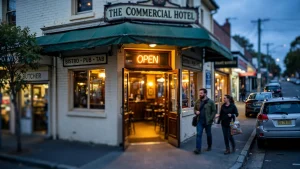
A listing marked “open” answers only part of the practical question. It may refer to a venue’s general business hours, not confirm that its gaming area is accessible at that moment. A venue can have different operating arrangements across its facilities, and a public listing may not explain them. I would treat an opening badge as a lead, not as confirmation that pokies are available.
Before travelling, check information published by the venue itself. Its current website or social media may carry updates about temporary closures, altered trading arrangements or access conditions. If the details are unclear, call and ask specifically whether the venue is open and whether the gaming area is operating. That distinction is easy to miss when a listing uses one set of hours for the whole business.
Third-party map listings are useful for finding a contact number or spotting a possible change, but they can lag behind a venue’s own updates. A listing may be maintained automatically, or may show regular hours that do not account for a public holiday, a private function or an unexpected closure. Even a recent customer comment is not the same as a direct confirmation for the day of travel. Cross-check rather than relying on one indicator.
The phrase “open now” is time-sensitive. It depends on when the listing was updated, the device’s time settings and the source’s understanding of what counts as open. A result can therefore look definite while leaving the important detail unresolved: whether the part of the venue being sought is operating.
There is also a difference between a venue being open to the public and a particular facility being accessible. Entry arrangements may vary, and the public listing may not explain them. A quick call can establish what a general opening label cannot. Ask a direct question about current access rather than interpreting a green status marker as a promise.
I learned to separate the door from the service. A building can be open while a particular area is unavailable, and an online listing rarely gives the full operational picture. No need to overread it.
Searches for early or late access have the same weakness. A phrase suggesting that pokies are available early in the morning, or late at night, is not proof that any particular Adelaide venue operates then. It may reflect an old listing, a broad category label or somebody else’s experience on a different day. The dependable check is a current statement from the venue, followed by a call if the wording still leaves room for doubt.
I use a short sequence. First, identify the venue from a current listing or its own public page. Then compare the stated hours with any recent update. Finally, contact the venue if the trip depends on the gaming area being open. This is not elaborate research; it is a way to avoid treating an automatically refreshed result as a live operational notice.
When calling, keep the question specific: is the venue open at the intended time, and is the gaming area operating? If access depends on an event, membership or another condition, ask about that too. A broad “Are you open?” may produce a technically correct answer that does not resolve the reason for the trip.
Verifying Venue Access
Identify Venue
Find the venue using a current listing or its own public page.
Compare Hours
Check the stated hours against any recent updates on the venue's website or social media.
Direct Contact
Call the venue specifically to ask if the gaming area is operating at the intended time.
Public holidays and special events are worth checking separately because ordinary hours may not describe a particular day. The same applies to temporary maintenance or operational changes. If a venue’s own page and a map listing disagree, the venue is the better place to resolve the discrepancy. If no one can confirm the detail, postponing the trip is more reliable than assuming the listing is right.
A search result also cannot establish a payout percentage. Opening status concerns access and timing; it does not certify the settings of machines inside. Those are separate questions, and an “open” label should not be read as evidence about game conditions.
For anyone comparing results, keep a note of when the information was checked and where it came from. That makes it clear whether a detail came from the venue directly or from an older directory entry. It also prevents a past visit or an old review from being mistaken for a current confirmation.
There is no universal “open” signal that settles every detail. Venue hours can change, listings can remain visible after circumstances change, and the gaming area may not follow the same access pattern as other parts of a venue. A direct confirmation is the cleanest basis for travel. No guesswork.
A location phrase can sound precise while leaving the important part unresolved. “Near Adelaide Airport” might mean inside the airport, close to its boundary, or somewhere in the wider area that a map labels nearby. Those are different claims. Without a confirmed venue address, none establishes that pokies are available at the airport itself or how far away a venue might be.
I learned to separate the destination named in a search from the place a business actually occupies. An airport result is not proof of an airport venue. A nearby result is not proof of a particular travel time. The same distinction applies to requests for pokies in Adelaide’s CBD: the words identify an area of interest, but do not verify a venue address within it.
Before relying on an airport-related listing, the first check is the venue’s own current address, not a map pin or a result headline. Then compare that address with the specific point meant by “the airport”. A terminal, an airport boundary and a nearby road are not interchangeable reference points.
Distance claims also depend on how they are measured. A straight-line distance can differ from a driving route, and either can change in practical significance depending on access and transport. Without a verified starting point and destination, a number would create precision without evidence. Convenient wording. Unsettled location.
The phrase “pokies at Adelaide Airport” makes a stronger claim than “pokies near Adelaide Airport”. The first suggests a venue on airport grounds; the second allows for a wider surrounding area. Neither should be treated as confirmation on its own. A venue address and a clear description of where it sits are needed to distinguish them.
“Near the CBD” is similarly elastic. It may refer to a place within the central business district or to one outside it that is marketed as close. A claim about North Adelaide adds another distinct area; it does not establish that a venue is in the CBD. For a useful comparison, the location should be stated plainly rather than inferred from a broad label.
I would check that a listing’s address is consistent across the venue’s own information and the map being used. If those details differ, or the listing gives only a suburb or a broad area, the exact location remains unclear. A map result can help orient a journey, but it cannot, by itself, establish that a venue has pokies or that its location description is accurate.
“Near me” is not a fixed place. It depends on the device’s current location and on what distance the service treats as nearby. A result produced elsewhere, or without a clear address, cannot answer the same question as a result based on the traveller’s actual starting point.
There is also a wording trap in “Adelaide, Vic”. That phrase does not neatly identify Adelaide in South Australia; it may reflect a mistaken location setting or an ambiguous search. It should not be used to infer a South Australian venue or a Victorian one without checking the address.
The sound approach is modest: confirm the street address, establish which area it belongs to, then assess the route from the intended starting point. Search labels are clues, not proof.
A venue’s approach to gambling harm is not measured by how polished its gaming area looks. The useful details are operational: who is available when machines are running, how staff respond to concerning behaviour, and whether the venue’s safeguards are visible without directing people towards more gambling.
A report published by regionriverina.com.au describes a requirement for venues with more than 20 gaming machines to have a dedicated responsible gambling officer (RGO) on duty while those machines operate. It also describes a one-month grace period for venues to remove specified signage and introduce the officer role. These are reported requirements, not proof that any particular Adelaide venue has an RGO on shift or that its procedures are working in practice.
The role matters because a concern on the floor needs a person responsible for handling it, rather than an assumption that another staff member will notice. A responsible-gambling officer is a venue-level safeguard, not a guarantee that harm will be prevented. The distinction is important. A title on a roster is not the same thing as a meaningful response to a patron showing signs of distress.
The same report says venues will be required to maintain a gambling incident register. It is intended to record occurrences, including cases where a patron’s behaviour indicates they may be at risk of, or affected by, gambling harm. In operational terms, a register creates a record of what happened; it does not, by itself, show what action followed. The practical test is whether staff can recognise a concern and respond appropriately, while the record supports consistent handling rather than replacing it.
Signage is another part of venue practice, not decoration. Signs directing patrons to gaming lounges must be removed if they are within eyeshot of ATMs or EFTPOS terminals. Signs directing patrons to ATMs must be removed if they are within eyesight of gaming machines. These placement rules matter because a supposedly helpful direction can also make access to cash more immediate in a gambling area. Small detail. Real consequence.
Responsible-gambling tools also include deposit limits, loss limits, session time limits and self-exclusion options. Their value depends on how they are presented and applied; a list of tools on a noticeboard is not evidence that a patron has been supported. The venue’s duties concern the environment and its response, while the individual tools give people ways to set boundaries.
Operational safeguards include having a dedicated responsible gambling officer (RGO) on duty for venues with over 20 machines, maintaining a gambling incident register, and ensuring signs to gaming lounges are not within eyesight of ATMs or EFTPOS terminals.
When comparing Adelaide venues, claims such as “best pokies venue” say little about these responsibilities. A venue’s reputation, décor or machine selection does not establish whether an RGO is on duty, whether incidents are recorded, or whether signage complies with placement restrictions. Those are separate operational questions. A careful account distinguishes what a venue advertises from what its safeguards actually demonstrate.
The legal distinction is between a payment method and the service taking the payment. PayID can move money; it does not authorise an online pokie service to offer real-money play in Australia.
The Interactive Gambling Act 2001 prohibits companies from providing real-money online pokies to people physically in Australia without a domestic licence. No such licences have been issued, and there is no Australian-licensed online casino. The restriction concerns the operator’s service, not whether a particular deposit method is available.
That matters when a payment page makes an online offer look routine. A familiar bank-transfer option, a polished cashier screen or a deposit confirmation says nothing about whether the underlying casino is licensed here. There is no domestic online casino licence for a site to point to as proof of approval. The machinery of payment is separate from the legal status of the game.
PayID is an alias layer connected to the New Payments Platform. It allows a transfer to be addressed using an email address, mobile number or ABN, rather than entering the recipient’s bank details directly. For real-money play at an online casino, using PayID requires linking it to a bank account first. That describes how the payment mechanism works; it does not make the casino Australian-licensed or establish that its games are lawful to provide here.
I have seen payment labels do a lot of quiet persuasive work. “Instant” describes a transaction feature, not the quality or legal standing of what sits behind it. A deposit method cannot verify a game, guarantee a withdrawal, or turn an unlicensed service into a domestic one. Those are separate questions, and a cashier page does not answer them.
The same applies to offers framed around no-deposit play. Whether an offer asks for a deposit is not the test under the Interactive Gambling Act. The relevant issue is the provision of real-money online casino services to people in Australia. A bonus label does not change that legal boundary.
The practical reading is plain: PayID identifies a way to transfer funds, while the law governs the operator and service. Treating one as evidence of the other confuses payment convenience with regulatory permission. They are not interchangeable.
An online service may appear available from Adelaide without being an Australian casino with local consumer safeguards. That distinction matters more than a polished site, familiar game names or claims about the best-paying pokies. A website’s willingness to accept Australians does not establish that winnings can be recovered through Australian channels.
The legal responsibility falls on the operator, not the individual player. Australians are not fined or prosecuted simply for playing on an offshore site that accepts them. That does not make the arrangement protected. If the operator refuses to pay, Australian players have no legal recourse in Australia to compel payment.
I have seen how easily those two points get blurred in promotional language. “Available to Australians” describes access, not accountability. A balance displayed on a screen is not the same as money held under Australian oversight. If a dispute arises, the operator’s own terms and complaint process may be the only route offered, with no Australian remedy to enforce an outcome.
There is also a practical obstacle to access. The Australian Communications and Media Authority (ACMA) blocks illegal offshore gambling sites, and internet service providers must follow its blocklist. A site may therefore be inaccessible, even if its pages or advertising suggest otherwise. A block is not evidence that a particular player has committed an offence; it is an enforcement measure directed at access to the service.
This leaves a narrow but important distinction: player liability is not the same as consumer protection. The absence of a penalty for the player does not guarantee a fair dispute process, a successful withdrawal or help from an Australian regulator if an offshore operator keeps winnings.
Terms can make the risk less visible. Withdrawal rules, account checks and restrictions may be presented as routine administration, but their effect becomes clear when money is requested. Identity and address documents must be verified before a first withdrawal; that requirement should be understood before any account is used. Even then, verification does not create an Australian avenue of appeal if payment is withheld.
BetStop is not a substitute for protection against offshore operators. It applies to Australian-licensed operators and does not bind offshore sites. That limitation matters when a service is outside the domestic system: a self-exclusion step that works with a local operator cannot be assumed to control an offshore account.
Searches for online pokies near Adelaide, or for high-limit play from central Adelaide, can make distance seem like the main issue. For an online service, location does not bridge the protection gap. The decisive question is who can be held accountable if the transaction turns into a dispute. For offshore sites, Australian players have no local legal recourse if winnings are refused. That is the hard limit.
A “24-hour” label sounds precise, but it can conceal an important distinction: a venue being open is not necessarily the same as pokies being available throughout the day and night. The phrase may describe a listing, a service area or an assumption carried over from an older page. On its own, it does not establish when gaming machines are operating.
I separate the claim into two parts: the venue’s opening status and the availability of its pokies. Those are related, but they are not interchangeable. A venue might have different operating arrangements for different areas or services; a search result rarely explains that detail. Nor does a result displayed as open now settle whether pokies can be played at that moment.
That is where the wording matters. “Open all day” and “pokies available all day” are not equivalent statements. Even a page that says a venue is open around the clock may not specify the operating hours of its gaming machines. The missing detail is not a technicality. It changes what the claim means for someone planning a visit.
Search listings also compress information. A short-hours panel can repeat an old entry, omit exceptions or refer to the venue generally rather than its gaming area. The label may look definitive because it is presented without explanation. It is still a summary, not a guarantee.
I would treat a 24-hour claim as something to confirm with the venue, not as a promise. The useful question is specific: are the pokies operating at the intended time, rather than merely whether the premises are open? If the answer is unclear, the label has not answered the practical question. Better to establish that before setting out.
There is another trap in the phrase “open now”. It depends on when the information was checked and what the listing considers open. A page can remain visible after details change, while a current status indicator may concern the venue overall. Neither should be stretched into a claim about continuous machine operation.
A careful reading keeps the wording narrow. A venue’s stated opening hours describe its premises; a separate statement is needed to establish when pokies are available. If no such detail is given, the responsible conclusion is simply that the hours of play remain unconfirmed.
I have seen how a confident label can do more work than its wording supports. “All day” sounds settled. The detail may not be.
Putting “Crown” beside Adelaide in a venue name does not establish that a Crown-branded casino or pokie venue operates in the city. Search wording can join a brand, a location and a type of gaming room even when those terms have not been independently connected. I would treat the phrase as a lead to verify, not as proof of a venue.
That distinction matters because a listing can repeat a title supplied by a directory, an old post or a user. Repetition does not confirm the business name, its location or whether the place is operating. Nor does a reference to Crown in a page about Adelaide necessarily mean that the page describes a local venue. The name may be part of a comparison or an unrelated discussion.
The same caution applies to claims about a “best” room. That label is a judgement, not a venue detail. Without confirmed information about the venue and what it offers, a ranking would dress an unverified association as a recommendation. I would not turn the wording into a list of Adelaide rooms or imply that a particular room has been checked.
A maximum cash payout is a separate question. It cannot be established from a venue name or a brand reference alone. Any claim about a payout would need to identify the relevant machine and the conditions that apply to it; a broad label such as “Crown Adelaide” does not supply those details. A figure repeated in a listing is not automatically a machine-specific rule.
This is where promotional language can blur the edges. “Official”, “premium” or “best” may sound like confirmation, but each describes something different—or nothing concrete at all—unless it is backed by clear, relevant details. The name is not the evidence.
I have seen how a familiar brand can make a vague listing feel more definite than it is. The practical reading is narrower: Crown-related wording and Adelaide appearing together do not, by themselves, prove a local Crown venue, a particular pokie room or a payout condition. Keep those claims separate, and do not treat one as confirmation of the others.
No connection established.
A claim about “the best pokies in Adelaide’s CBD” sounds like a comparison, but the word *best* needs a measure behind it. Without published, comparable information about particular venues or machines, it is an opinion rather than a finding. A polished listing or a prominent result does not establish that its recommendations have been checked against machine-level data.
The same caution applies to references to Adelaide clubs with pokies. A club name in a directory, review or social post may indicate that someone has described it that way; it does not establish the current machine offering, the machines’ settings or a consistent basis for comparing them. I would separate those claims from details that can actually be verified, rather than turn a list of names into a ranking.
CBD wording also matters. “Near the centre” can cover different areas, and a venue described as being in the city may not be inside the CBD boundary a reader has in mind. For a location decision, an address and a clearly defined boundary matter more than a broad label. That is a different question from whether any particular machine is better than another.
“Best” is doing a lot of work. No comparison, no ranking.
Self-exclusion is a separate issue from venue quality. Deposit limits, loss limits, session time limits and self-exclusion are recognised responsible-gambling tools. They are safeguards, not evidence that a venue is suitable for everyone, nor a way to identify which CBD venue has the most favourable machines. BetStop applies to Australian-licensed operators; it does not bind offshore sites.
I have seen how a short promotional label can make a choice look settled before the underlying detail is clear. For Adelaide CBD pokies, the useful distinction is between a claim and a verifiable detail: a venue’s precise location can be checked, while broad descriptions such as “best” need a stated comparison method. Without that method, the label tells little about the machines or the experience inside.
That distinction keeps club references in proportion. It avoids implying that a particular Adelaide CBD venue, machine or ranking has been independently assessed when the wording alone cannot show that.
“Cashless” can describe different parts of a transaction, and the distinction matters. PayID is a transfer alias: it lets a payment be directed through an email address, mobile number or ABN rather than by entering bank-account details. It operates within the New Payments Platform (NPP), a system supported by all major Australian banks and protected with end-to-end encryption.
That says how a bank transfer is addressed and carried. It does not tell us how a venue’s pokies accept funds. A PayID option for an online payment is not evidence that a machine on a venue floor is cashless; nor does the presence of a digital payment method establish anything about machine design or operation. Different layers. Easy to blur in promotional copy.
I learned to separate the payment rail from the equipment. One concerns moving money between accounts. The other concerns how a particular machine is funded and used at a physical venue. A shared word such as “cashless” does not make those systems the same.
The Newcastle wording creates a different problem: it combines two place names. Adelaide and Newcastle refer to separate locations, so a preference for pokies in one cannot establish anything about venues or machines in the other. The wording might reflect a comparison, a travel plan or a mistaken combination; it does not identify a specific venue.
I would treat each place as its own question and look for details tied to the location actually intended. A payment method is not a venue description, and a two-city phrase is not proof that the same facilities exist in both. Keep the categories separate. That is the useful check.
Yes, Australians can legally play on offshore sites that accept them, but no Australian-licensed online casino exists. The law prohibits operators from offering real-money online pokies to Australians without a domestic licence, and players have no legal recourse in Australia if an offshore casino withholds winnings.
You must be at least 18 years old to gamble online in Australia.
Yes, PayID is treated like other qualifying deposit methods at the recommended sites. Check the bonus terms for any wagering requirements or other conditions.
Some game providers let casinos choose between different RTP settings for the same pokie, so the return percentage can vary between casinos. Check the RTP for the specific game and setting.