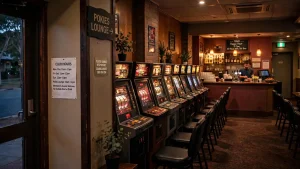
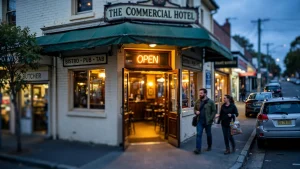
Venue listings may not reflect whether gaming areas are open, so checking availability separately can help avoid relying on outdated information.
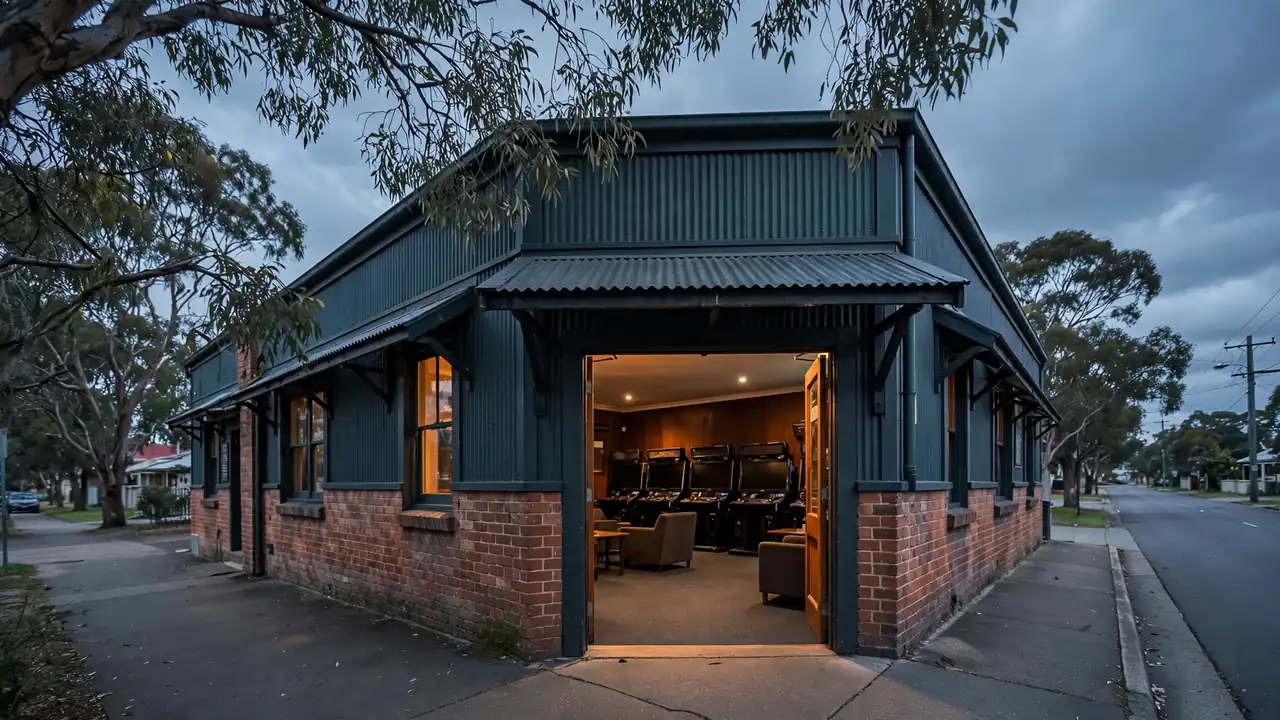
A listing that says a Geelong venue is open is not the same as confirmation that its pokies are available at that moment. The distinction is easy to miss. A business can appear open on a map or directory while its gaming area is closed, temporarily unavailable or subject to a change that has not yet reached the listing. A search result is a starting point, not a live status check.
I have learned to separate three claims that often get folded into one: that a venue exists, that the venue is open, and that pokies can currently be played there. Each needs its own confirmation. A name appearing online may support the first claim, but it says little about the other two. Even a current-looking opening-hours panel should not be treated as a guarantee of access to a particular part of the premises.
This matters most when the timing is tight. Someone looking for an early opening, a late visit or somewhere operating at an unusual hour can lose time by relying on a result that describes ordinary business hours rather than the specific service being sought. Search tools may combine information from the venue, previous updates and user contributions. Those details can be useful, but they do not necessarily change at the same time as the venue’s own arrangements.
The practical check is direct and specific. Contact the venue using a current contact method and ask whether it is open now and whether its gaming area is operating. Asking only “Are you open?” can leave the important point unresolved: a venue might be open for another service while the pokies are not accessible. If a call is unanswered, that is not proof either way. It may mean the line is busy, staff cannot respond, or the contact details are no longer current.
 Best pokies in Melbourne: location and availabilityLearn what location searches can establish, why “best paying” claims need caution when outcomes are random, and why venue hours require direct…
 Pokies in New South Wales: Access and Venue ListingsLearn what “open now” listings can confirm, why venue hours may not confirm machine access, and what NSW-specific searches leave unclear.
I would treat a posted schedule as a guide rather than a promise. Special events, maintenance, staffing decisions or other operational changes can affect what is available on a particular day. These are general reasons a published schedule can fail to settle a live-status question; they are not evidence that any particular Geelong venue has changed its arrangements. The useful distinction is between a routine timetable and confirmation for the intended visit.
There is also a difference between “open now” and “open for pokies now”. Some online listings show a single status for the whole business, without separating the gaming area from dining, bar or other facilities. A green open label can therefore answer less than it appears to answer. The wording in a listing may be broad; the actual question is narrow.
A second check can help when the first one is unclear. The venue’s own current notice may be more relevant than an old directory entry, but a posted notice can also be incomplete or out of date. If two sources disagree, the disagreement is itself a reason not to assume access. I would not turn the more convenient answer into the more reliable one simply because it suits the plan.
The same caution applies to phrases such as “open late” or “open early”. They are not precise enough to establish whether a venue is operating at the time someone has in mind. A result may use those words loosely, or refer to the venue generally rather than the gaming area. The only dependable resolution is an up-to-date answer tied to the particular venue and visit.
A current-status check also cannot establish whether a venue is a good choice overall. Open doors say nothing about the quality of the experience, the machines available, or the return setting of a pokie. A payout percentage is a separate question from opening status, and a venue’s apparent availability does not supply that information. I keep those questions apart rather than treating a convenient location or an open listing as evidence of better value.
For a quick decision, the order is simple: identify the exact venue, check its latest direct notice, and contact it to confirm both general access and gaming-area availability. If the answer remains uncertain, the honest result is “not confirmed”, not an assumption built from a map label. That small distinction prevents a search result from being mistaken for a promise.
A listing can point the way. It cannot open the doors.
Finding pokies to play in Geelong in 2026 means checking the details that matter before choosing an online casino. This list gives you a concise reference to each option's stated licensing, deposit, and payout information.
7Bit Casino
7Bit Casino is operated by Dama N.V. and holds a Curacao license.
MrPacho
MrPacho lists a minimum deposit of A$30. Its stated payout times are 30–120 minutes for crypto and 24–72 hours for fiat.
SkyCrown
SkyCrown is licensed by the Tobique Gaming Commission. Its stated payout times are around 10–15 minutes for crypto and 1–5 days for fiat, with a A$30 minimum deposit.
Wild Tokyo
Wild Tokyo holds a Curacao license and has a A$10 minimum deposit. Its stated payout times are 30–60 minutes for crypto and 1–5 days for fiat.
Uptown Pokies
Uptown Pokies has operated since 2017 under a Curacao license. Its minimum deposit is A$20.
Thor Casino
Thor Casino is licensed in Curacao by Antillephone N.V. (Versus Odds B.V.). Its minimum deposit is EUR 20.
Roby Casino
Roby Casino is listed as licensed by Curacao eGaming, with Roby Games Ltd named as the operator.
Ricky Casino
Ricky Casino lists crypto payouts in under an hour and PayID payouts in 1–3 business days. The minimum deposit is A$20, or A$30 to qualify for the bonus.
GoldenCrown
GoldenCrown lists a Curacao Gaming Control Board license, OGL/2023/176/0095, held by Hollycorn N.V.
LevelUp Casino
LevelUp Casino holds a Curacao eGaming license, OGL/2023/174/0082, with Dama N.V. named as the operator. Its minimum deposit is A$15.
“Best-paying” sounds like a clean comparison: one pokie gives more back, so it must be the better choice. In practice, a payout claim cannot tell the whole story. I learned to separate the figure being advertised from what it can actually establish. A return percentage describes a setting for a game, not a promise about what will happen in a particular session.
A specialist review reports that some game providers let casinos choose between different return-to-player settings for the same pokie. That means a game’s return percentage may not be identical wherever it appears. Recognising a familiar title, or seeing the same artwork and features, does not by itself establish which setting is in use. A comparison has to concern the particular version and setting, not just the game’s name.
That distinction matters when looking for the best-paying pokies in Geelong. A claim about a game in one setting does not prove that the same figure applies at a venue elsewhere. Nor does the phrase “high return” explain how the figure was obtained or whether it describes the version being discussed. Without those details, a payout claim is incomplete.
The percentage itself is also easy to read as a personal forecast. It is not one. Return to player, or RTP, is a way of expressing a game’s expected return over play; it does not say what a particular player will receive, or when. It cannot turn a short session into a predictable result. That is the part marketing tends to leave in small print.
Each spin is generated separately by a Random Number Generator. In practical terms, a previous result does not make a particular outcome due on the next spin. A run of losses does not force a win to arrive, and a recent win does not mean the next result must be lower. The machinery does not keep a memory of the player’s session in the way people often imagine.
I have heard the “due” argument from both sides of a counter. It feels persuasive because people naturally look for patterns in a sequence. But a sequence that looks meaningful to a person does not change how the next spin is determined. Independent events. No debt to repay.
That is why “best-paying” cannot be treated as a reliable ranking of individual Geelong pokies. Even where a return setting is known, it does not identify a better result for a particular visit, and it cannot support a promise that one game will pay more in the next session. A percentage can describe a configuration; it cannot remove randomness.
There is another practical limit: a headline figure may not make clear which setting it refers to. If a game can be offered at different RTP settings, a general statement about the game is not enough to establish the setting at a particular casino. The same caution applies to broad claims about pokies in the Geelong CBD or across the city. Location and a familiar title do not fill in that missing detail.
I would read any payout claim narrowly. It may describe a specified game configuration, if the setting is clearly stated and relevant to the version being discussed. It does not establish that the game is available at a particular Geelong venue, that a local machine uses that setting, or that a player will receive a particular return. Those are separate claims, and the wording should not blur them together.
For anyone comparing pokies, the useful question is not simply which one is labelled “best-paying”. It is whether the claim identifies the exact game setting and whether it is being presented as a long-run measure rather than a session forecast. If that information is absent, the slogan is doing more work than the evidence.
This leaves no defensible list of winning machines or guaranteed favourites. A return setting may help explain how a game is configured; independent spins explain why it cannot predict the next outcome. There is no shortcut from a percentage to a sure result.
A search for online pokies around Geelong can blur two different questions: whether a service can be reached, and whether its operator is legally entitled to provide it to people in Australia. Those are not the same thing. The Interactive Gambling Act 2001 prohibits companies from providing real-money online casino games, including pokies, to customers in Australia. No Australian online-casino licences have been issued, so there is no locally licensed online casino to distinguish as a lawful option.
The law is directed at operators, not individual players. Australians are not criminally liable merely for playing on an offshore site that accepts them, and offshore services may still be accessible. That does not make those services Australian-regulated or give their customers the protections available through an Australian online-casino licensing system. There is no such system for online casinos.
I have seen the distinction get lost in the way online offers are presented. A site can look local, use Australian currency or display familiar payment options; none of those details changes who is providing the service or whether it holds an Australian online-casino licence. PayID, for instance, is a payment method, not evidence of a licence, fair game settings or a remedy if a dispute arises. Presentation is not oversight.
The practical risk is most obvious when a withdrawal is disputed. If an offshore casino refuses to pay winnings, an Australian player has no legal recourse in Australia against it. That leaves a basic imbalance: the operator controls the account and payment process, while the player cannot rely on an Australian online-casino regulator to resolve the claim. A “welcome bonus” or “no deposit” offer does not change that position. The wording is promotional; the legal status of the service remains the same.
The same applies to searches for real-money play, high stakes or maximum bets from Geelong. Those phrases describe what someone hopes to find, not a category of locally authorised service. A claim that a site has generous limits or pays well should not be mistaken for proof of Australian oversight. Nor does a game’s advertised return settle what settings apply on a particular site. Separate from those game mechanics, the more basic issue is that no Australian-licensed online casino exists.
The Australian Communications and Media Authority (ACMA) enforces the Interactive Gambling Act and blocks access to illegal offshore gambling sites; internet service providers must comply with its blocklist. Blocking is an enforcement measure, not a sign that every offshore site has been removed or that any site still reachable has been approved. Access and legality should not be treated as synonyms.
In my experience, the most consequential detail is often the one least visible in the headline offer: who can be held to account if something goes wrong. An offshore operator may accept an Australian customer, but acceptance is not a local licence and does not create an Australian route to recover disputed winnings. That is the risk behind online-play searches in Geelong. No local online casino. No Australian remedy for an offshore refusal.
A request for pokies near Geelong Airport sounds precise, but “near” does not identify a particular premises. It could mean a venue within the airport, somewhere close to it, or a place that is simply convenient for a trip involving the airport. Those are different claims. I would not treat a result for the broader area as proof that pokies are located inside the airport itself.
The same distinction applies to the Geelong CBD. A venue described as being in central Geelong is not necessarily in the CBD, and a listing that uses “near the CBD” may cover a wider area. North Geelong adds another location label, not a confirmed venue or a measure of how far away it is. Without a verified address, distance and route, there is no sound basis for turning any of those labels into a recommendation.
This is where location language can do more work than the underlying detail. “Convenient” may refer to a venue’s position, but it can also be a loose description with no stated starting point. For someone travelling from the airport, the relevant location is not necessarily the same as for someone already in the city centre. I have seen broad area descriptions mistaken for exact directions. That is how a nearby-sounding claim becomes an unhelpful one.
A useful comparison needs a precise starting point and a premises address. Distance depends on what is being measured: straight-line proximity is not the same as a practical trip. A route also depends on the chosen starting point and destination. Without those details, a claim that one venue is closer than another cannot be checked. No reliable ranking follows from the words “near Geelong” alone.
Search terms can also blur the difference between a place and its surroundings. “Pokies at Geelong Airport” implies something on airport premises; “pokies near the airport” does not. The wording matters. I would keep those claims separate rather than assume that a nearby listing answers the question about an airport location.
The same care is needed when the starting point is described only as “near me”. That phrase has no fixed geographic meaning: it changes with the person’s location. A result tied to Geelong generally cannot establish which venue is closest to an individual, or how long a journey would take. A clear address is the useful anchor; an area label is not a substitute.
For Geelong, North Geelong, the CBD and the airport, I cannot responsibly name a specific nearby venue or give a distance or route. That is not a claim that no venue exists in any of those areas. It is a limit on what can be stated confidently. A location label alone is not enough to establish where a premises is, whether it is inside an airport, or how close it is to a particular starting point.
Geography first. Claims second.
A venue’s gaming-floor oversight is less visible than its machines, but it matters more when gambling begins to affect someone’s behaviour. A responsible gambling officer (RGO) is a designated staff role, not a label that tells anyone whether a venue is “best”. The practical point is that oversight has to be present while gaming is taking place.
A report by regionriverina.com.au says that, from 1 July, venues operating more than 20 gaming machines must have an RGO on duty while those machines are running. The same report describes a one-month grace period for venues to remove signage and put the officer arrangements in place. Those are operational requirements, not a scorecard for comparing Geelong venues. They do not establish how many machines a particular local venue has, whether it meets the threshold, or who is rostered on a given shift.
From the other side of a counter, the distinction between a policy and its daily use is familiar. A requirement only becomes meaningful in practice when staff know who is responsible, how concerns are escalated and what needs to be recorded. A named role creates accountability; it does not, by itself, show how an individual interaction will be handled.
The incident register is another part of that process. The report says venues will need to record occurrences, including situations where a patron’s behaviour suggests they may be at risk of gambling harm or already affected by it. That makes the register a record of events requiring attention, rather than a tally of wins, losses or machine performance. It also gives venue procedures a written trail instead of leaving every response to memory.
A register cannot prevent harm on its own. Its value depends on staff noticing concerning behaviour and recording what happened in a usable way. The RGO role and the register therefore address connected tasks: one places responsibility on duty, while the other captures relevant incidents. Neither is a promise that every venue will respond identically, nor evidence that a particular Geelong venue has performed well.
For anyone comparing pokies venues in Geelong, these requirements offer a more grounded point of reference than promotional language about a “top” or “friendly” gaming floor. Such words are not evidence of staffing, record-keeping or the quality of a response. The available report describes obligations for venues covered by the rules; it does not identify local venues or establish their individual compliance.
Oversight is procedure, not a rating.
A venue staying open late does not automatically mean its pokies are available for the whole of that time. The venue’s operating hours and the hours when machines can be used are separate details, and a broad “open” label can blur that distinction. For anyone comparing late-night options around Geelong, the useful detail is the machine operating window, not simply whether the premises are trading.
Venues operating more than 20 gaming machines must have a dedicated responsible gambling officer (RGO) on duty while those machines are running.
I learned to be careful with the phrase “24-hour pokies”. It sounds like a clear operating promise, but it can refer loosely to a venue’s general availability rather than confirmed machine hours. Opening times can also change, so an old listing or a search result is not a dependable record of tonight’s arrangements. Direct confirmation from a venue is the practical way to establish its current hours; the answer needs to cover the machines, not only the door.
There is another distinction behind the wording. A venue may have staff on site while particular facilities are unavailable, or may close its gaming area at a different time from other parts of the premises. That is why “open now” and “pokies operating now” are not interchangeable. I would treat them as separate checks. No shortcut in the wording can settle the difference.
There is also an oversight condition tied to machine operation. A report by regionriverina.com.au describes a requirement taking effect from 1 July: venues with more than 20 gaming machines are to have a dedicated responsible gambling officer (RGO) on duty whenever those machines are running. The condition is linked to the machines being in operation, rather than merely to the venue’s general opening hours.
That distinction matters when hours stretch into the night. A venue’s schedule is not just a matter of when it opens and closes; the operating period for its machines is also relevant to the staffing requirement. The report does not establish that a particular Geelong venue runs around the clock, and the requirement itself should not be mistaken for proof of any venue’s timetable.
I have seen “open late” do too much work in promotional wording. It can describe the bar, dining room, or premises generally, while leaving the gaming schedule unclear. The plain question is whether pokies are operating during the hours being considered, and whether those hours are current. A venue’s own confirmation is more useful than an old directory entry.
For a 24-hour search, the sensible standard is simple: distinguish venue access from machine availability, and verify the relevant schedule with the venue. “Open” is not the same as “pokies running”.
A Crown-related phrase can combine a brand, a city and a type of gambling without establishing that they belong to one local place. I separate those parts before treating the wording as a venue description. “Crown” is not, by itself, a Geelong address, and adding “pokies” does not identify a particular gaming floor or machine.
That distinction matters because venue claims quickly turn into practical claims. A statement that there are pokies at a Crown casino in Geelong could imply that a local venue exists, that it has a gaming room, and that the machines can be visited. The wording alone establishes none of those things. It should not be turned into a recommendation, directions or a description of facilities.
“Best pokies room” has the same problem in a different form. “Best” sounds like a comparison, but a useful comparison needs a defined basis: for instance, verified venue details or a stated measure. Without that, the phrase is an impression dressed as a result. A room’s name or association with a casino brand does not tell much about its machines, conditions or suitability.
The maximum cash payout question also needs a specific machine and its applicable terms. A general label cannot establish what a particular game can pay, how any prize is handled, or whether a venue sets relevant procedures. I would not treat an unqualified payout figure as a promise applying across a room. Details belong to the particular game and the arrangements in force where it is played. No shortcut.
Search wording often compresses several assumptions into a few words. The practical check is to keep each claim separate: whether a venue is identified as being in Geelong, whether it offers pokies, and what can be said about a particular machine or payout. A brand reference cannot stand in for all three.
That is not a judgement about a brand. It is a matter of precision. In venue descriptions, small wording choices carry weight: “near,” “at,” and “in” can suggest different locations, while “maximum” can sound like a guaranteed outcome when it may only refer to a particular game’s stated feature. The wording needs to match what is actually being described.
For Geelong, a Crown name in the phrase should therefore be treated as a name being sought, not as confirmation of a local casino or pokies room. The same discipline applies to claims about the best room or its cash payout: establish the venue and the specific terms first, rather than letting a compact phrase do the work of evidence.
A club label can make a venue sound like a straightforward choice, but it does not tell the full story. In my experience, the useful distinction is between a place’s general description and what is actually known about its gaming facilities. A central Geelong address, or a reference to club pokies, is not by itself evidence of a particular machine selection, availability or suitability. Those details should not be filled in by assumption.
“Best” is especially slippery in this context. It can be a promotional label rather than a measurable judgement, and a venue name or CBD location cannot establish that its pokies offer a better experience. I would separate claims about a club from practical considerations such as whether gambling fits within a person’s plans and budget. No ranking follows from the word alone.
Responsible-play controls are more concrete. Deposit limits restrict how much money can be put into an account or gambling activity; loss limits set a boundary around losses; and session time limits put a cap on time spent playing. Self-exclusion is another standard option, intended to prevent access for a chosen period or longer, depending on the available arrangement. These tools address different points in the process. A deposit limit does not itself control time, and a time limit does not set a loss boundary.
The important detail is that a limit only helps when it is set before play and treated as a real boundary, rather than something to revisit whenever it becomes inconvenient. Self-exclusion is a more decisive step than ordinary limits. I would not treat any of these controls as a guarantee against harm; they are safeguards, not a change to the underlying nature of gambling.
Restrict the amount of money that can be put into an account or gambling activity.
Set a specific boundary around total losses to manage gambling spending.
Put a cap on the total amount of time spent playing.
Prevent access to gambling for a chosen period or longer.
Age is also a basic condition: the legal age for gambling in Australia is 18. That applies across gambling forms, including online pokies. A club setting does not make the age requirement less relevant.
For central Geelong, the responsible approach is to judge claims carefully, avoid treating a venue description as proof of machine details, and think about safeguards separately from location. A name on a list is not a safety measure. Limits matter.
The wording that pairs Parkes with Geelong does not, by itself, establish a venue or explain what Parkes refers to. It could reflect a place name, a business name, or simply an imprecise combination of terms; choosing one interpretation without evidence would turn a search phrase into a claim.
I have seen this happen in venue research: a place name gets repeated beside a city, then repetition starts to look like confirmation. It is not. A listing needs to identify the actual premises and its location, and a claim about pokies needs separate support. Without those basics, there is no sound basis for presenting a Parkes venue as part of Geelong’s pokies scene—or for recommending it as one of the best.
The distinction matters because location labels can be ambiguous. Parkes may refer to somewhere other than a Geelong suburb or venue, and the wording alone does not settle the point. Nor does a result appearing near Geelong in an online listing prove that the premises are in the city. Search tools group material by words and apparent relevance; they do not certify a venue’s address, machines or operating status.
The practical standard is plain: establish which place is meant, then verify the premises and the relevant details independently. If that chain cannot be made, the honest answer is that the connection remains unclear. No invented route, club name or machine count can fill the gap.
That is not a claim that no such place exists. It is a limit on what can responsibly be said about it. The broader phrase “pokies in Geelong” does not resolve the Parkes wording either: a general city reference cannot supply a missing identification. I would keep the two ideas separate until reliable details connect them.
A confident-looking label is not evidence. Ambiguity stays ambiguity.
“Cashless” can describe different things: a venue’s way of handling payments, or a transfer method used online. They are not interchangeable. PayID, for instance, is an alias service built on Australia’s New Payments Platform. It lets people send a bank transfer using an email address, mobile number or ABN. That does not make PayID a cashless system for pokies on a venue floor.
I have seen payment labels do a lot of work in advertising. A familiar bank-transfer method can sound like proof that a service is local, properly overseen or transparent. It proves none of those things by itself. Nor does the use of PayID establish the fairness of a game or the licensing status of an operator.
The Newcastle wording alongside Geelong does not, on its own, identify a venue or establish a connection between the two places. It may reflect mixed location terms rather than a meaningful geographic link. Treating the phrase as a recommendation would turn uncertain wording into a claim about a real venue.
For anyone comparing local options, the practical distinction is simple: a payment method is not evidence that a particular Geelong venue offers cashless pokies. That needs to be confirmed directly with the venue, rather than inferred from a payment label or a place-name combination.
Online payment references need separate care. Real-money online casino services are prohibited for operators serving people in Australia; BetStop applies only to Australian-licensed operators and does not bind offshore sites. PayID’s presence is not a substitute for checking what a service is and whether it is lawful.
The label is not the system.
Yes, Australians can legally play on offshore sites that accept them, but no Australian-licensed online casino exists. Offering real-money online pokies to Australian residents without a domestic licence is illegal for operators, and players have no legal recourse in Australia if an offshore casino withholds winnings.
You must be at least 18 years old to gamble online in Australia.
No betting strategy can predict the next spin: each result is an independent random event. You can use tools such as deposit, loss and session-time limits to manage your play.