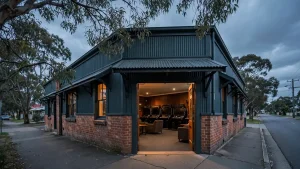
Venue opening information does not necessarily confirm poker-machine availability, while online access and local venue details may remain unclear.
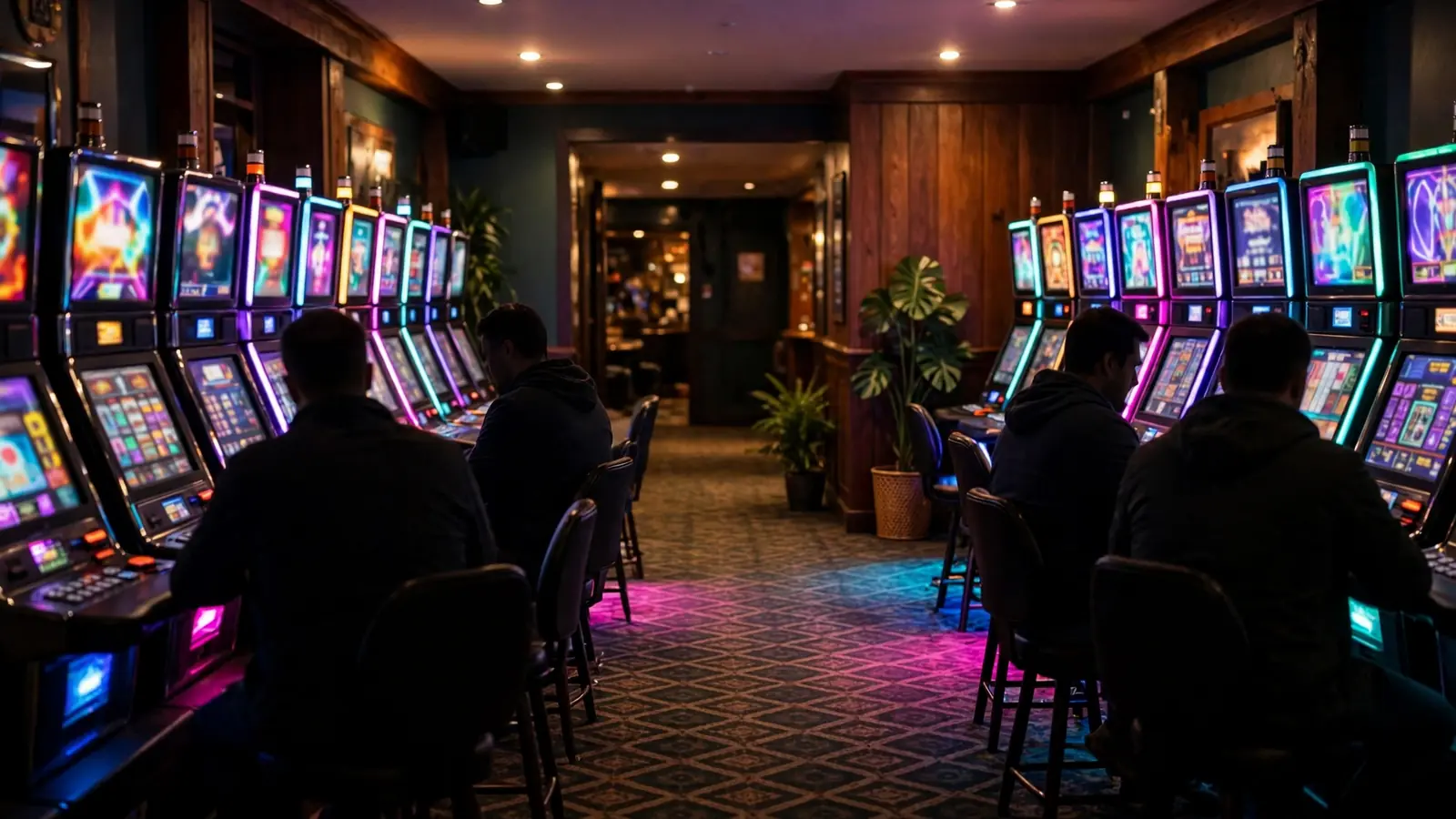
An “open now” label answers a narrow question: whether a venue is listed as operating at the time shown. It does not, by itself, explain what parts of the venue are available or what conditions apply to poker-machine gambling. I learned to separate those details because a single green status can make several different things look like one.
A venue’s general opening information may be useful when planning a visit, but it should not be read as a live confirmation that poker machines are available at that moment. Listings can be presented without much detail about what “open” covers. The venue, its facilities and its gambling area are not interchangeable terms. That distinction is easy to miss when the search is simply for NSW pokies open now.
The practical check is the venue’s own current information, especially where the timing matters. A listing can help narrow down options; it is not a promise about conditions on arrival. “Open” is a label, not a full operating schedule.
For players looking into online pokies options connected with New South Wales, this list provides a concise reference to the available operator details. Check the terms and local requirements before choosing where to play.
7Bit Casino
7Bit Casino is operated by Dama N.V. and lists a Curacao license.
MrPacho
MrPacho lists crypto payouts in 30–120 minutes and fiat payouts in 24–72 hours. Its minimum deposit is A$30.
SkyCrown
SkyCrown lists a Tobique Gaming Commission license, with crypto payouts taking about 10–15 minutes and fiat payouts 1–5 days. The minimum deposit is A$30.
Wild Tokyo
Wild Tokyo lists a Curacao license, crypto payouts in 30–60 minutes and fiat payouts in 1–5 days. Its minimum deposit is A$10.
Uptown Pokies
Uptown Pokies has operated since 2017 and lists a Curacao license. The minimum deposit is A$20.
Thor Casino
Thor Casino lists a Curacao license through Antillephone N.V. (Versus Odds B.V.). Its minimum deposit is EUR 20.
Roby Casino
Roby Casino lists a Curacao eGaming license under Roby Games Ltd.
Ricky Casino
Ricky Casino lists crypto payouts in under an hour and PayID payouts in 1–3 business days. Its minimum deposit is A$20, or A$30 to qualify for the bonus.
GoldenCrown
GoldenCrown lists a Curacao Gaming Control Board license, OGL/2023/176/0095, under Hollycorn N.V.
LevelUp Casino
LevelUp Casino lists a Curacao eGaming license, OGL/2023/174/0082, under Dama N.V. Its minimum deposit is A$15.
That is particularly relevant to searches for early or late access. Phrases such as pokies open early in NSW or NSW pokies open late describe a timing preference, not a rule that applies across the state. Opening arrangements belong to individual venues, and a search result should not be treated as confirmation that poker-machine play is available throughout every hour the venue is listed as open. No shortcut there.
Once play begins, the question changes from availability to eligibility and the rules that apply. In NSW, the legal minimum age for gambling on poker machines is 18. Being old enough is not the only condition attached to play: NSW also has mandatory pre-commitment systems. Players set a loss limit before playing.
That requirement matters because it places a decision before the session rather than leaving the limit to be worked out after gambling has started. In my experience, this is the sort of condition that can disappear behind the casual language of “open” or “available.” A venue listing describes access; it does not replace the pre-commitment step.
A loss limit is not a prediction of what a session will cost, nor does setting one make the outcome predictable. It is the limit chosen before play under the pre-commitment system. The distinction is plain but important: access to a machine and permission to begin play are not the same thing as deciding how much loss to accept. The limit belongs to that decision.
This is why an NSW pokies opening time should be read as one part of a visit, not as a complete account of the experience. The label may answer when the venue is listed as open. Age and pre-commitment rules still apply when poker-machine gambling is considered. One does not cancel the other. Simple, but often blurred.
The phrase “open now” also carries a promotional feel when it is displayed without context. In the trade, a short status is convenient because it is easy to scan. What it leaves unsaid is the scope of the status: whether it refers to the venue generally or to the specific activity being sought. The wording does not establish that every facility is available, and it does not remove the conditions that apply before play.
A careful way to read NSW pokies availability is to keep three points separate: the venue’s listed status, the details the venue confirms directly, and the requirements that govern poker-machine gambling. That approach avoids treating a general opening label as a guarantee. It also keeps the legal age and the pre-set loss limit in view, rather than treating them as small print.
For anyone comparing NSW venues by opening time, the useful question is not only whether a venue appears open. It is whether the information refers to the relevant area and whether the conditions for play can be met. The label starts the check; it does not finish it.
When I look at a pokie, I separate what its display promises from what its underlying rules can establish. A theme, feature name or rising jackpot can make one title feel different from another. None of those details makes the next spin predictable. “Hot” is a sales-floor description, not evidence that a game is due to pay.
Online pokies use a Random Number Generator, or RNG, to determine outcomes. Each spin is independent: the RNG does not keep a score of previous results, and earlier spins do not improve or worsen the odds of the next one. A run of losses is not a signal that a win must follow. Nor does a recent win mean that the game has entered a cold stretch.
That distinction matters when comparing titles described as the best pokies in NSW or as the best paying pokies. A memorable feature or a cluster of wins can make a game feel generous, but a short session cannot establish how it will perform over time. Names such as Dragon Link, Lightning Link, Wolf Treasure, Book of Ra, Gonzo’s Quest, Mega Moolah and Starburst can serve as examples of familiar pokie titles; the names alone say nothing about a particular player’s likely result.
I have seen people treat a streak as information. It is not. The next spin remains separate.
RTP means return to player. It is a theoretical measure of the share of wagered money a pokie pays back across a very large number of spins. It describes long-run behaviour, not a promise about an individual session, a venue or a particular sequence of results.
That is why an RTP figure cannot reliably identify the “best paying” choice for someone playing briefly. A theoretical return does not mean that a player receives that share back, and it does not tell when any return might occur. Results over a short spell can vary substantially from the long-run model. A ranking based only on a displayed figure can therefore leave out the main practical point: it offers no forecast of the next spin.
The same care applies when comparing games found in different settings. The wording “best pokies in NSW” can sound like a settled verdict, but a title’s return figure is not a local venue rating. It does not establish that a game is available at a particular NSW casino, club or CBD venue, or that it will suit a particular session.
A progressive jackpot grows as a small portion of each bet is added to the prize pool. The amount displayed can make the feature especially prominent, but the growing total is not a measure of how close a win is. Each spin remains independent; a larger visible jackpot does not make a particular outcome due.
Paid bonus entry works differently from waiting for a bonus feature to appear during play. It allows a player to pay a set amount to enter a bonus round directly. A report published by psu.com describes buy-bonus prices in the range of fifty to one hundred times the stake. That is a reported range, not a universal rule: the cost and availability depend on the game’s terms. Paying for entry changes how the bonus is reached, not the independence of the underlying outcomes.
These mechanics can make two games feel very different, but neither guarantees a return. The practical control is the amount committed to a session, not a theory about when a machine will pay. Set a session budget based on the bankroll and keep it fixed. Do not increase bets to recover losses or chase a result; that turns a previous loss into pressure for a larger one. The mechanic does not change.
A website that loads from NSW is not necessarily authorised to provide online pokies in Australia. The distinction is between the operator’s location and the person using the service: under the Interactive Gambling Act 2001, operators must not provide real-money online casino games to people physically in Australia. That restriction applies to Australian-based operators and does not disappear because an offshore business holds a gambling licence elsewhere.
An offshore licence is not an Australian licence. It does not make an online casino a lawful provider in NSW, and offshore platforms are not regulated under Australian law. Australian players are not criminally liable simply for using an offshore service, but that is different from the operator being permitted to supply it. The legal position is often blurred in promotions; the practical distinction is straightforward. No local authorisation.
That matters when a site advertises real-money pokies, a “no deposit” offer or high-limit play as though availability were the same as approval. A bonus is a promotional condition, not proof that the service is lawful or that a withdrawal will be straightforward. Bonus terms can impose wagering requirements, maximum cashout limits or clauses that allow winnings to be voided. Offshore customers may also have limited dispute-resolution options, and winnings may not be protected if an operator becomes insolvent. A headline offer leaves those conditions unsaid.
Access can also depend on location technology. Region blocking commonly uses the IP address of the connection to estimate where a player is located. An operator can block IP addresses associated with excluded countries; a game or the wider service may therefore be unavailable from an Australian connection. A foreign gambling licence may require an operator or software provider to restrict access from particular jurisdictions, so the game catalogue can differ by country. A title appearing in a promotional image does not establish that it can be opened from NSW.
This is why searches for online pokies near NSW central or for casino-style games online in NSW can produce results that look local while pointing to offshore services. “Near” describes neither the provider’s Australian status nor the rules governing its service. Nor does a page advertising the best-paying pokies establish a reliable return or guarantee that a game is accessible. Online availability can change with an operator’s restrictions, software-provider rules or the location detected for the connection.
A virtual private network can make a connection appear to come from another country, but using one to reach region-blocked pokies sites is against the site’s terms of service and may lead to account suspension. It does not change the player’s physical location or turn an offshore operator into an Australian-authorised provider. In practical terms, masking an IP address is not a legal workaround.
The same caution applies to claims about “no deposit” pokies and maximum bets. Those phrases describe marketing or product conditions, not a separate legal status. An offer can be unavailable to Australian users, and a casino’s own terms may restrict access even when its pages remain visible. I have seen the distinction matter at the point of account review: a site can accept registration details and later apply its location rules when access or a withdrawal is checked. A visible page is not a clearance.
For NSW residents, the key issue is not whether a foreign site can technically be reached, but whether it is permitted to supply the service in Australia and what protections exist if something goes wrong. Under Australian law, offshore licensing does not provide local regulation, and apparent access should not be mistaken for approval.
A location label is a starting point, not a measure of distance. “Near an airport” can mean beside a terminal, somewhere in the surrounding area or simply within the same city. A CBD search has the same problem: a venue may be described as central without being close to a particular station, office district or hotel. I treat those descriptions as broad orientation, not directions.
For a useful comparison, the venue’s street address matters more than a headline. Put that address against the actual destination—an airport terminal, a CBD landmark or a planned route—and assess the distance from there. “Near” can change with the starting point. A place close to one side of a business district may be inconvenient from the other; a venue in an airport’s wider precinct may still require a separate trip from the terminal.
Airport wording needs particular care. A search for pokies at an NSW airport can blur together facilities inside the airport and venues elsewhere in the surrounding region. Those are not interchangeable. The phrase alone does not establish that poker machines are located in a terminal, that a venue is within walking distance, or that it is practical during a connection. Location first. Then the actual address.
CBD descriptions can also conceal a difference between a venue’s postal area and its practical proximity to the centre. A suburb name or a “city” label is not enough to judge the journey. I would compare the address with the specific CBD destination and the transport route, rather than relying on a broad claim of centrality.
The same principle applies to northern NSW and searches around the NSW–Victoria border. “North NSW” covers a large stretch of the state; “near Victoria” could refer to many different places along a long border. Neither phrase identifies a particular club or tells how far it is from a traveller’s route. State labels are not a substitute for a town and street address.
For a “near me” search, the result depends on the location being used by the device or service and on how broadly nearby results are grouped. A result appearing first is not proof that it is the closest venue, nor does it confirm that the venue has the facilities implied by the search. I separate the map pin from the claim: one indicates a plotted location; the other needs to be checked against the venue’s own details.
Verifying Venue Location
Check the street address
Compare the venue's specific street address against your actual destination, such as an airport terminal or CBD landmark.
Assess the route
Evaluate the distance and transport route independently rather than relying on broad descriptions like "near" or "central.
Confirm the precinct
Verify if the venue is inside a terminal or requires a separate trip within the wider airport precinct.
There is a practical reason to be precise. Airport trips run to fixed schedules, while CBD journeys depend on the exact destination and route. A vague regional match can look suitable on a screen and prove awkward on the ground. I would confirm the address and the route independently before treating a location description as a plan. No shortcut there.
A venue’s position does not establish that it is the best choice, and a broad airport, CBD or border description does not settle how convenient it will be for a particular journey. The address is the detail that makes the comparison meaningful.
Among clubs in New South Wales, Club Liverpool has the highest number of operational poker machines. That is a clear distinction, but it answers a narrow question: which NSW club has the largest operational machine count. It does not, by itself, settle which venue is best for a particular visit.
I have seen how easily a number becomes a sales message. “Largest” sounds like a verdict; in this case, it describes scale. It says nothing about whether the venue suits someone looking for a particular atmosphere, location or type of visit. A high machine count is not a rating of the machines, the service or the overall experience.
The word “operational” matters, too. It refers to machines counted as operating, not a promise that every machine will be available at every moment. Nor does a club-wide count tell a visitor what they will find in one particular area of the venue. Those are different questions from the statewide comparison.
That distinction is useful when comparing NSW pokies venues. Club Liverpool stands out on machine numbers among clubs, while “best pokies venue in NSW” is a broader judgement. A ranking would need a stated basis: machine count, convenience, setting or another measure. Without that, “best” is advertising language, not a conclusion supported by the count. A bigger figure is not a better fit for everyone.
There is also a category boundary in the claim: it compares clubs in NSW. It should not be casually rewritten as a ranking of every place in the state where poker-machine gambling might be found. In venue comparisons, the category is part of the finding. Leave it out, and a precise statement becomes a sweeping one.
For someone weighing up pokies venues in NSW, Club Liverpool is therefore a concrete point of reference for scale, not a complete shortlist. The number can help describe the venue’s position among clubs, but a visit involves practical preferences the count cannot express. I would keep those two judgements separate: the recorded distinction is about operational machines; choosing a venue is personal.
The same care applies to CBD clubs. A statewide machine-count distinction does not tell anyone where a venue sits within a central business district, or whether it is convenient for a particular journey. Location and machine count are separate ways of describing a venue; one should not be used as a proxy for the other.
So Club Liverpool’s standing is significant, but specific. It has more operational poker machines than any other club in NSW. That makes it notable in a comparison of club scale. It does not make “best” an objective label, and it does not turn one measure into a complete account of what a venue offers. A useful distinction. Not a verdict.
A listing marked “open 24 hours” is a statement about the hours shown for a venue; it is not, by itself, confirmation that poker machines are available throughout that period. The distinction matters because a search result can compress several details into one short label. The label may be old, refer to the venue rather than the gaming area, or omit conditions that affect access.
I have seen how quickly a neat hours field becomes a stronger claim than the information behind it. A page can look definitive while giving no indication of when it was checked or what the hours cover. “Open now” is similarly time-sensitive: it reflects a listing’s status at a point in time, not a standing guarantee of round-the-clock operation.
For NSW pokies opening hours, the useful detail is not simply a clock range. It is whether the published hours apply to the venue, the relevant area, and the period in question. Where a listing does not make that clear, treating it as proof of uninterrupted machine access is a leap. A venue’s own current information is a better place to confirm its hours than a copied summary, but even then the wording needs to be read precisely.
The phrase “24-hour pokies” can also blur two separate ideas: a venue that is open at any hour and poker-machine play that is available at any hour. Those are not interchangeable descriptions. A search result may use broad wording, while the actual information is narrower. That is a presentation problem, not evidence that a particular NSW venue offers continuous play.
I would not turn a broad hours label into a list of all-night venues. Without a clearly stated, current basis for the claim, a list would create certainty the wording does not earn. The same caution applies to claims that a venue is open at the moment: a result can be delayed or incomplete, and the phrase alone does not settle what is accessible inside.
The practical reading is restrained. Treat round-the-clock wording as a lead to check, not a guarantee. Confirm the current hours directly with the venue, and distinguish general venue opening times from any specific statement about poker-machine availability. If the wording does not say which one it means, it has not answered the question. No shortcut.
A town name narrows a search; it does not identify a particular venue or establish what Electronic Gaming Machines (EGMs) it has. That distinction matters in Parkes, where a statewide statement about NSW pokies cannot be treated as a local description. The same applies when comparing Parkes with Port Macquarie: a shared state label does not show that venues, facilities or machine selections are alike.
I have seen venue decisions become blurred by broad labels. “Best pokies NSW” sounds like a ranking, but “best” could mean different things: a convenient location, a particular game, a club’s facilities or simply a player’s preference. Without a named venue and a specific basis for comparison, the word does not tell much. It is promotional shorthand. Not a measure.
For someone considering a particular Parkes venue, the useful details are concrete and local: whether that venue has poker-machine gambling, what facilities it offers, and what conditions apply on site. Those details need to be tied to the venue itself. A general claim about NSW cannot supply them, and a fact about one club elsewhere in the state cannot be carried over to Parkes.
The rules that do apply statewide are more definite. In NSW, a person must be at least 18 to gamble on poker machines. The state also requires a pre-commitment system: a player sets a loss limit before starting. Those are rules of play, not evidence about which Parkes venue has machines or what its offering looks like.
That difference is easy to miss in a list that mixes town names, clubs and game titles. A game name does not establish that it is available in Parkes; a club name does not establish its current machine selection. I would keep those questions separate rather than infer a local answer from a statewide label.
The search for pokies in Parkes, NSW, is therefore best understood as a request for venue-specific information, not as proof of a local ranking. A proper comparison would need comparable details for the venues being considered and a clear criterion for “best”. Without that, a ranked-sounding description can create more certainty than it earns.
There is no sound basis for transferring details from another NSW town to Parkes merely because both searches concern pokies. Local specifics have to stand on their own. The boundary is plain.
Crown-branded pokies can sound like a straightforward venue choice, but the name alone does not establish that a Crown casino operates in NSW, that a particular Crown games room is available there, or that any named pokie can be played at one. A search for Crown in connection with NSW therefore needs to be separated from a confirmed local venue or game listing.
That distinction matters because a brand name is not a map. Nor does it identify the machines on a venue floor. “Best pokies room” is advertising language unless it is tied to a stated, comparable measure; it cannot show which games are installed, how they are arranged or whether the room is operating. The label does not settle the practical question.
The same caution applies to a maximum cash payout. The phrase can refer to different things: a machine’s stated prize, a venue’s payment procedures or a limit imposed by an operator. Those are not interchangeable. A jackpot headline, even where one is advertised, does not by itself establish how or when winnings are paid. No single NSW-wide maximum follows from the Crown name.
I have seen venue descriptions make a brand feel more specific than the information underneath it. The wording can suggest a known room, a set of games and a clear payout expectation, while leaving each of those details unaddressed. A name is not an inventory.
For NSW poker-machine gambling, the rules that apply to play are separate from branding. The minimum legal age is eighteen, and NSW requires players to set a loss limit through a pre-commitment system before playing. Those requirements do not confirm the presence of a Crown venue or determine what its machines might offer.
So a Crown reference should be treated as a starting point, not proof of local availability or a recommendation. A definite venue claim needs a current, venue-specific listing; a game claim needs confirmation that the game is offered at that venue; and a payout claim needs clear terms describing what the figure covers. Without those distinctions, “Crown” carries more certainty in the wording than it does in the underlying detail. Just the brand.
CBD clubs are often considered alongside other NSW venues when people look for poker-machine gambling. The address does not change the basic rules: the legal age to gamble on poker machines in NSW is 18. A club setting is not an exception, and a machine being available does not make underage play lawful.
From the venue side, age checks are a practical part of controlling access. Identification must be checked before poker-machine gambling, and underage participation can have legal consequences. The age rule is simple; enforcing it depends on staff applying it consistently, including when a venue is busy.
NSW also requires pre-commitment before play. Players set a loss limit in advance, making the limit part of the decision to begin rather than a figure chosen after losses have accumulated. In my experience, that distinction matters: a limit set before the session is a control; changing the plan under pressure is something else. The system does not make gambling risk-free or guarantee that a session will end comfortably. It places a boundary on planned losses.
That is why “best” is a slippery label for CBD clubs. It can suggest that a venue or its machines improve the likely outcome, when the rules governing play do not support that inference. Club atmosphere and location are separate from the legal conditions for gambling. No address changes the age threshold or removes the pre-commitment requirement.
Self-exclusion is another term that can arise in discussions of NSW club pokies. It concerns restricting access to gambling, rather than setting the loss limit required before a session. The two ideas should not be treated as interchangeable: one relates to access, the other to a limit chosen before play. The key point here is the rule that applies at the machine.
For CBD venues, then, the useful distinction is not between a city club and a club elsewhere in the state. It is between lawful adult participation under NSW requirements and play that ignores them. The age threshold is fixed. Pre-commitment comes first.
“Cashless” describes a way of handling funds; it does not, by itself, identify a particular Electronic Gaming Machine (EGM), club or payment arrangement. A venue’s use of cashless gaming cannot be inferred from the word appearing in a description or search result. The practical details depend on the venue’s own system and conditions.
That distinction matters in Newcastle.
In my experience, labels do a lot of work in gambling promotion. “Cashless” can sound like a simple convenience, but the label alone says nothing about the controls, fees or limits involved. Those are separate details, and they should not be guessed from a venue name or a machine description. The distinction is plain.
Cashless arrangements also do not change the rules for poker-machine gambling in NSW. The minimum legal age is 18, and venues must check identification for poker-machine play; gambling below the legal age can have legal consequences. NSW also requires players to set a loss limit before playing through a mandatory pre-commitment system. A different method of handling funds does not remove those obligations.
The money discipline remains the same, too. A session budget should be set against available bankroll, and increasing bets to recover losses is not a sound response to a losing run. Cashless access may change how funds are handled, but it does not change the outcome of a spin or make losses easier to reverse.
Online pokies use an RNG, so each spin is independent of previous results. In NSW, club play is subject to a pre-set loss limit; online casino games cannot be offered by Australian-run operators, while offshore platforms are not regulated under Australian law.
Club Liverpool has the highest number of operational poker machines among clubs in NSW.
An RNG determines each spin, and every spin is independent—earlier results do not affect the next one. RTP describes the theoretical share of wagers returned over a very large number of spins, not what a player will receive in a particular session.