Casino operating hours, access to specific areas and holiday schedules can differ, so nearby listings need careful interpretation.
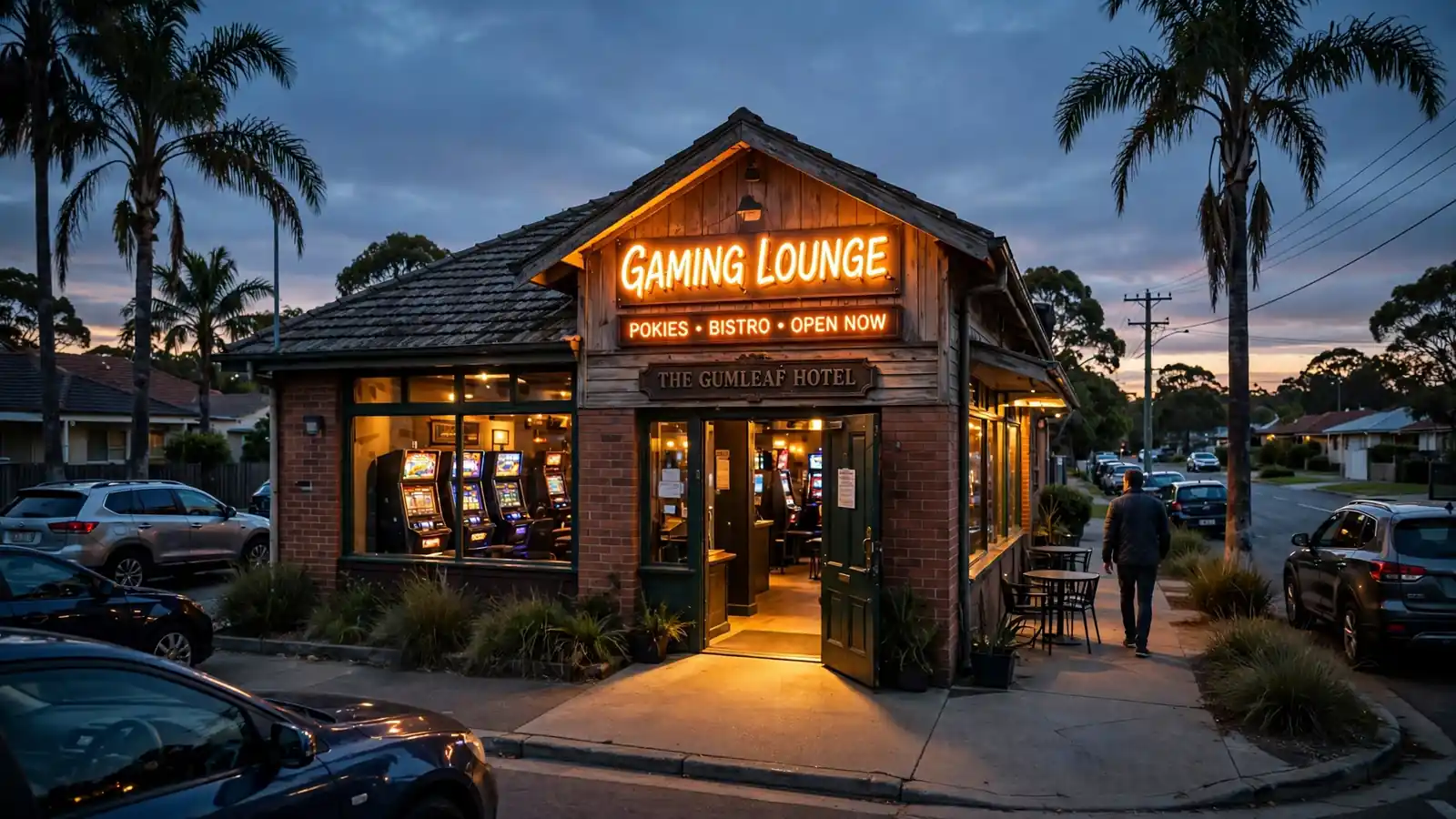
“Open now” is not a single status that answers every practical question. A casino may have general operating hours, but a result shown as open does not, by itself, establish that the particular part of the venue being sought is accessible at that moment. The distinction matters when a search for nearby pokies returns casinos alongside pubs and other gaming venues: those are different types of places, and a label attached to one does not confirm the status of another.
I separate three things: the venue’s stated operating hours, its current access status, and the availability of the specific area or service involved. A listing may describe a property as open without making clear what that means in practice. It might refer to the venue overall, rather than a particular entrance or gaming area. That is why “open” is useful as an initial indication, not a complete answer.
The location attached to the result matters just as much. A nearby name can be easy to mistake for the venue that is actually closest or relevant, especially where results cover a broad area. The Australian market is not concentrated in one city: a specialist review counted gambling activity across 147 cities. That figure is the review’s count, not a permanent measure of every available venue. It does, however, underline why a broad location label is not enough. The exact address must match the place being considered.
If you’re looking for pokies to play in Australia in 2026, use this list as a starting point and check that online gambling is available to you under the rules that apply where you are. The details below highlight the specific information available for each operator.
7Bit Casino
7Bit Casino is operated by Dama N.V. and holds a Curacao license.
MrPacho
MrPacho lists a minimum deposit of A$30. Its stated payout times are 30–120 minutes for crypto and 24–72 hours for fiat.
SkyCrown
SkyCrown is licensed by the Tobique Gaming Commission. Its stated payout times are around 10–15 minutes for crypto and 1–5 days for fiat, with a minimum deposit of A$30.
Wild Tokyo
Wild Tokyo holds a Curacao license and lists a minimum deposit of A$10. Its stated payout times are 30–60 minutes for crypto and 1–5 days for fiat.
Uptown Pokies
Uptown Pokies holds a Curacao license and has been operating since 2017. Its minimum deposit is A$20.
Thor Casino
Thor Casino is licensed in Curacao by Antillephone N.V., with Versus Odds B.V. listed as the operator. Its minimum deposit is EUR 20.
Roby Casino
Roby Casino is licensed by Curacao eGaming, with Roby Games Ltd listed as the company.
Ricky Casino
Ricky Casino lists a minimum deposit of A$20, or A$30 to qualify for the bonus. Its stated payout times are under an hour for crypto and 1–3 business days for PayID.
GoldenCrown
GoldenCrown holds a Curacao Gaming Control Board license, OGL/2023/176/0095, with Hollycorn N.V. listed as the company.
LevelUp Casino
LevelUp Casino holds a Curacao eGaming license, OGL/2023/174/0082, and is operated by Dama N.V. Its minimum deposit is A$15.
This is where a quick scan of a result can mislead. A venue may share a suburb or city name with another place, while being at a different address. A map pin can help distinguish them, but it should be read alongside the venue’s own location information. “Near me” is a geographic prompt, not a guarantee that the result is the right property, that the entrance is accessible, or that the relevant area is operating.
I also keep the type of venue clear. A casino and a pub with gaming machines are not interchangeable descriptions. If the result is for a pub, a casino’s operating pattern says nothing about that pub’s hours. If the result is a casino, a pub listing nearby does not confirm casino access. Search results can place both in the same set because the wording of a search may cover gaming venues broadly. The label needs to be checked against the actual venue, rather than treated as a promise about all places returned.
There is a further distinction between a building being open and a person being able to enter. Major Australian casinos require valid photo identification for entry. That is an access condition, not a detail that a map’s open/closed indicator can settle. A result may therefore appear relevant while still leaving basic questions about entry unanswered. The same logic applies to any venue-specific restriction or access arrangement: a general status does not replace the venue’s own current information.
 Pokies parlour casinos in Australia: meaning and rulesUnderstand what “pokies parlour” can mean, how venue licences differ from websites, and how to assess bonus and review claims. A website…
 Perth Pokies: Venue Hours, Rules and What to CheckSee why venue hours need direct confirmation and why “best-paying” claims cannot promise results when every spin is random.
In practice, the reliable reading is narrow. “Open” indicates a reported status for a listing at a particular point, where the listing has been updated. It does not certify that every service is available, that every part of the property is accessible, or that the listing is current. “Open now” should be treated as a starting point for checking the exact venue and its stated access details. Nothing more.
The wording itself can also blur intent. Someone looking for gaming machines may see casinos, pubs, or other gaming venues in the same results, even though they do not share a single operating schedule. A result that matches the broad subject may still be the wrong kind of place. Checking the venue name and address first avoids carrying assumptions from one category into another.
I have seen how operational language gets compressed in listings: a simple status is easier to display than the conditions behind it. The short label strips away the difference between a venue’s general hours and access to a specific area. It is not necessarily false; it is incomplete. That is the useful distinction. A place can be listed as open, while the information needed to decide whether it is accessible for the intended visit remains venue-specific.
So, for a casino, “open now” means only that the listing reports the venue as open at the time shown. It is not a blanket confirmation of access. The exact property, its address, the type of venue, and its entry conditions remain part of the answer. A nearby result is a lead, not a verdict.
A venue described as operating around the clock has no ordinary daily opening point to wait for. That is the practical meaning of the 24-hour pattern reported for all major Australian casinos: the casino’s operating day does not begin at a set morning hour and end at a set night-time hour. A search for access at six, seven or eight in the morning therefore raises a different question from one about a venue that opens later.
I have seen the wording around hours do more work than it should. “Open 24 hours” sounds like a simple promise, but it describes the casino’s operating pattern at a broad level. It does not, by itself, establish that every part of a property is accessible at every moment, or that a particular gaming area has identical access arrangements. The distinction matters most in the early hours, when a broad label can be mistaken for a venue-specific confirmation.
 Best Pokies in Adelaide: Venues, Hours and RulesLearn how independent RNG spins prevent past results predicting payouts, and what the article checks about Adelaide venues, hours and online-pokies claims.
 Best pokies in Melbourne: location and availabilityLearn what location searches can establish, why “best paying” claims need caution when outcomes are random, and why venue hours require direct…
For a major casino, an early-morning visit is consistent with its 24-hour operating pattern. That is a useful starting point for interpreting searches about six or seven in the morning. It is not a substitute for checking the specific venue’s current information, especially when the result refers to a particular entrance, floor or service rather than the casino as a whole. Search wording often compresses those separate details into one phrase.
The same applies to an eight o’clock start. At a casino operating continuously, eight in the morning is not necessarily an opening time; the venue may already have been operating through the night. That does not settle whether a particular area or service is available then. The label concerns the general operation of the casino, not every facility within it.
Late-night wording creates the reverse confusion. A request for a venue open until five or six in the morning may be asking whether it stays open late, or whether it remains accessible through the early morning. Where the major-casino pattern is continuous, “until” can be the wrong frame: there may be no scheduled daily closing time to attach to that hour. But a continuous operating pattern still should not be read as a promise that every service continues unchanged.
This is why I separate the operating clock from the practical access question. The first is broad: major Australian casinos operate around the clock. The second is local and specific: which venue, which area, and what access applies at the intended time? A result that answers the first question does not automatically answer the second. Nearby wording cannot fill that gap.
There is also a difference between “major casinos” and every place that may appear in a general result for gaming. The 24-hour statement applies to major Australian casinos; it should not be stretched into a nationwide guarantee about every gaming venue. A result can use familiar language while referring to a different kind of premises. The distinction is easy to miss when the only detail shown is a short hours label.
My own mistake was treating a continuous schedule as if it described the whole building in equal detail. It does not. Operating hours are an umbrella; access arrangements sit underneath. A venue can remain open while details about a particular area, entry point or service still need confirmation. The wording is broad by design.
So, for an early start, the 24-hour pattern is meaningful but limited. It indicates that major Australian casinos do not have a routine daily closure and reopening in the way a daytime business does. It does not confirm a specific venue’s full access arrangements at a particular hour, nor should it be applied automatically to every place described as a gaming venue. General pattern first. Local detail next.
A casino’s usual operating pattern does not settle whether it will be open on Good Friday. Public holidays can bring a different schedule, and an ordinary-hours listing may not reflect the arrangements for that date. The same caution applies to a search for a casino open today or tonight when today is a public holiday: the date matters as much as the venue.
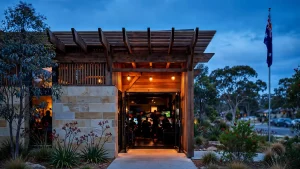 Best pokies in Canberra: hours, listings and limitsLearn what an “open now” listing can—and cannot—confirm, and why a venue’s general opening status is not proof that pokies are operating.
 Aussie Pokies Online in Australia: Free Play ExplainedLearn how free play can mean a demo, virtual credits or a promotion, and how bonus terms, payment claims and access differ…
I have seen how a single word such as “open” can flatten several different things into one result. A listing may show a venue’s general hours, while a holiday notice applies to a particular date. Those details should not be treated as interchangeable. A search result that looks current is not, by itself, confirmation of the holiday schedule.
In Australia, casinos are licensed by the state or territory where each property operates. That makes the venue’s jurisdiction relevant when checking a public holiday. A rule or notice for one state does not establish the hours of a casino elsewhere, and a schedule published for one property should not be carried across to another just because both are casinos.
Good Friday searches often have a practical urgency: the date is approaching, or the day has arrived, and a general result may look definitive. The safer reading is narrower. It identifies a place that may be relevant, but the exact venue’s own information needs to confirm its holiday hours. If the venue’s notice does not clearly cover Good Friday, its ordinary schedule is not a substitute.
This distinction matters for other public holidays, too. The calendar can affect a venue’s arrangements, but the name of the holiday alone does not establish whether a casino is open, when it opens, or whether its ordinary schedule applies. Those details belong to the specific property and its jurisdiction. No universal Australian holiday timetable follows from the fact that casinos are licensed locally.
I would check the venue’s official website or contact channel for a notice that names the relevant holiday and date. A general hours page can still be useful, but only as background unless it expressly addresses the holiday. If the information is unclear or conflicting, it is better to treat the schedule as unconfirmed than to infer an answer from a nearby listing or another casino’s hours.
That is especially important when the search is for “open near me” rather than for a named property. A result may be close geographically and still be subject to different local licensing arrangements from a venue in another jurisdiction. Proximity does not make its holiday notice applicable to every casino in the surrounding area.
The useful distinction is simple: ordinary hours describe the routine; holiday hours require a date-specific check. Good Friday is not settled by a routine listing, and a result for one venue does not answer the question for another. Check the property itself. The location matters.
A “nearest” result is only useful when the venue’s actual location is clear. Australian listings can group a casino under a familiar city or region even when its street address sits elsewhere. That distinction matters in a country where casinos are spread across all eight states and where broad place names can cover a substantial area.
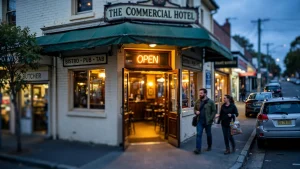 Pokies in Sydney: Checking Venues and LocationsLearn how to assess distance, venue facilities, opening-time claims and online-pokies searches, and why a map listing alone is not verification.
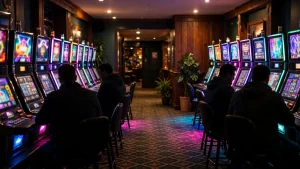 Pokies in New South Wales: Access and Venue ListingsLearn what “open now” listings can confirm, why venue hours may not confirm machine access, and what NSW-specific searches leave unclear.
One specialist casino review counts more than twenty full-scale casinos nationally. That figure gives a sense of the market’s reach, but it does not tell anyone which property is closest to a particular suburb. A city label is a starting point, not a location check. In my experience, that is where a quick scan of results can go wrong: a venue may be associated with a destination name that does not identify its precise address.
The listed locations show why the detail matters. Lasseters Casino is at 93 Barrett Drive in Alice Springs, in the Northern Territory. Jupiters Gold Coast Casino & Hotel is on Broadbeach Island, Gold Coast. Country Club Casino is associated with Country Club Avenue in Prospect, within Meander Valley. These are three different location formats: a street address, an island within a city, and a road and locality within a regional municipality. They should not be treated as interchangeable kinds of directions.
A search for a nearby venue in Redcliffe, for instance, needs a location match rather than a name that merely sounds close. The useful distinction is between a casino’s marketed city or region and the address that pins down where it actually is. A result with a nearby-sounding label can still refer to a different locality.
The same applies when someone is looking for a casino that may open early or remain accessible late. Those are separate questions from where the venue stands. A map result can establish a location; it cannot, by itself, establish the hours of a particular property. Mixing the two produces a familiar mistake: treating a nearby result as confirmation that the venue suits the immediate plan. Different question.
Located at 93 Barrett Drive in Alice Springs, Northern Territory.
Located on Broadbeach Island, Gold Coast.
Located on Country Club Avenue in Prospect, Meander Valley.
For a “closest” search, the most reliable comparison begins with the locality attached to the property, then checks the address or named site. Alice Springs, Broadbeach Island and Prospect in Meander Valley are more precise than an isolated city label because they narrow the point being considered. They still do not supply travel time or distance, so those should not be inferred from the names alone.
Australia’s broad casino footprint explains why one national list cannot resolve every local search. The country has casinos across its states, but the specific locations above illustrate how unevenly a result can be described: a city, a coastal island precinct, or a locality within a valley municipality. The practical test is simple: match the venue to a recognisable place and address before relying on the word “nearby”. A label is not a pin.
Yes. The established operating pattern is that all major Australian casinos run 24 hours a day. That is the clearest answer to whether a major casino can be open throughout the day and night: its general operation is not limited to a conventional daytime schedule.
The wording still needs care. “Open around the clock” describes the casino’s operating pattern; it is not a guarantee that every venue, entrance or service within a property is available at every hour. A casino is a collection of facilities, not one room with a single switch. The all-day claim should not be stretched into a promise about the availability of a particular part of the property.
I learned to read operating language narrowly. A venue can be described as open continuously while the details that matter to a particular visit depend on what is being accessed. The broad statement answers whether major casinos operate through the day and night. It does not settle every question about a specific facility or service. That distinction is easy to miss when a short label is treated as a complete operating schedule.
There is also a difference between a major casino and every place that might appear in a local search. The national pattern applies to major Australian casinos; it should not be casually extended to every gaming venue or smaller property. A result being nearby does not, by itself, show that it belongs to that category or follows the same hours. The category matters.
In practical terms, the 24-hour pattern is useful as a starting point, not as a detailed timetable. It means that a major casino is not generally defined by a daily closing time. It does not mean that every element of the property has identical access, or that the same conditions apply across all venues. The distinction is operational, not cosmetic.
I would therefore describe the answer plainly: major casinos in Australia operate continuously, but “open” should be read as a statement about the casino’s overall operation. It is not a blanket assurance about each individual service. Short wording has limits.
Australia’s casino footprint is broad, but it is not evenly distributed. A specialist casino review describes more than 20 full-scale casinos across the country’s eight state and territory jurisdictions. That figure is a snapshot from a single review, not a permanent count: venues and classifications can change, so it is best read as a guide to scale rather than a definitive live register.
The national total also needs a little care. “Casino” can mean a full-scale casino in one account and a wider range of gambling facilities in another. Those categories are not interchangeable. A count of venues across the country does not tell how many are in a particular town, whether they are accessible to the public, or whether a specific location suits a particular trip.
From behind the counter, I found that national maps can make distances look deceptively manageable. A venue in the same state may still be nowhere near a person’s actual location. Australia’s spread means that the broad picture is useful for understanding availability, but local geography does the practical work.
The Northern Territory offers a compact example of how counts can be distributed. One specialist casino review records three casinos across three cities in the Territory. It identifies Alice Springs as the city with the most, listing one casino there. That wording is easy to misread: “most” describes the highest city count in that review, not a dense cluster of venues.
Lasseters Casino is listed at 93 Barrett Drive, Alice Springs, NT 0870. That address gives the city count a concrete reference point, but it does not turn the national picture into a directory. The same review lists other locations elsewhere: Jupiters Gold Coast Casino & Hotel is on Broadbeach Island, while Country Club Casino is listed on Country Club Ave, Prospect, in Meander Valley. These examples show the range of settings without implying that every region has comparable coverage.
The useful distinction is between a countrywide footprint and local availability. More than 20 full-scale casinos, as reported by a specialist review, sounds substantial at national scale; it says little on its own about how close any one venue is. Territory-wide totals are similarly limited: a casino assigned to a city is still one location, not evidence of several nearby options.
A map can show the spread. It cannot flatten the distances.
A casino described as open late may be open for business while a particular entrance, gaming area or other service has different access arrangements. Those are separate questions, and a general operating label does not settle each one.
All major Australian casinos operate around the clock. That establishes a broad pattern for major properties, not a promise that every casino has the same hours or that every part of a venue remains accessible throughout the night. “Open” can describe the property overall; it does not necessarily describe every space within it.
A venue can be described as open continuously while specific access to a particular area, entrance, or service still requires individual confirmation.
I learned to be careful with that distinction from the way venue information is presented. A single opening-hours line is easy to read as a complete account of access. It rarely carries that much detail. The exact venue matters, and so does what the hours are referring to: the casino as a whole, a particular area, or another facility on the property.
Late arrival, then, is not just a matter of finding a closing time. The useful check is whether the specific venue’s current information covers the part of the property in question. If the listing gives only general hours, it should not be treated as confirmation of every late-night access detail.
There is also a difference between “open till late” as a casual description and a stated operating schedule. The first can be imprecise; the second still needs to be read in context. Where a major casino operates 24 hours, that says something meaningful about its general operation. It does not make the same claim for every venue, entrance or service.
No universal late-night schedule. That is the practical distinction. A broad label can help identify a venue that may be operating late, but only venue-specific information can clarify the access it describes.
Christmas Day access is a separate question from a casino’s ordinary operating pattern. Major Australian casinos operate around the clock, but that general pattern does not establish whether a particular property admits guests or provides access to every part of the venue on Christmas Day.
The distinction matters because a broad “open” label can conceal practical differences. A casino may share a site with restaurants, bars, hotels and entertainment spaces, and their access arrangements need not match the gaming floor. The word “open” is not a complete description of what is operating.
Australian casinos are licensed by their state or territory. That local framework is relevant to the property, but a national statement about ordinary operation cannot settle a specific Christmas schedule. Nor does the fact that a venue is in a city with gambling facilities confirm its holiday arrangements.
The careful conclusion is narrow: major casinos have a 24-hour operating pattern, while Christmas Day access must be treated as venue-specific. No Christmas schedule is established by that general pattern. A result described as open should therefore not be read as proof that all facilities are available, or that the same arrangements apply across different casino properties.
This is not a contradiction. General operating hours describe the broad pattern; a holiday schedule answers a different question. Christmas Day can require its own arrangements, and those arrangements may concern entry, particular areas or services rather than the property as a whole. The label alone does not resolve those distinctions.
I have seen how a single status word can carry more weight than it deserves. “Open” sounds definite, yet it may say little about what is actually accessible on a particular date. For Christmas Day, the defensible reading is limited to the general pattern at major casinos—not a promise of access at a named venue. Holiday-specific detail matters. No assumption.
Anzac Day does not, by itself, establish whether a particular casino’s gaming floor will be accessible. Ordinary operating arrangements are not a substitute for a venue’s holiday schedule, and a result described as open may refer to the broader property rather than the area where casino gaming takes place. I have seen that distinction matter at the counter: “open” can describe a building, not every service inside it.
There is no single Anzac Day timetable that can be applied to every Australian casino. Each property operates under a licence issued by its state or territory, so holiday arrangements are tied to the individual venue and its jurisdiction. Without a confirmed schedule for a named casino, it would be misleading to treat its usual hours as proof of access on the day. Check the venue’s own current notice before making the trip. No guesswork.
Age is a separate condition, not a holiday exception. Casino entry in Australia is restricted to people aged 18 or over nationwide. Major casinos also require valid photo identification for entry, so being old enough does not remove the need to establish eligibility at the door. The age threshold applies whether the visit is on an ordinary day or a public holiday.
That rule concerns casino entry; it should not be read as a statement that every part of a hotel or entertainment complex has the same entry conditions. A property may contain areas beyond the casino, and the casino’s access rules do not automatically describe those spaces. The practical distinction is simple: holiday access depends on the venue’s confirmed arrangements, while the minimum age for casino entry remains 18. Eligibility is not a schedule.
A request for a nearby gaming venue that is open and accepts cash or cheques combines separate questions. A venue’s presence in a search result does not establish its payment facilities, and the word “open” does not answer them either. I have seen how operational details get flattened into a single label: useful for scanning, poor as a guarantee. Payment arrangements need to be confirmed with the venue itself.
“Top rated” is another label, not a consistent measure. A ranking may reflect reviews, editorial selection or commercial placement; without knowing what is being measured, it says little about a venue’s suitability. Australia has 3,308 gaming machines installed under casino venue licences. That is a national count, not a score, service standard or indication of quality.
The distinction between a physical venue and an online casino matters. The Interactive Gambling Act 2001 prohibits operators from providing real-money online casino games to people in Australia. A website loading, taking account traffic or appearing at another address does not make the service lawful or locally licensed.
The Australian Communications and Media Authority (ACMA) enforces the Act and monitors compliance with federal interactive gambling rules. It can ask internet service providers to block websites that provide prohibited services or advertise them in Australia. Following enforcement actions, ACMA reports blocking more than 1,455 illegal gambling and affiliate websites since November 2019.
There is also a discrepancy in reported withdrawal totals: one figure says more than 210 illegal services withdrew from the Australian market since enforcement began in 2017, while another says over 190. Neither figure changes the distinction between a land-based venue and an online service. A familiar name or alternate web address is not proof of legitimacy. Check the category, not the branding.